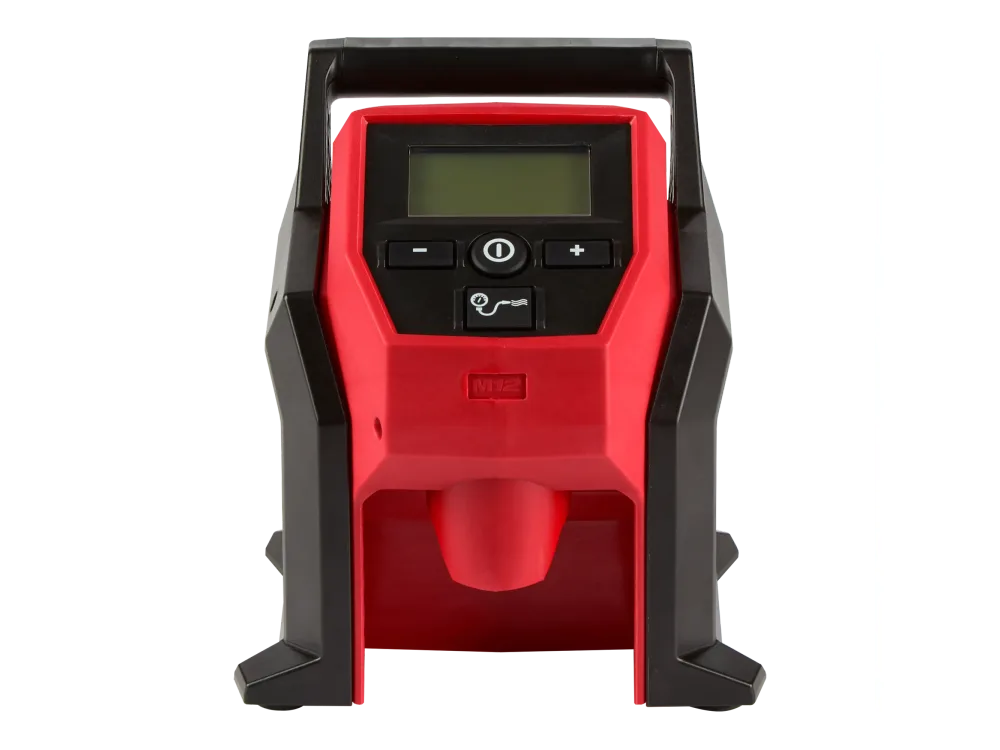
Milwaukee M12 Cordless Tire Inflator 2475-20Best premium cordless
120 PSI · Milwaukee M12 12V battery (bare tool)
Full review →Buying scenario · full-size trucks
A half-ton pickup is not harder to inflate because of its weight. It is harder because each tire holds more air, the placard pressures climb with the tow and payload packages, and a large share of owners have fitted an all-terrain larger than the truck shipped with. Towing adds trailer tires at 50–80 PSI on top of that.
Every score and figure below comes from our linked reviews — this page adds no new tests.
| Truck | Common factory sizes | Typical placard pressure | Off-road trim caveat |
|---|---|---|---|
| Ford F-150 | 265/70R17, 275/65R18, 275/55R20 | Around 35 PSI front and rear | Raptor ships on 35s and specifies its own pressures. |
| RAM 1500 | 275/65R18, 275/55R20 | Mid-30s PSI | Rebel and TRX run LT tires at higher pressures. |
| Chevrolet Silverado / GMC Sierra 1500 | 265/70R17, 275/60R20 | Mid-30s PSI | Trail Boss and AT4 run larger, heavier tires. |
The sticker in your driver’s door jamb is the authority for your trim, cab, bed and options. Tire-sidewall maximums are a different number and are not the pressure to run.
A 275/65R18 or a 33-inch all-terrain holds substantially more air than the 265/70R17 a work truck may have shipped on. Pressure barely moves; volume does. A pump that tops off a crossover in ninety seconds per tire takes several minutes per truck tire, and four of them in a row is where a short duty cycle shows up.
This is also why the maximum-PSI figure is close to useless here. A 150 PSI rating is a ceiling every candidate clears. What you feel is airflow, measured in CFM, and what can end the job early is heat.
Add a travel trailer or a loaded utility trailer and the job includes four more tires, usually specified between 50 and 80 PSI — higher than anything on the truck itself. Check the compressor’s duty cycle against six or eight tires, not four, and check whether its cord or hose reaches the trailer without moving the truck.
Trailer tires are also the ones most often neglected between trips, so a slow top-off of eight tires is a real use case, not a hypothetical one.
On some cab and bed configurations the nearest 12V socket is a long way from the rear tires. Measure the distance from where you would place the compressor to the furthest valve before you buy, and prefer battery clamps or a dual-voltage unit if the number is close.
If the truck is lifted and the tires are oversized, read the off-road hub as well: the same volume and heat logic governs, and the weights shift further toward speed and build quality.
A placard pressure is quoted for a load condition. Load the bed, or drop a trailer tongue onto the hitch, and the rear axle carries more — which is why the heavy-payload and max-tow packages specify a higher rear pressure than the base truck. That is not a reason to inflate to the sidewall maximum; it is a reason to read the sticker for your own configuration instead of copying a number from a forum thread.
If you tow regularly, budget for the trailer’s pressures too. Trailer tires are usually specified higher than the truck’s, and they are the set most often checked once a season rather than once a month, so a compressor that can finish eight tires at two different pressures is the honest requirement, not a luxury.
We have not run a fitment or pressure test on an F-150, a RAM 1500 or a Silverado. This page re-weights the sub-scores we published for the inflators we own — inflation speed and build quality first — for full-size-truck demands, and states the weights so you can disagree with them.
The five sub-scores in the table below are the ones published in every review. The weights are our editorial judgment about this job; the inputs are measured. Disagree with a weight and you can re-rank the list yourself from the raw sub-scores.
| Sub-score | Weight | Why it matters for Pickup trucks |
|---|---|---|
| Inflation speed | 35% | More air per tire turns a top-off into a long job. |
| Build quality | 30% | Longer runs at higher pressure are what kill cheap pumps. |
| Gauge accuracy | 15% | Truck and trailer pressures are high enough that a fixed error costs. |
| Value | 10% | It is a real tool, but it is not used weekly. |
| Portability | 10% | It lives in the truck; reach matters more than weight. |
120 PSI · Milwaukee M12 12V battery (bare tool)
Full review →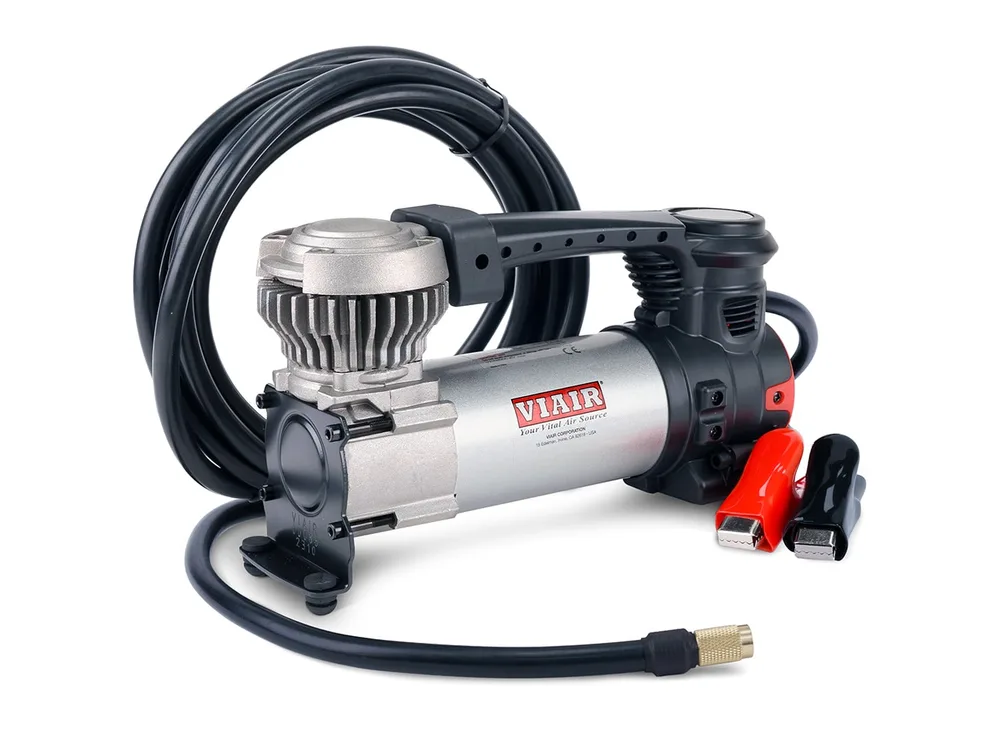
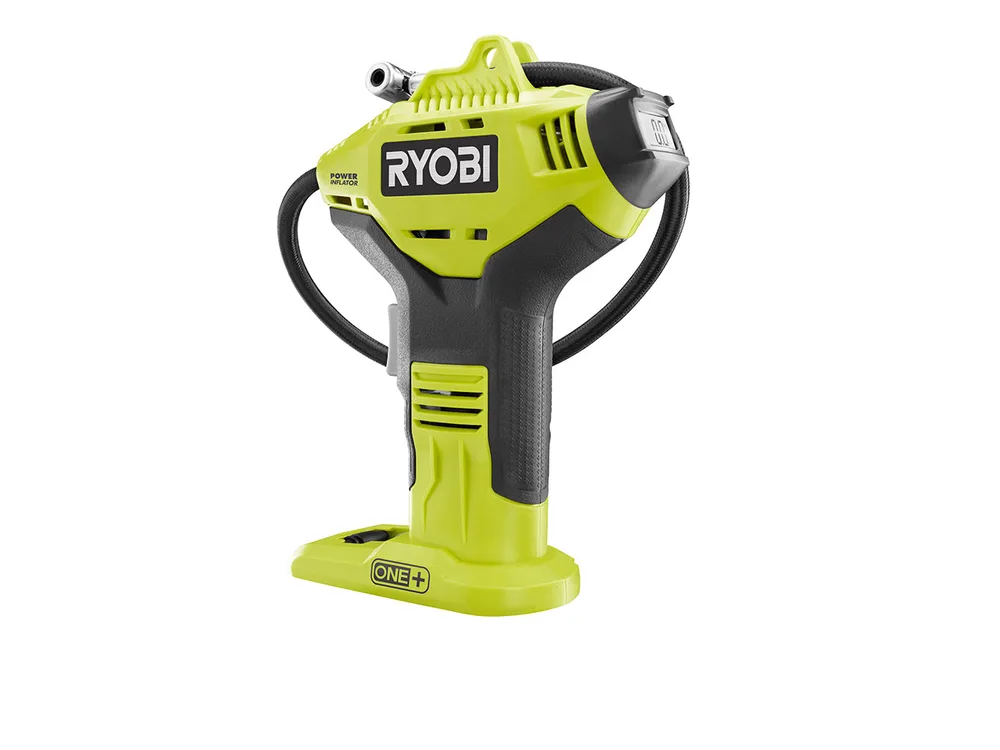
150 PSI · Ryobi 18V ONE+ battery (bare tool, no battery included)
Full review →150 PSI · 120V AC wall power and 12V DC cigarette plug
Full review →150 PSI · 12V DC cigarette plug, 10 ft cord
Full review →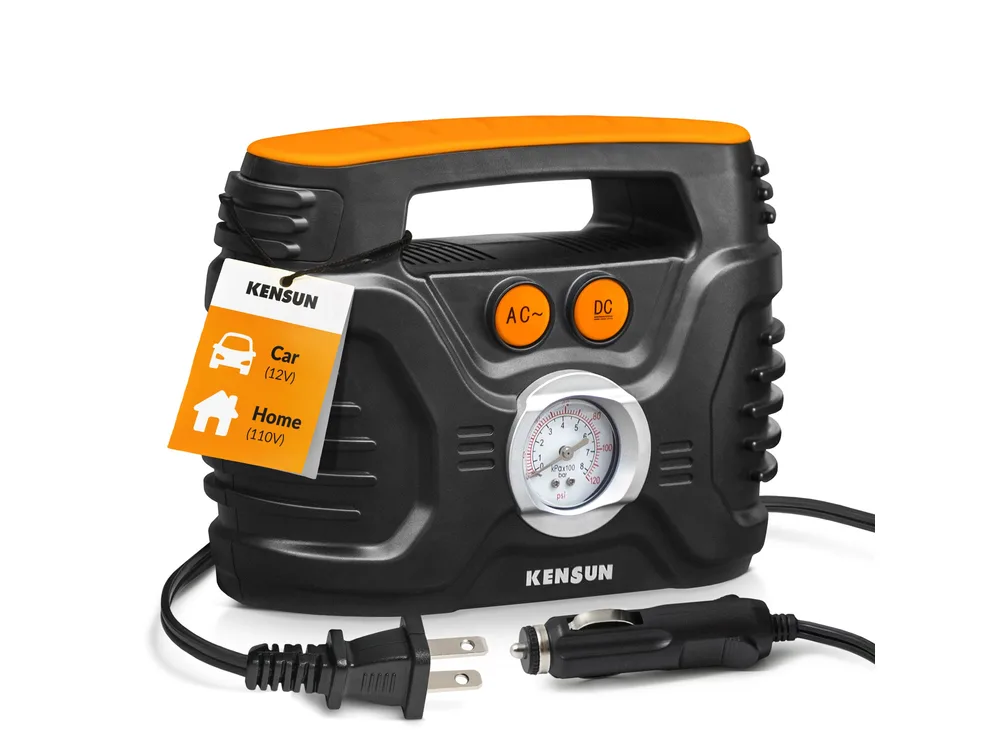
150 PSI · 120V AC wall power and 12V DC cigarette plug
Full review →120 PSI · 12V DC cigarette plug, 10 ft cord
Full review →| # | Product | Scenario score | Overall | Max pressure | Power | Price |
|---|---|---|---|---|---|---|
| 1 | Milwaukee M12 Cordless Tire Inflator 2475-20Best premium cordless | 4.65 | 4.6 | 120 PSI | Milwaukee M12 12V battery (bare tool) | $89.00 (bare tool) |
| 2 | VIAIR 88PBest overall | 4.64 | 4.7 | 120 PSI | 12V DC, alligator battery clamps, 9 ft cord | $64.99 |
| 3 | Ryobi P737D 18V ONE+ Cordless InflatorBest cordless | 4.41 | 4.5 | 150 PSI | Ryobi 18V ONE+ battery (bare tool, no battery included) | $39.97 (bare tool) |
| 4 | Avid Power AC/DC Portable Air CompressorReviewed · hard to find | 4.16 | 4.3 | 150 PSI | 120V AC wall power and 12V DC cigarette plug | Hard to find new (was ~$60) |
| 5 | AstroAI 12V DC Portable Air CompressorBest value | 4.14 | 4.4 | 150 PSI | 12V DC cigarette plug, 10 ft cord | $36.99 |
| 6 | Kensun AC/DC Portable Air Compressor | 3.95 | 4.0 | 150 PSI | 120V AC wall power and 12V DC cigarette plug | $49.99 |
| 7 | EPAuto 12V DC Portable Air CompressorBest budget | 3.73 | 4.1 | 120 PSI | 12V DC cigarette plug, 10 ft cord | $24.99 |
Milwaukee M12 Cordless Tire Inflator 2475-20 tops this ranking. The most precise and best-built portable inflator here. Its gauge and auto shut-off are flawless, and it tops up car tires in under two minutes — but a 2.0Ah pack runs out before the fourth tire.
Trade-offs: $89 bare tool, and you need M12 batteries and a charger on top; A 2.0Ah compact pack ran out during the fourth tire in our runtime test.
VIAIR 88P is close behind on this weighting. Where it wins: Fills a 225/65R17 tire from 28 to 36 PSI in about 1 minute 40 seconds. If that matters more to you than the winner’s strengths, it is the better buy for your use.
Read the full Milwaukee M12 Cordless Tire Inflator 2475-20 review →
Whatever the driver’s door-jamb sticker says for your truck’s configuration — commonly around 35 PSI for a half-ton on stock tires, higher with the max-tow or heavy-payload packages. It is not the maximum printed on the tire sidewall.
It will inflate them, given time and a duty cycle long enough to finish four. The question is how many minutes per tire and whether the unit thermally cuts out before the fourth. Prefer airflow and a published duty cycle over a high max-PSI claim.
Usually yes, if it is rated for the trailer’s pressure and can run long enough for eight tires. Battery clamps or a dual-voltage unit avoid depending on a current-limited 12V socket, and check hose reach to the trailer before committing.
We recommend one. Truck and trailer pressures sit high enough that a two-to-four PSI on-board gauge error is a meaningful under- or over-inflation. Use the inflator to get close and a separate gauge to set it.
Follow the placard for the loaded condition. Heavy-payload and max-tow packages commonly specify a higher rear pressure than the base truck, and the trailer tires add their own targets on top. The sidewall maximum is a ceiling, not a recommendation.