AEV EZ Tire Deflator Review: Off-Road Air-Down Tool
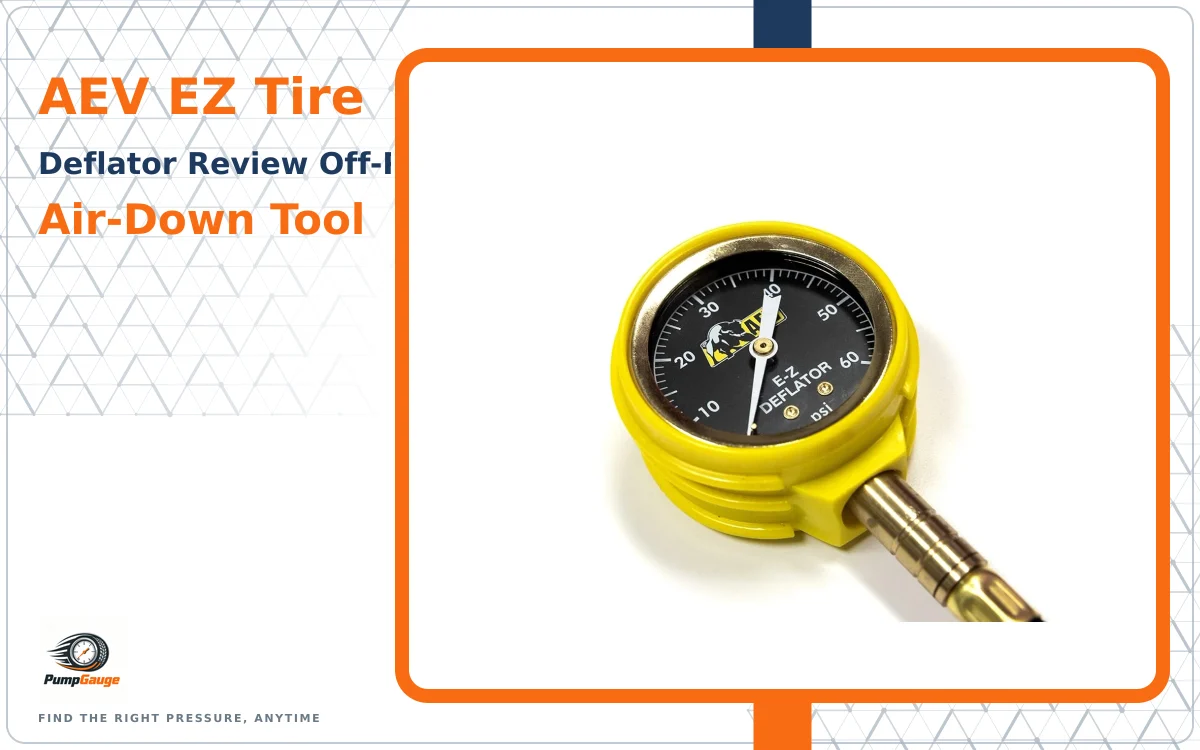
The AEV EZ Tire Deflator is a niche tool for airing down tires before hitting the trail. This spec-based review breaks down what the numbers actually mean for off-road use, and where the data runs out.
The spec sheet, translated
The AEV EZ Tire Deflator is a single-purpose tool: it screws onto a valve stem and bleeds air until you hit your target pressure. The listing gives a few key numbers, but they need translation into real-world meaning.
Here are the specs that actually shape the experience, with their official values and sources.
- **Pressure range: 0–60 PSI (listing).** Covers most off-road tires, from low-pressure rock crawling to street pressures. If you run above 60 PSI (some heavy-duty trucks), this won't read it.
- **Accuracy: ±2 PSI (listing).** That's typical for analog deflators. It means you might set 18 PSI and get 16–20 PSI. For trail use, that's usually fine, but for precise street tuning, it's loose.
- **Hose length: not specified (listing).** The product image shows a short hose, but without a number, you can't judge reach or ease of use on different wheel sizes.
- **Weight: not specified (listing).** Portability matters when you're already carrying recovery gear. No weight means you can't compare heft.
- **Price: $54 (listing).** Sits in the mid-range for deflators. Historical low is also $54, so no discount history to wait for.
- **Rating: 3.1 out of 5 stars from 4 ratings (listing).** A small sample, but a signal about perceived value.
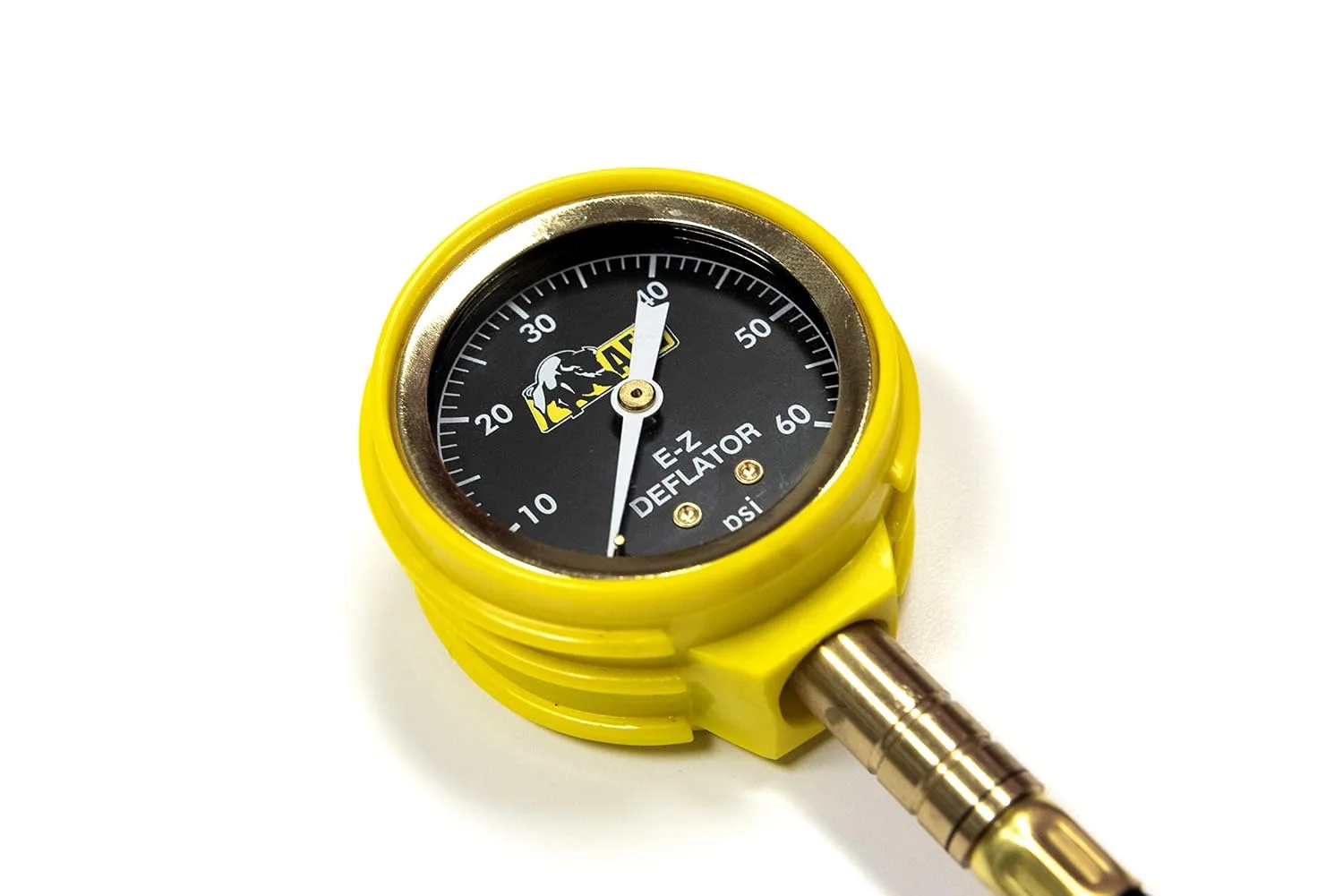
AEV EZ Tire Deflator & Storage Pouch
Retailer links are being wired. Affiliate programs are approved for PumpGauge, but this product does not yet have a tracked ASIN or destination URL in our catalog. Scores and measured data do not depend on those links.
Highlights
- Trail tire deflator
- Manual trail control
- On-tool gauge readout
- About $54 list
Best for
- Airing down one tire at a time at the trailhead
- Overlanders who already carry onboard or portable air
- Drivers OK watching the gauge while air dumps
Strengths
- Purpose-built for controlled air-down — faster than a bleed button on a check gauge
- On-tool gauge keeps PSI visible while you dump or fill
- AEV kit sits in the overland / recovery gear class rather than a glovebox pencil
- Fewer electronics to fail in dust and weather than a full digital manifold
Watch-outs · not ideal when
- Needs a plan to air back up — this is not a compressor
- One-tire tools are slower on a four-corner air-down
- Easy to overshoot target PSI if you walk away from a wide-open dump
- Trail abuse (sand, rocks, tossed in a drawer) wears seals and QDs over time
Which numbers decide the purchase
Not all specs are equal. For a tire deflator, the priority order is: accuracy, pressure range, build quality (inferred from price and brand), then convenience features like hose length and storage.
**Accuracy first.** If the gauge is off by 2 PSI, you might as well guess. Off-road, a 2 PSI difference can affect traction and tire wear. The ±2 PSI spec is the most important number here.
**Pressure range second.** 0–60 PSI covers most 4x4 tires, but if you tow a heavy trailer or run commercial tires, you'll need higher. This tool is for passenger and light truck tires.
**Build quality third.** AEV is known for durable off-road gear, but the single 2-star review calls it 'cheap for the price' compared to ARB. That suggests the materials might not match the brand's usual standard.
**Convenience last.** Hose length and storage pouch are nice, but they don't affect core function. The pouch is included, which helps keep things organized.
So when you look at the $54 price, ask: does the accuracy and range justify it? If you need better than ±2 PSI, look elsewhere.
- Priority 1: Accuracy (±2 PSI) — directly affects tire pressure.
- Priority 2: Pressure range (0–60 PSI) — must cover your tire needs.
- Priority 3: Build quality — inferred from brand and reviews.
- Priority 4: Convenience — hose, pouch, ease of use.
Numbers that mislead
Two specs on this listing can trip you up if you read them without context.
**1. The 0–60 PSI range.** It sounds universal, but many off-roaders air down to single digits for sand or rock. The gauge might read 0–60, but accuracy at the low end is often worse. Without a specified low-pressure accuracy, you can't trust it below 10 PSI.
**2. The ±2 PSI accuracy.** This is a maximum error, not a guarantee. It might be ±2 at 30 PSI but ±4 at 5 PSI. Also, analog gauges can drift over time. The spec doesn't tell you how it performs after a year of bouncing in a truck bed.
**3. The price.** At $54, it's not cheap, but the single review says it feels cheap compared to ARB. Price alone doesn't indicate quality; the review suggests the materials might not match the cost.
**4. The star rating.** A 3.1-star average from 4 ratings is a small sample. It's a warning, not a verdict. You need more data to judge overall satisfaction.
- 0–60 PSI range doesn't guarantee low-pressure accuracy.
- ±2 PSI is a max error, not consistent across the range.
- $54 price doesn't automatically mean premium build.
- Small sample star rating is anecdotal, not statistical.
What the data does not say
The listing and the one review leave critical gaps. You won't find answers to these from the manufacturer or the current owner feedback.
**Hose length and fitting compatibility.** Without a hose length, you can't tell if it reaches comfortably on a 35-inch tire. The valve stem connection type isn't specified—does it fit standard Schrader valves? Probably, but not confirmed.
**Durability and long-term accuracy.** No data on how the gauge holds calibration over time. The review hints at cheap feel, but doesn't say if it breaks or drifts.
**Ease of use.** How fast does it deflate? Is the bleed valve smooth? The review doesn't cover it, and the listing doesn't either.
**Customer support and warranty.** AEV's warranty terms aren't mentioned. For a $54 tool, that matters.
These gaps mean you're buying with incomplete information. If any of these are deal-breakers, look for a product with more published specs or more reviews.
- Hose length and valve compatibility unknown.
- No durability or calibration drift data.
- Deflation speed and valve feel not described.
- Warranty and support terms not stated.
Spec-based verdict
Based on the numbers, the AEV EZ Tire Deflator is a narrow fit. It's for off-roaders who need a simple, mid-range deflator and don't mind a single negative review.
**Buy if:** you need a 0–60 PSI deflator for occasional trail use, you're okay with ±2 PSI accuracy, and you trust AEV's brand enough to overlook one bad review.
**Skip if:** you demand better than ±2 PSI accuracy, you air down below 10 PSI regularly, or you want a proven track record. The single 2-star review calling it 'cheap for the price' compared to ARB is a red flag.
At $54 with no discount history, it's not a value play. If you need reliability, spend more on ARB or find a deflator with more reviews and clearer specs.
- Buy if: occasional off-road use, 0–60 PSI range fits, okay with ±2 PSI.
- Skip if: need high accuracy, low-pressure precision, or proven durability.
- Consider ARB if the review's comparison resonates.
What owners report
Themes below are paraphrased from Amazon owner reviews on file in Hub — not independent lab tests.
- AEV EZ Tire Deflator & Storage Pouch: hussam mansour 2 out of 5 starsCheap for the price Reviewed in the United States on November 22, 2021 Verified Purchase Comparing with the ARB … the ARB is the way to go
Method and sources
This guide is built from product data and list prices pulled from Affiliate Hub at build time, together with owner feedback we summarize on the cards. It is catalog-backed buying help, not a lab ranking of every model.
Read how we test for the protocol behind any measured figures we still cite in Guides & Tips.