
Best Tire Pressure Gauges: Dial, Digital and Pencil
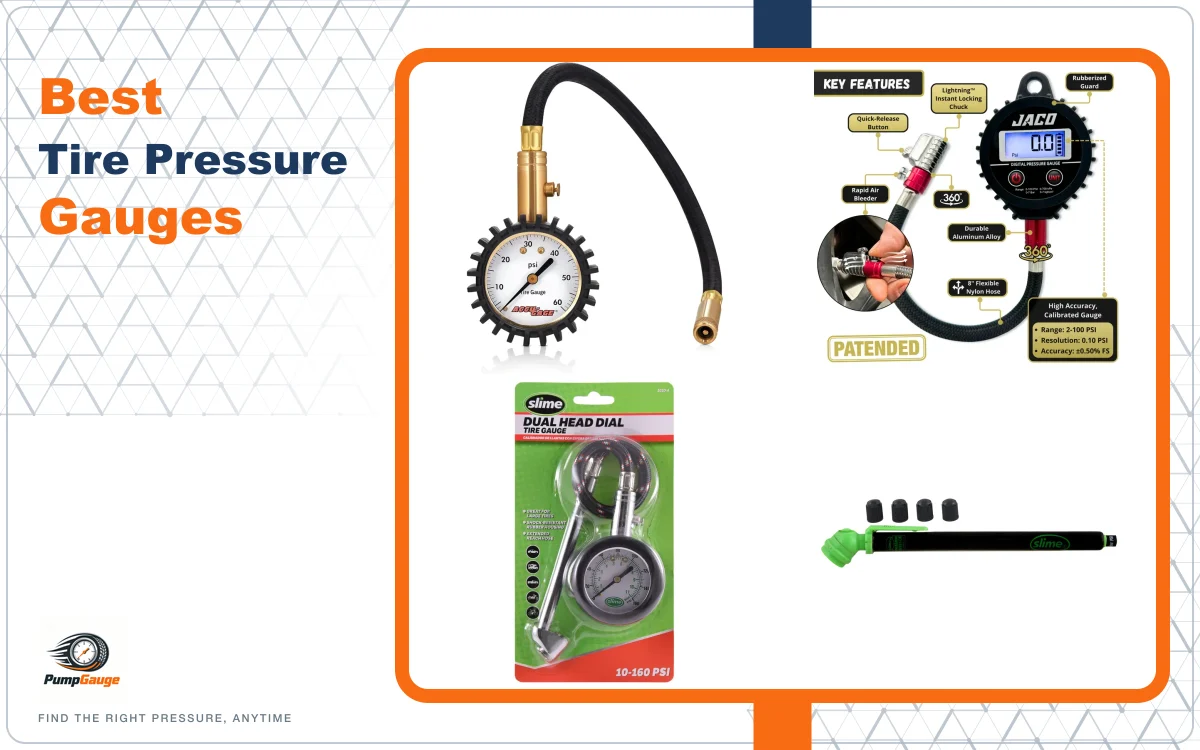
A gauge is the cheapest tool in the garage and the one most likely to be wrong. Accuracy, range and chuck seal matter more than backlight gimmicks.
Picks from Hub
These SKUs are live in Hub under pressure-gauges. Prefer a bleed-valve chuck if you air down on the trail; prefer a recalibratable dial if you want something you can trust for years.
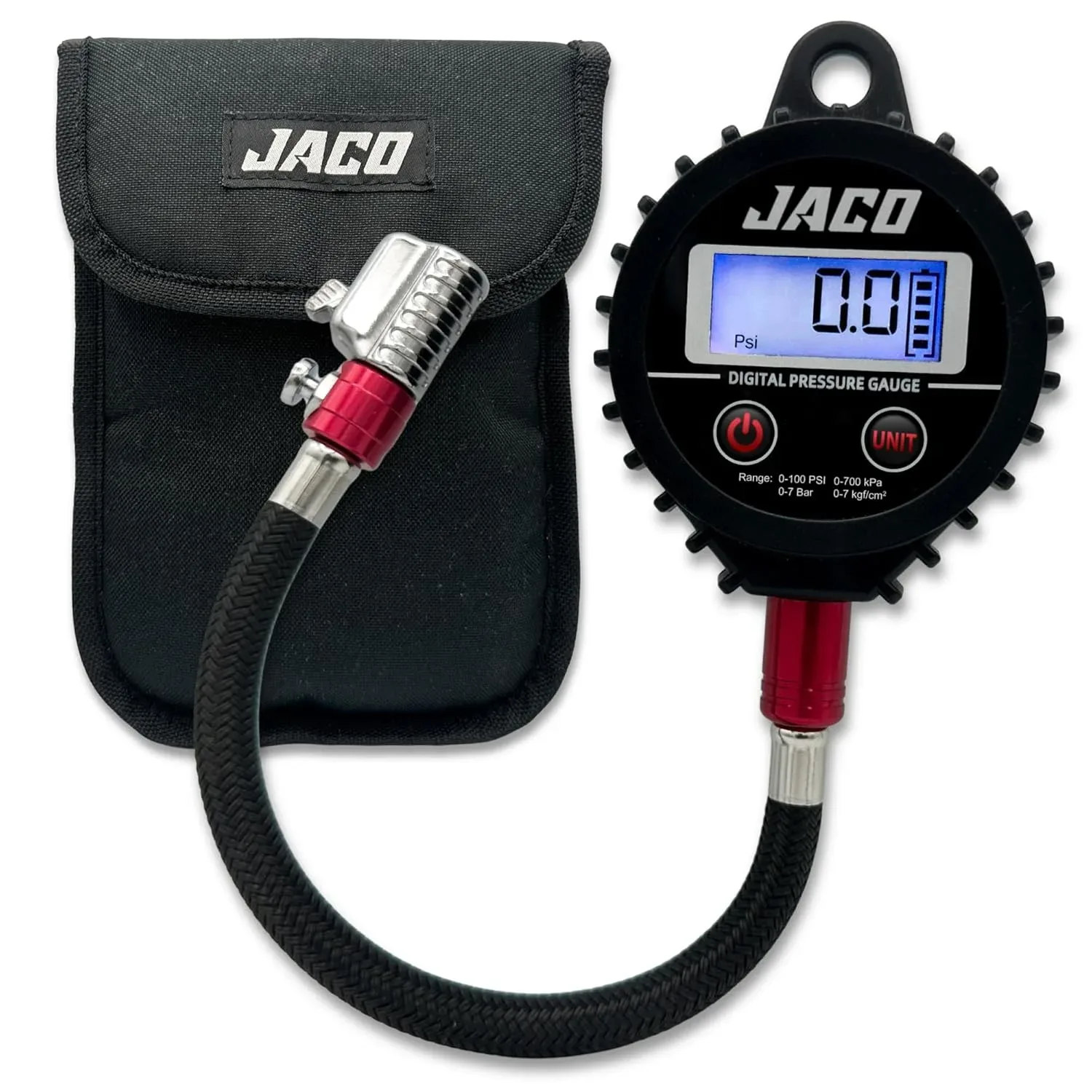
JACO ElitePro-X Digital Tire Pressure Gauge with Lightning Chuck - 100 PSI
Highlights
- Digital ElitePro-X
- Lightning chuck
- 100 PSI
- Backlit display
Best for
- Drivers who want push-on Lightning chuck with zero screw-on fight
- Night checks with a backlit digital face
- Owners who will cross-check dashboard TPMS vs a hand gauge
Strengths
- Lightning chuck seats fast and releases with little air loss vs screw-ons
- Instant digital reading with a backlight that works day or night
- Reaches tight valve wells better than bulky screw chucks
- JACO support replacements show up repeatedly in owner notes
Watch-outs · not ideal when
- Some report ~2 PSI offset vs truck TPMS — always verify your baseline
- Premium price vs a basic dial or pencil
- Learning curve for the chuck motion if you expect a screw-on
- Digital electronics still dislike glovebox heat/abuse long-term
Owner voices
Short takes from public retail reviews — paraphrased or translated when long or non-English; meaning kept close to the original.
“Quick, accurate, and the road feel on my German cars finally matched the number on the gauge.”
“Had a bad first unit — JACO overnighted a replacement. Chuck is instant and the backlight is excellent.”
“Reads about 2 PSI under my Tacoma TPMS. Easy to use; I just note the offset.”
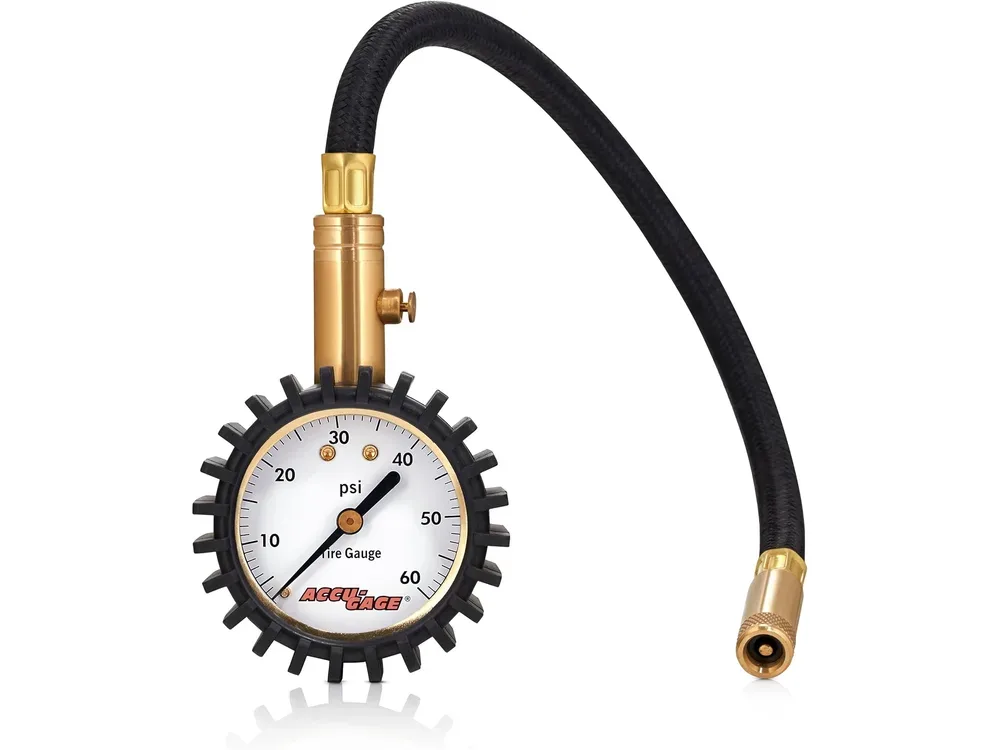
Milton Accu-Gage RH60X Professional Tire Pressure Gauge
Highlights
- Hose Accu-Gage
- 60 PSI
- Bleed / reset valve
- Rubber boot
Best for
- Car owners who want hose reach and a readable face
- Drivers who bleed overfills without removing the chuck
- Garage drawers where a rubber-booted dial gets knocked around
Strengths
- Hose puts the dial in your hand instead of twisted at the valve
- Chuck seals and pops off cleanly with little air loss for many owners
- Bleed / reset valve helps dial down from overfills to placard PSI
- Rubber boot and rugged feel match the “shop Accu-Gage” reputation
Watch-outs · not ideal when
- Pricier than a basic pencil for the same car PSI job
- Bleed valve can fail after years — verify before trusting it alone
- 60 PSI face is wrong for many light-truck / RV high fills
- Still cross-check after drops; no digital hold / backlight
Owner voices
Short takes from public retail reviews — paraphrased or translated when long or non-English; meaning kept close to the original.
“Hose readout and a proper bleed valve — finally easy to bring a 40 PSI fill down to my 32 placard.”
“Straight chuck, release button, and rubber cover — simple and tough for monthly car checks.”
“Loved it for years until the bleed valve quit. Great while it worked; now I treat that part as wear.”
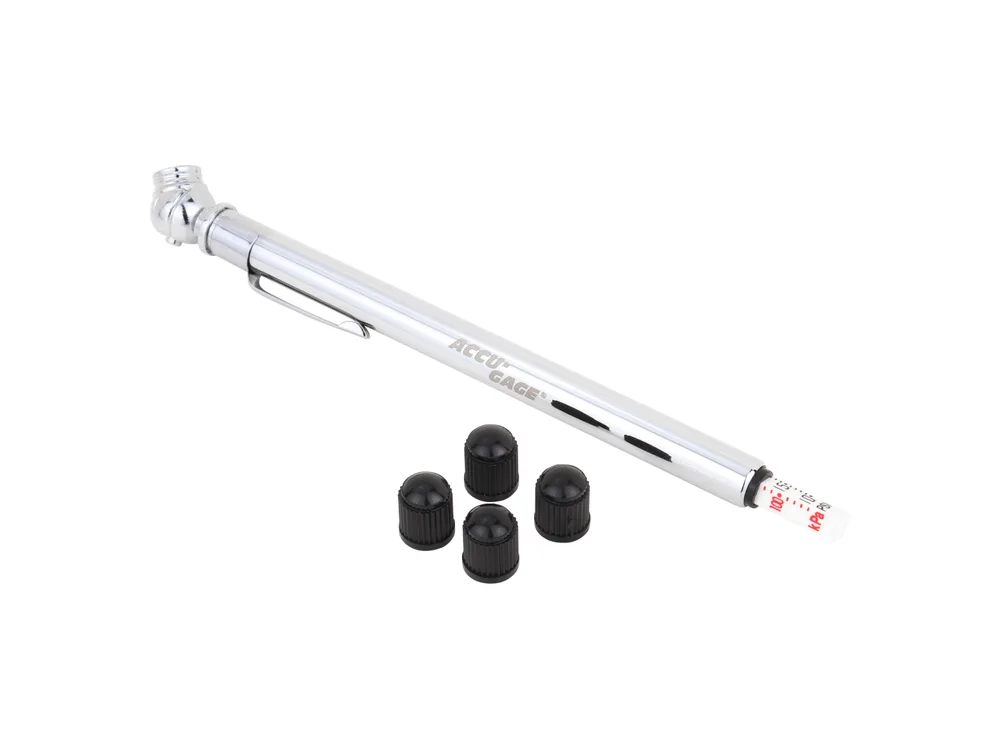
Milton High Pressure 10-75 PSI Tire Pencil Gauge
Highlights
- Pencil / stick gauge
- 10–75 PSI
- Metal body
- Made for glovebox abuse
Best for
- Glovebox backup when you refuse battery gauges
- Quick cold checks on cars and light trucks
- Owners who already trust Milton shop gear
Strengths
- No batteries to die or leak in a hot glovebox
- Metal pencil body survives drops better than cheap plastic dials
- Owners report stable readings vs digital units that drift or die
- Compact and USA-made feel that shop users already recognize
Watch-outs · not ideal when
- 2-PSI increments make odd placard targets (33 / 35) a visual estimate
- Not a bleed-while-you-watch tool — add/bleed air separately
- Easy to lose the protective sleeve / end pieces
- Scale tops out at 75 PSI — skip for many commercial / overload fills
Owner voices
Short takes from public retail reviews — paraphrased or translated when long or non-English; meaning kept close to the original.
“No batteries, no dial glass to crack — this is the glovebox gauge after years of Milton shop tools.”
“Solid metal stick gauge. Stay away from the cheap plastic ones if you actually care about the number.”
“Works well — just know it marks even PSI numbers, so 33 and 35 are between the lines.”
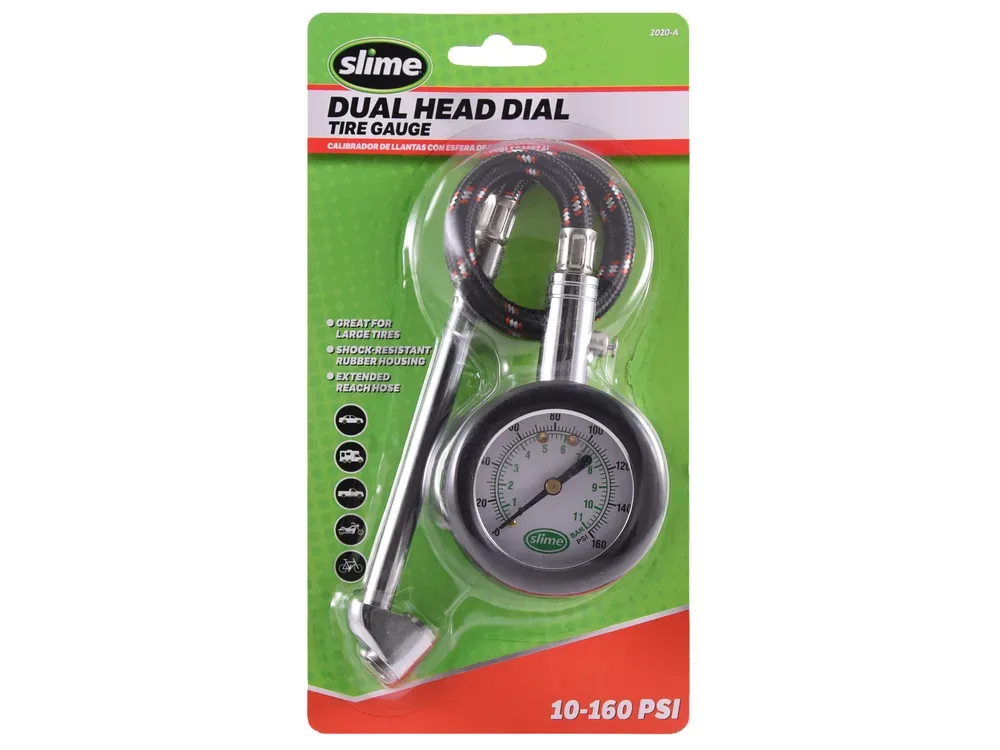
Slime Dual Head Dial Tire Gauge (10-160 psi)
Highlights
- Dial gauge
- 10–160 PSI
- Dual head (standard + dual wheels)
- Bleed / hold release
Best for
- RV and dually owners who need the reverse head
- Drivers who want bleed-down without removing the chuck
- Glovebox analog when battery gauges die
Strengths
- Dual chuck reaches inner dual tires without fighting the hose as hard
- Needle holds the reading until you hit the release — easier than reading on-stem
- Bleed valve lets you drop overfills while watching the dial
- Wide 10–160 PSI scale covers cars through many light-truck / RV fills
Watch-outs · not ideal when
- Some units arrive with a strong chemical odor that fades after days
- Hose bend and tight fittings can fight positioning on tight stems
- Still calibrate against a second gauge — dials drift if dropped
- Bulkier than a pencil gauge for everyday car-only use
Owner voices
Short takes from public retail reviews — paraphrased or translated when long or non-English; meaning kept close to the original.
“Solid seal on the stem, and the hold/bleed release means I can read the dial after I pull it off — handy on duals.”
“Great for the inner dual tire. Accuracy is fine once I check it against my other gauges.”
“Bleed without removing the gauge makes topping down to placard PSI quick. Reads close to my TPMS.”
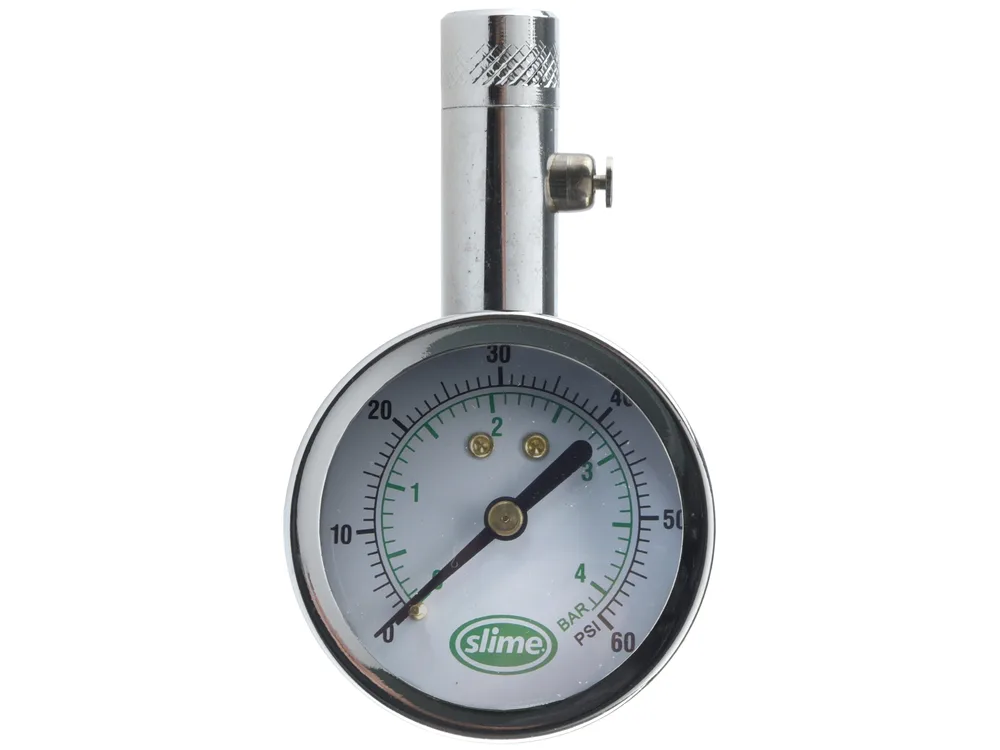
Slime Chrome Dial Tire Gauge (5-60 psi)
Highlights
- Chrome dial
- 5–60 PSI
- Large face
- Car / light-truck range
Best for
- Monthly car and crossover pressure checks
- Drivers ditching hard-to-read 2-PSI pencil marks
- Households that want a cheap second gauge to cross-check
Strengths
- Large dial is easier to read than pocket pencils for many owners
- Car-friendly 5–60 PSI scale keeps everyday pressures in the middle of the face
- Affordable enough to keep as a second reference gauge
- Helps catch slow leaks TPMS may miss when all four tires drop together
Watch-outs · not ideal when
- Not for high-pressure truck / commercial fills above ~60 PSI
- Dial gauges need a zero-return check after drops — needle stuck off zero lies
- Chuck seal quality varies; poor seal wastes air and confuses readings
- No hose — awkward on some valve orientations
Owner voices
Short takes from public retail reviews — paraphrased or translated when long or non-English; meaning kept close to the original.
“Learned the hard way with another dial that wouldn’t return to zero — I cross-check now, and this Slime has been fine so far.”
“Big dial, easy grip, and accurate enough that my TPMS light finally made sense.”
“Bigger face than my old 2-PSI-per-mark pencil dial — much easier to hit placard numbers.”
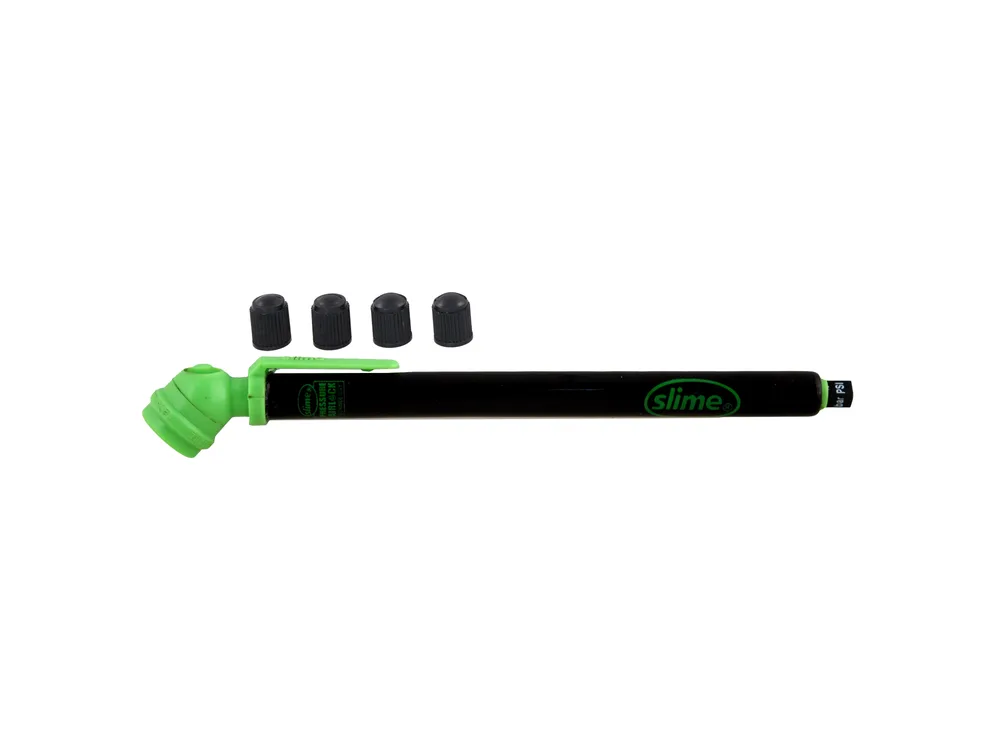
Slime Airlock Pencil Tire Gauge (10-120 psi)
Highlights
- Pencil / stick gauge
- Bleed / hold friendly
- Multi-PSI scale in product name
- About $10.99 list
Best for
- Monthly cold placard checks on daily drivers
- Glovebox analog when you refuse dead batteries
- Bleed-down to placard without removing the chuck every time
Strengths
- No batteries and a slim body that survives glovebox abuse
- Bleed / hold features turn “check” into “set” without walking for a compressor
- Cheaper and more accurate day-to-day than trusting TPMS alone when all four tires drop together
- Light enough to keep permanently in the car
Watch-outs · not ideal when
- Coarse stick marks make odd placard targets (33 / 35) a visual estimate
- Not a compressor — you still need a way to add air
- Low-end car dials top out too early for many light-truck / overloaded fills
- Always cross-check a new gauge against a known-good one before trusting it alone
Dial vs digital
- Dial: no batteries, easy to read in sun, great with a bleed button.
- Digital: precise resolution, needs batteries, can wash out in glare.
- Pencil: glovebox backup only — fine for a quick check, not for setting pressure carefully.
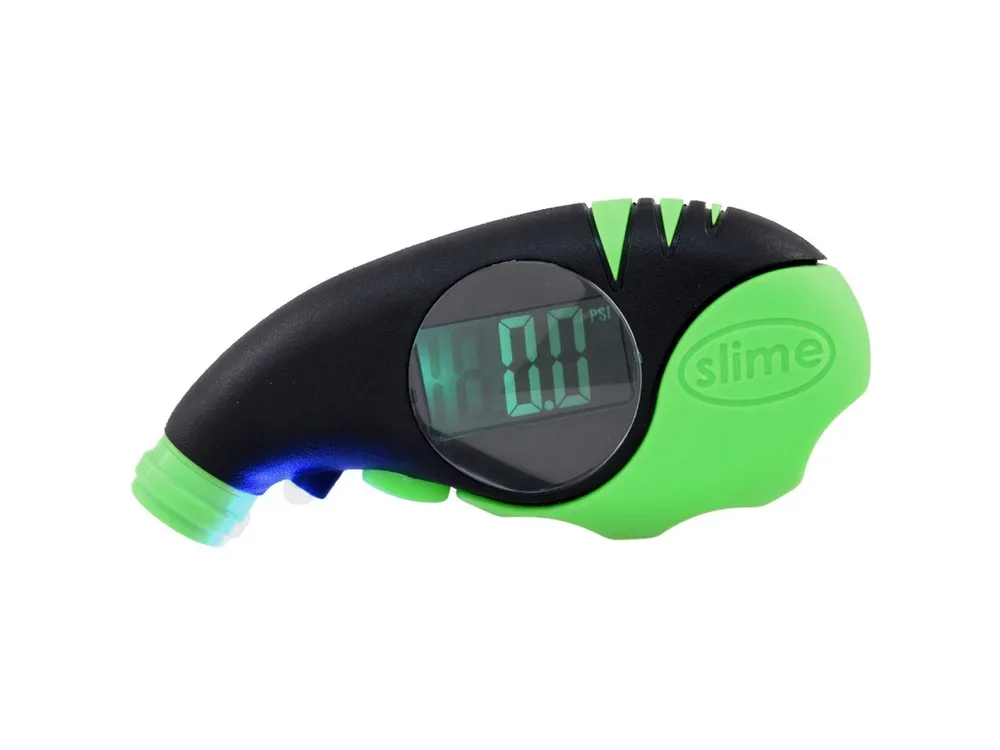
Product photographs from our image library — manufacturer images, not our own photography.
Frequently asked
Dial or digital — which is better?
Dial gauges need no batteries, read well in sunlight and suit bleed-valve workflows. Digital gauges give finer resolution but need batteries and can wash out in glare.
What accuracy should I look for?
Look for a stated tolerance such as ±1 PSI or ±2% of reading, and prefer a gauge you can recalibrate if you want it to stay trustworthy for years.
Do I need a bleed valve?
If you air down, yes. A bleed valve lets you release pressure while keeping the reading, which is the difference between setting an exact PSI and settling for close enough.
Method and sources
This guide is built from product data and list prices pulled from Affiliate Hub at build time, together with the reviews and measured results we publish. It is catalog-backed buying help, not a lab ranking of every model.
Read how we test for the protocol behind our figures, or see the measured results table for the numbers in one place.