Best Budget Tire Inflator Under $50
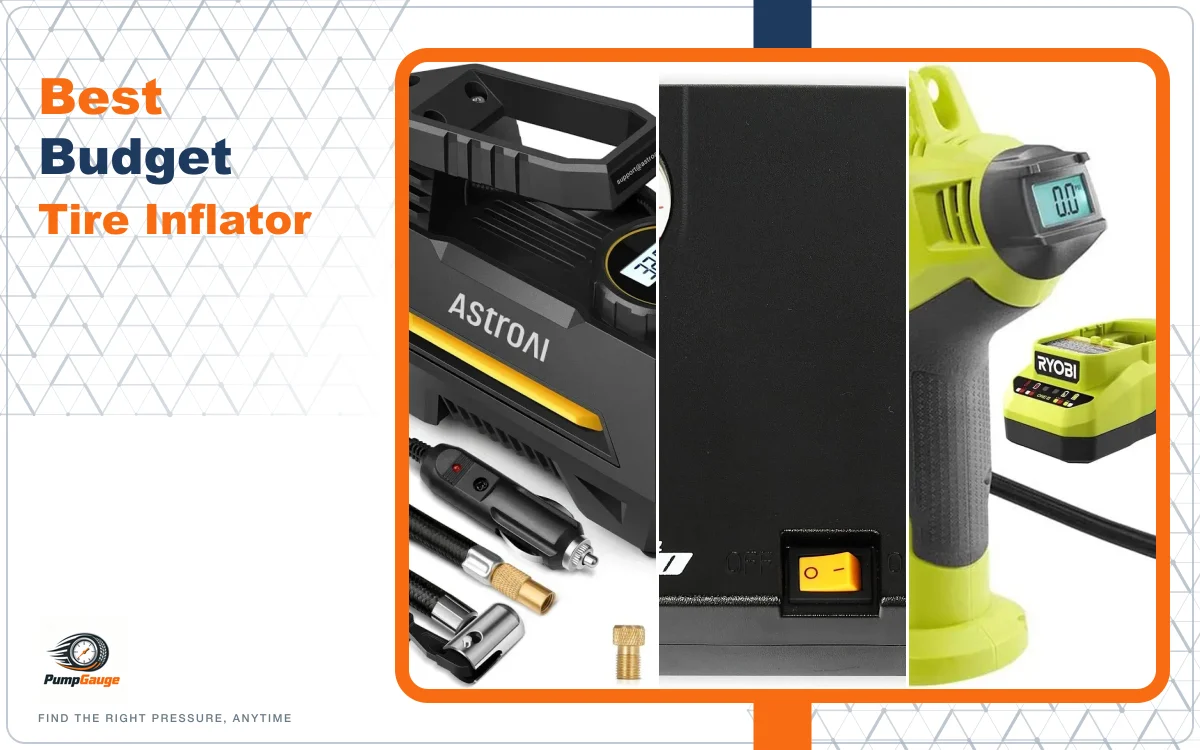
“Cheapest” and “good enough for roadside” are not the same search. Under $50 you can get a usable 12V pump — just do not expect truck-duty CFM or a laboratory-grade gauge.
What under $50 actually buys
Expect cigarette-lighter power, plastic housings and a gauge that is fine for ± a couple PSI if you verify it. Skip these for airing up 35s after a trail run.
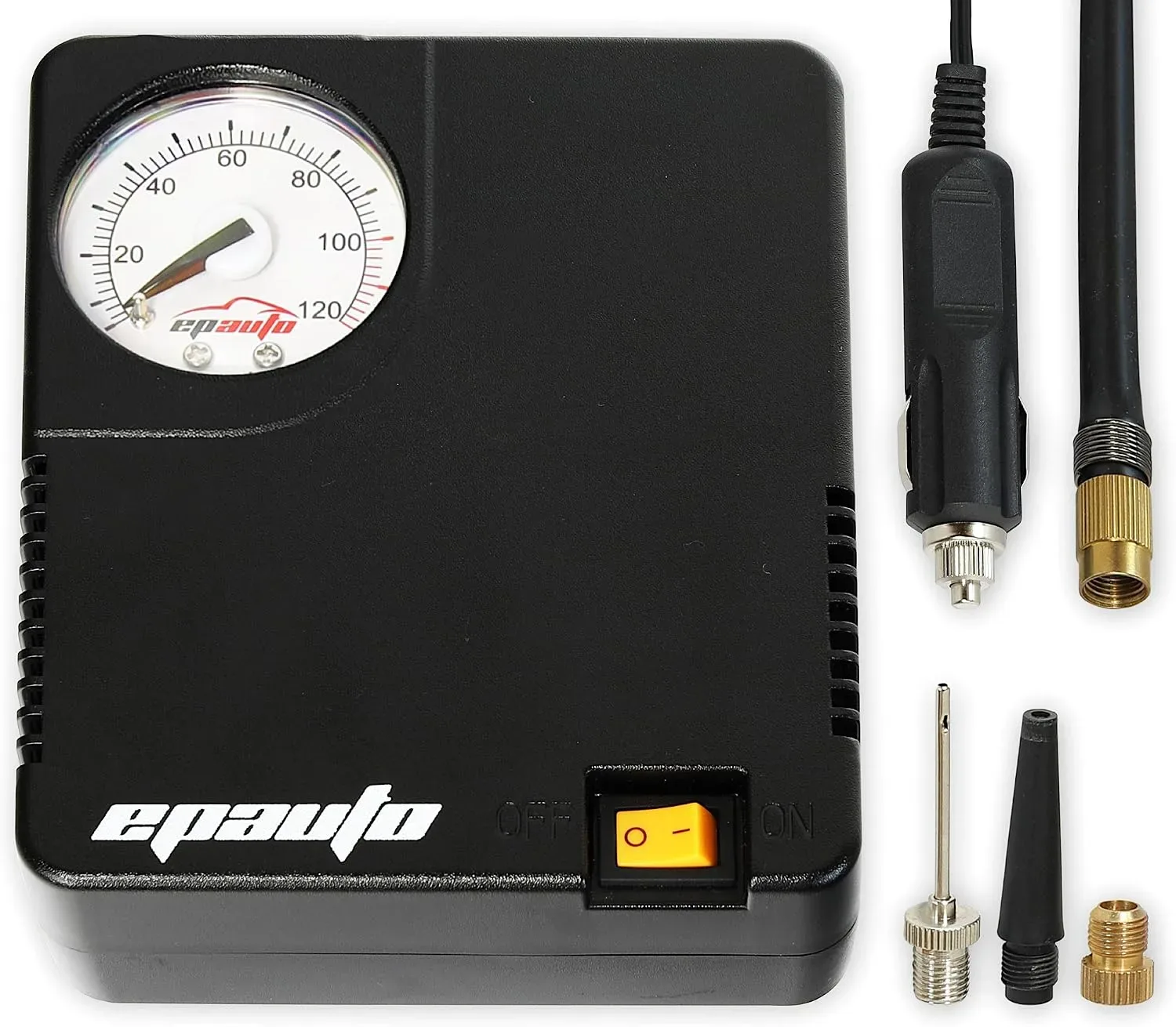
EPAuto 12V DC Portable Air Compressor
Highlights
- Best budget
- Budget 12V
- Power source: 12V DC cigarette plug, 10 ft cord
- Maximum pressure: 120 PSI
- Air flow: 1.0 CFM at 0 PSI
Best for
- Spare-tire-kit emergency top-ups on a budget
- Drivers who will always verify with a separate gauge
- Small storage spots (wheel well / under seat)
Strengths
- Costs about half of what the mid-range inflators do
- Metal chuck and brass valve fitting hold up better than expected
- Ran 60 inflation runs with fill times up by only about 15 seconds
- Small enough to store inside a spare-wheel well
Watch-outs · not ideal when
- Gauge read 3 to 4 PSI high, the worst accuracy in our test group
- 4 minutes 10 seconds for a routine 8 PSI top-up
- Very loud and noticeably buzzy in the hand
- Short 10 ft cord limits reach on longer vehicles
Owner voices
Short takes from public retail reviews — paraphrased or translated when long or non-English; meaning kept close to the original.
“Cheap enough to leave in the car year-round. Slow and loud, but it got me home.”
“Don’t trust the dial — mine reads several PSI high. Use a real tire gauge.”
“Surprisingly durable metal chuck for the price. Cord is short on longer vehicles.”
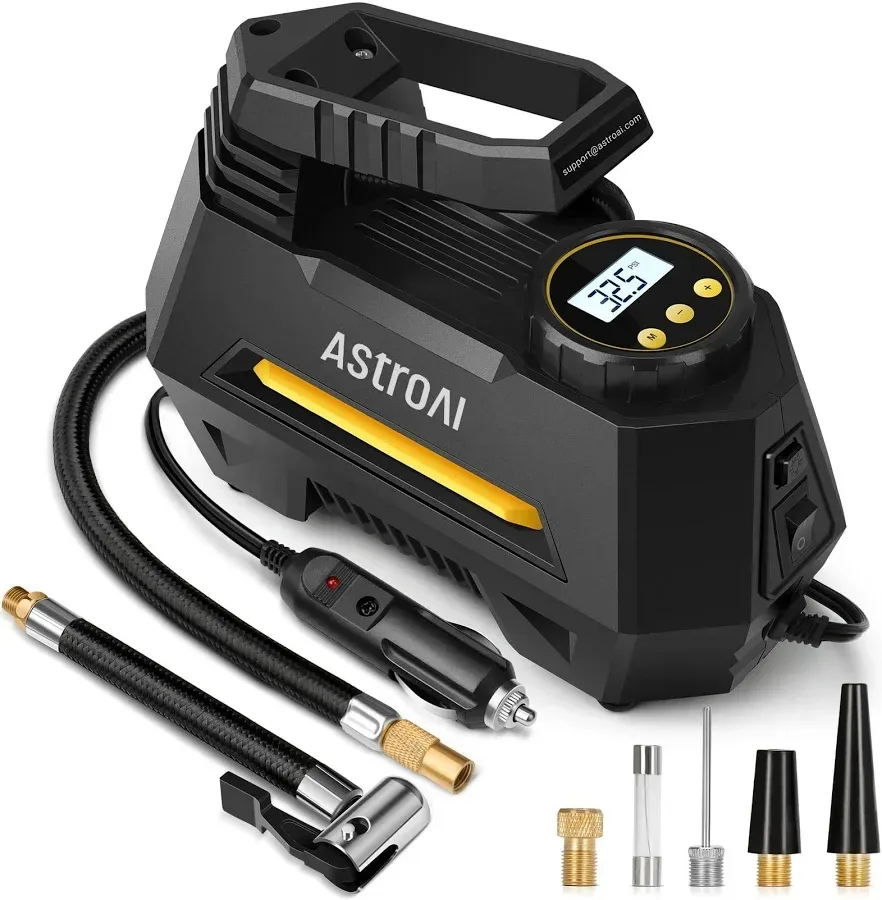
AstroAI 12V DC Portable Air Compressor
Highlights
- Best value
- 12V socket
- Power source: 12V DC cigarette plug, 10 ft cord
- Maximum pressure: 150 PSI
- Air flow: 1.2 CFM at 0 PSI
Best for
- Everyday drivers who want preset + auto shut-off
- Glovebox / trunk kit without opening the hood
- Night top-ups with a built-in light
Strengths
- Digital gauge with preset target pressure and automatic shut-off
- Plugs into a 12V socket — no hood opening, no battery clamps
- Indicated within 1 PSI of our calibrated tester
- Bright built-in LED makes night-time top-ups far easier
Watch-outs · not ideal when
- About 70% slower than the VIAIR 88P on the same tire
- Plastic housing and a short hose that stiffens in freezing weather
- 10-minute duty cycle means one tire, then a cooldown
- 12V plug can blow a 15A accessory fuse on some older cars
Owner voices
Short takes from public retail reviews — paraphrased or translated when long or non-English; meaning kept close to the original.
“Set the PSI, walk away, it stops on its own. That alone is worth it for me.”
“Not as fast as a clamp-on compressor, but the cigarette plug is so much easier.”
“Blew a 15A accessory fuse on my older truck once — check your socket rating first.”
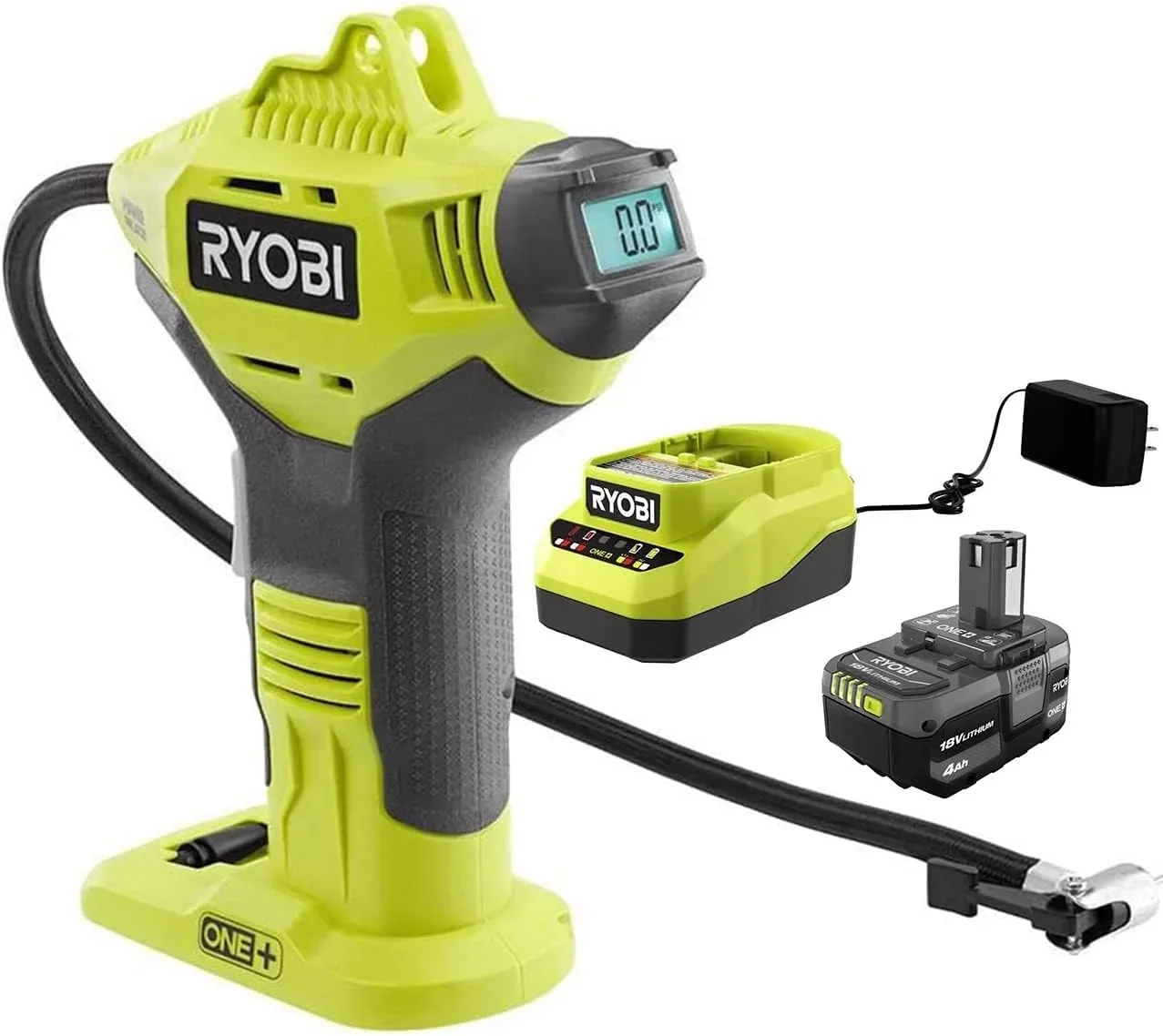
Ryobi P737D 18V ONE+ Cordless Inflator
Highlights
- Best cordless
- Cordless 18V
- Power source: Ryobi 18V ONE+ battery (bare tool, no battery included)
- Maximum pressure: 150 PSI
- Air flow: 0.57 CFM at 0 PSI
Best for
- Owners already on Ryobi ONE+ batteries
- Inflating wherever the car is parked — no cord hunt
- Cold-weather top-ups when socket pumps struggle
Strengths
- No cord at all — inflate anywhere the car is parked
- Digital gauge with preset auto shut-off, accurate to within 0.5 PSI
- Four tires from 28 to 36 PSI on a single 4.0Ah battery with charge to spare
- Cold-weather runtime held up far better than the 12V corded units we tested
Watch-outs · not ideal when
- Sold as a bare tool — battery and charger cost extra if you are not already in the ONE+ system
- Slower than a battery-clamp 12V compressor on a completely flat tire
- Bulkier than a 12V inflator and heavier in the hand at 3.6 lb with a 4.0Ah pack
- The 1/4 in hose has no standard quick-release, so aftermarket accessories need an adapter
Owner voices
Short takes from public retail reviews — paraphrased or translated when long or non-English; meaning kept close to the original.
“No cord mess. I top up all four tires on a 4.0Ah pack with charge left.”
“Bare tool price looks cheap until you add a battery — fine if you already own ONE+.”
“Digital shut-off is accurate. Flat-to-full on a big tire is still slower than a clamp compressor.”
When to spend more
- Frequent truck / SUV top-ups → look at VIAIR-class 12V kits.
- No outlet in the garage → cordless platform pump.
- You already own a good gauge → prioritize flow rate over fancy screens.
Frequently asked
What do I actually get under $50?
Cigarette-lighter power, a plastic housing and an onboard gauge that is usually fine to within a couple of PSI once you verify it with a separate gauge.
Are budget inflators good for off-road tires?
Not for airing up large tires after a trail run. Their airflow and duty cycle suit occasional passenger-car top-ups, not repeated fills from very low pressure.
When should I spend more?
If you top up a truck or SUV often, want cordless convenience, or already own a good gauge and care about fill speed, step up to a VIAIR-class 12V kit or a battery-platform pump.
Method and sources
This guide is built from product data and list prices pulled from Affiliate Hub at build time, together with the reviews and measured results we publish. It is catalog-backed buying help, not a lab ranking of every model.
Read how we test for the protocol behind our figures, or see the measured results table for the numbers in one place.