
Milton S-920 Pencil Gauge Review: 10–70 PSI, No Batteries
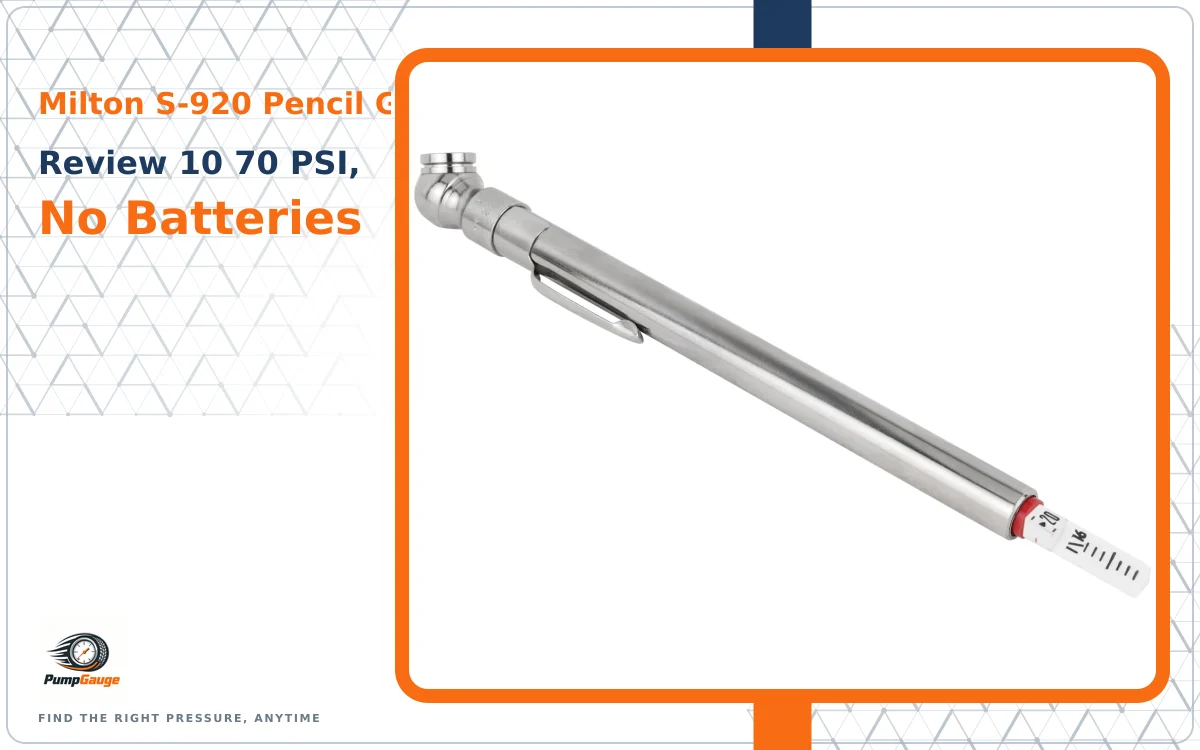
Milton's S-920 pencil gauge covers 10–70 PSI in 2-lb increments, includes a built-in deflator and tread depth gauge, and holds a 4.6 rating across 1,804 owner ratings.
Milton S-920 Pencil Gauge: What You Get
The Milton High Pressure 10-75 PSI Tire Pencil Gauge (model S-920) is a mechanical pencil-style gauge listed at $17.91, which is also its historical low. It reads PSI from 10 to 70 in 2-lb increments and kPa from 60 to 500 in 10-kPa increments, and it includes a built-in deflator valve plus a tire tread depth gauge marked in 1/16-inch increments.
It carries a 4.6 rating across 1,804 owner ratings. The body is brass and nylon, it uses a Schrader thread, and it weighs 1.28 ounces at 7 x 2 x 1 inches. There are no batteries, so nothing dies or leaks in a hot glovebox, and there is no dial to break if it gets dropped.
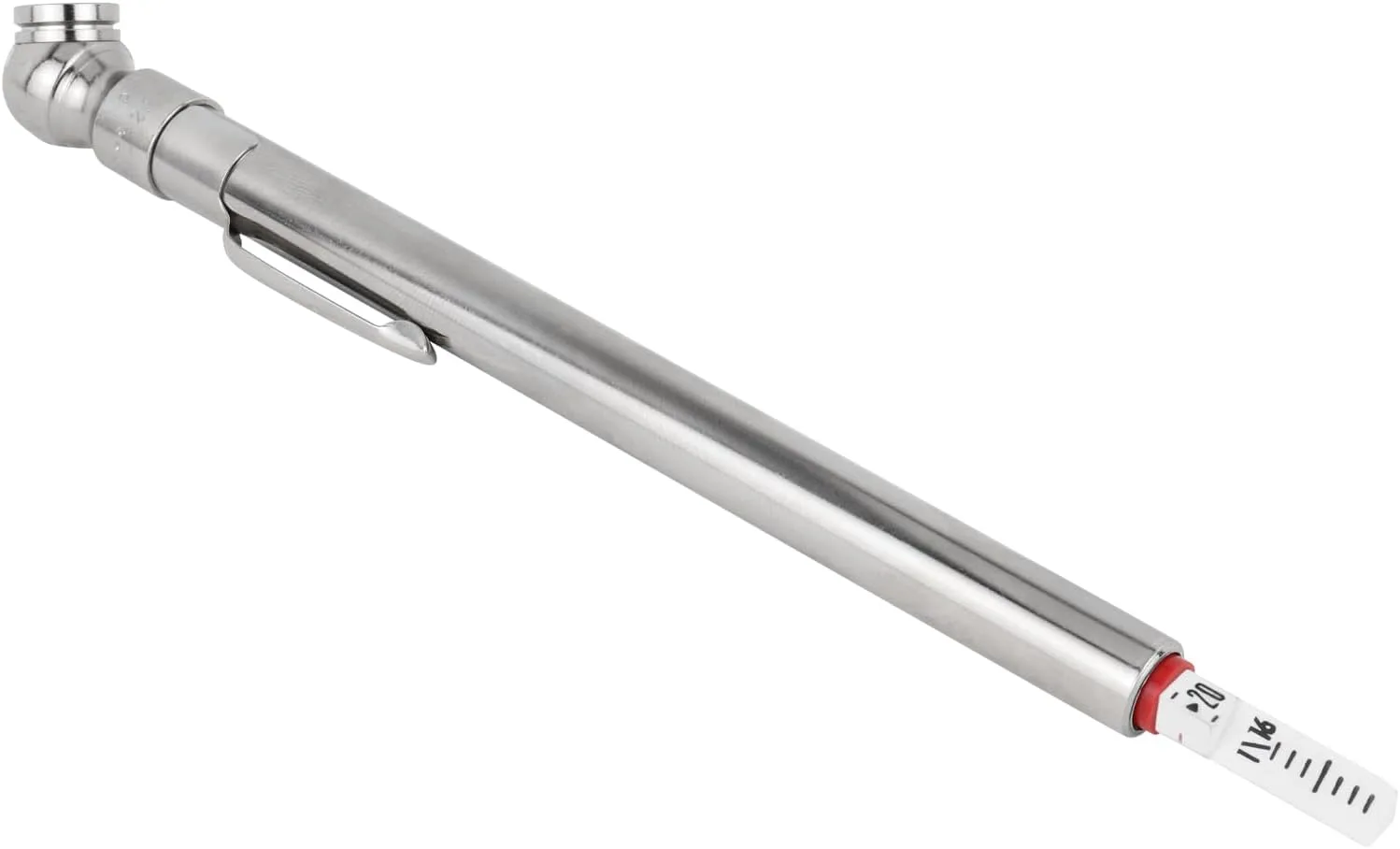
Milton High Pressure 10-75 PSI Tire Pencil Gauge
Highlights
- Pencil / stick gauge
- 10–75 PSI
- Metal body
- Made for glovebox abuse
Best for
- Glovebox backup when you refuse battery gauges
- Quick cold checks on cars and light trucks
- Owners who already trust Milton shop gear
Strengths
- No batteries to die or leak in a hot glovebox
- Metal pencil body survives drops better than cheap plastic dials
- Owners report stable readings vs digital units that drift or die
- Compact and USA-made feel that shop users already recognize
Watch-outs · not ideal when
- 2-PSI increments make odd placard targets (33 / 35) a visual estimate
- Not a bleed-while-you-watch tool — add/bleed air separately
- Easy to lose the protective sleeve / end pieces
- Scale tops out at 75 PSI — skip for many commercial / overload fills
Owner voices
Short takes from public retail reviews — paraphrased or translated when long or non-English; meaning kept close to the original.
“No batteries, no dial glass to crack — this is the glovebox gauge after years of Milton shop tools.”
“Solid metal stick gauge. Stay away from the cheap plastic ones if you actually care about the number.”
“Works well — just know it marks even PSI numbers, so 33 and 35 are between the lines.”
Accuracy, Bleed Control, and the Chuck Seal
For a pencil gauge, the two things that decide whether the reading is worth trusting are the bleed valve and the chuck seal. The built-in deflator lets you bleed pressure down in small steps instead of guessing, and the 2-lb increments mean you can see the change you made. The Schrader-thread chuck is the standard fitting, so it seats on the valve stem the same way a compressor chuck does.
Milton states the gauge is made with machined parts, unlike its competition. Owner reviews back the accuracy claim directly: one 5/5 reviewer wrote that their other gauges were off and that they trust Milton to deliver a quality product, and that the faith was well founded. Another 5/5 review calls it quick and accurate for regular vehicle maintenance.
Readability and Cold-Weather Use
The listing positions this gauge for higher-pressure automobile tires and notes it is handy in cold temperature weather conditions. That matters because a mechanical gauge has no screen to dim or slow down in the cold, and the 10–70 PSI range covers the pressures most passenger cars and light trucks actually run.
Owner feedback on readability is positive: a 5/5 review describes the display as clear and easy to read. The tread depth gauge in 1/16-inch increments is a second job in the same tool, which is useful because proper tread is what keeps traction on the road.
Calibration Habits and Long-Term Ownership
A pencil gauge is only as good as the habit behind it. Check against a known reference when you first get it, then re-check after any drop or after a season of glovebox heat. The 10–70 PSI range and 2-lb increments make it easy to compare against a TPMS readout, but note that TPMS only warns when one tire is low relative to the others, so a hand gauge is still how you verify the fill after adding air.
The long-term signal in the reviews is durability. One 5/5 owner has used a Milton air inflator for 20+ years and bought this gauge specifically for the glovebox because it has no batteries and no dial to break. Another 5/5 reviewer came from a failed digital gauge and went back to the mechanical style they grew up with in the 1980s. That is the pattern: fewer parts, fewer failure points.
Who Should Buy It
Buy this if you want a no-battery glovebox gauge with a deflator and a tread depth gauge built in, and you are willing to read a mechanical scale instead of a digital screen. At $17.91 with a 4.6 rating from 1,804 ratings, the value case is straightforward. Skip it if you need pressures above 70 PSI or readings finer than 2-lb increments.
Method and sources
This guide is built from product data and list prices pulled from Affiliate Hub at build time, together with owner feedback we summarize on the cards. It is catalog-backed buying help, not a lab ranking of every model.
Read how we test for the protocol behind any measured figures we still cite in Guides & Tips.