
Dual Head vs Heavy Duty Digital Tire Gauge: Which to Buy?
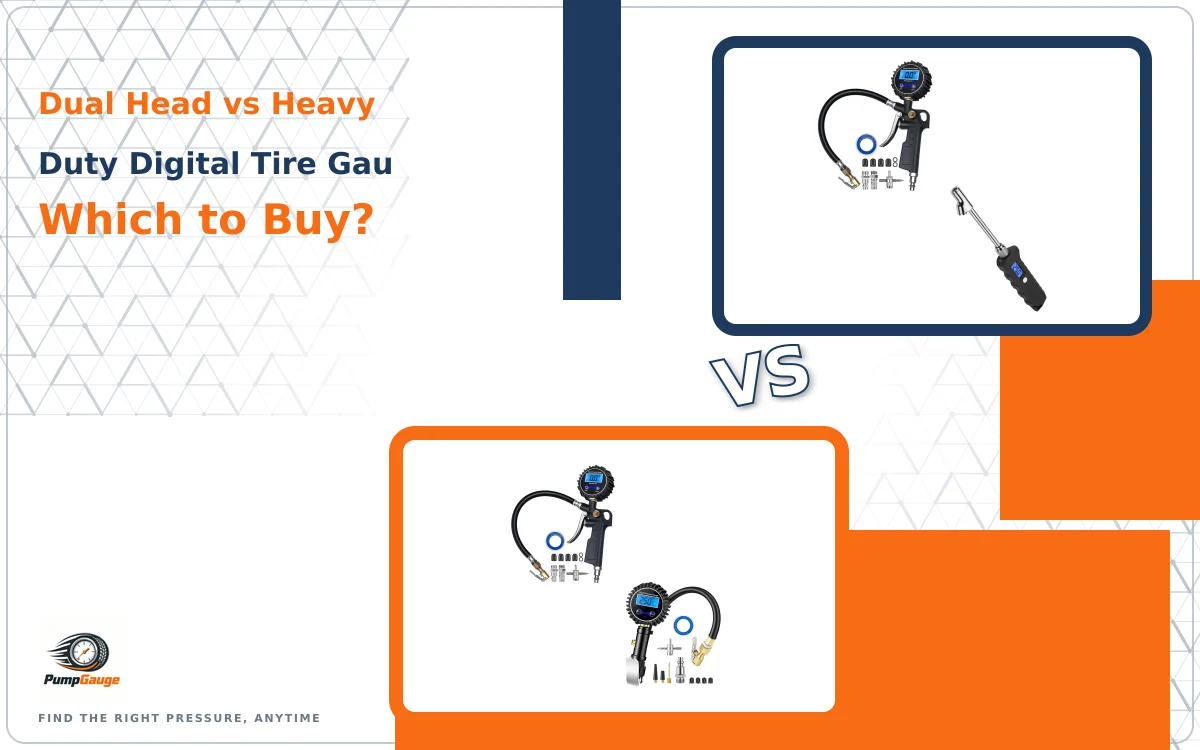
Two DigitPro digital tire pressure gauges compared: a dual-head model for RV and truck duals at $27.42, and a heavy-duty model for cars at $33.58. We break down the specs and pricing to help you pick.
The two-line summary
If you need a gauge for an RV or truck with dual wheels, the Digital Tire Pressure Gauge for Vehicles & Dual Head Tire Gauge for RV Truck is the better fit. For cars and light trucks where a heavy-duty, single-head gauge is sufficient, the Digital Tire Pressure Gauge for Vehicles & Heavy Duty Tire Pressure Gauge for Cars and is the stronger choice.
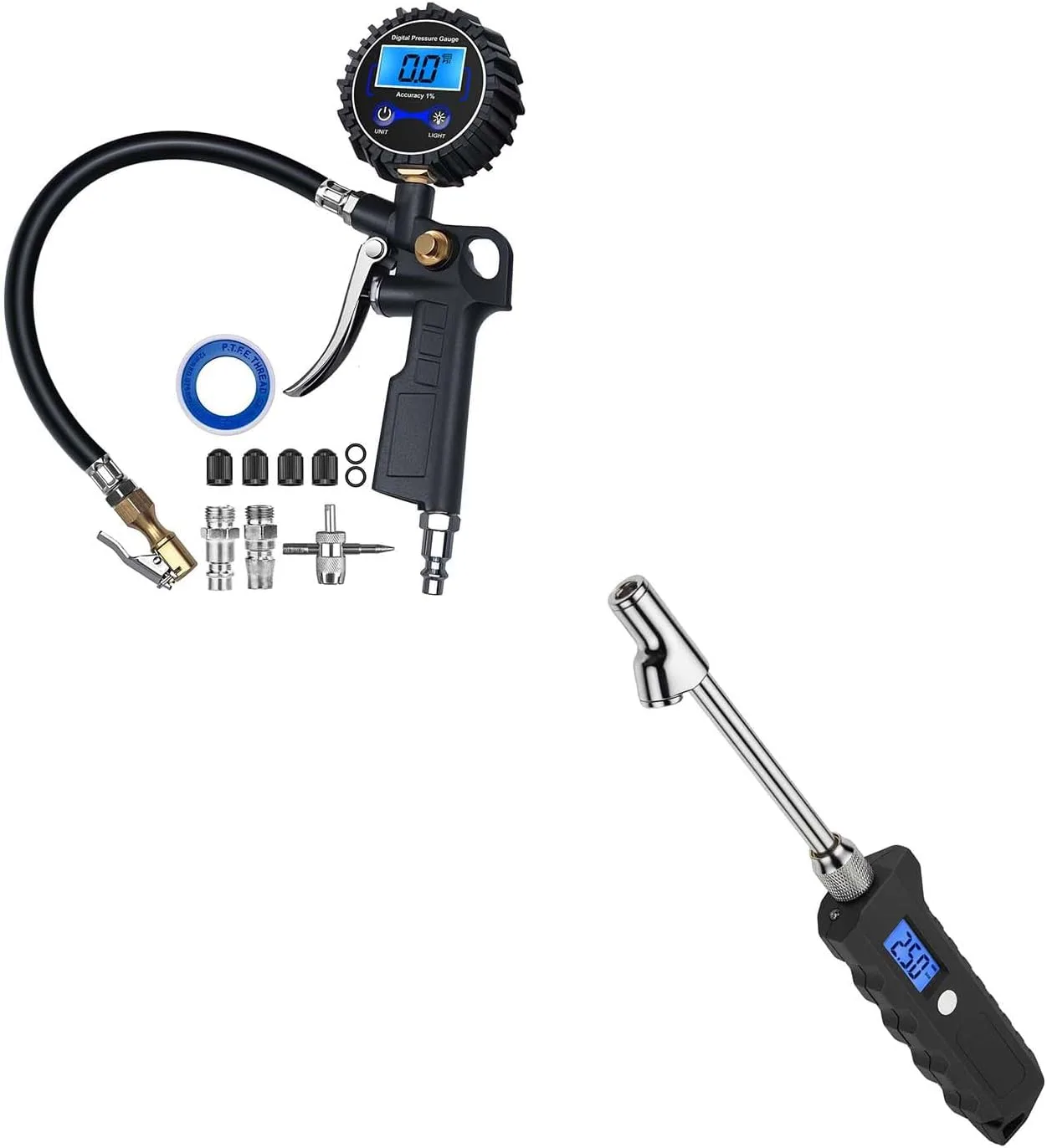
Digital Tire Pressure Gauge for Vehicles & Dual Head Tire Gauge for RV Truck
Highlights
- Digital readout
- Dual head (std + dual wheels)
- Passenger / light-truck oriented
- About $27.99 list
Best for
- RV / dually owners who need the reverse head
- Night checks and drivers who want a lit/hold reading
- Quick cross-check against TPMS
Strengths
- Easy-to-read digits beat guessing between dial hash marks for many owners
- Dual chuck geometry reaches inner dual tires without a second tool
- Cheaper and more accurate day-to-day than trusting TPMS alone when all four tires drop together
- Light enough to keep permanently in the car
Watch-outs · not ideal when
- Electronics and seals still dislike glovebox heat and drops long-term
- Not a compressor — you still need a way to add air
- Large RV / high-range faces are awkward for everyday 32–35 PSI car work
- Always cross-check a new gauge against a known-good one before trusting it alone
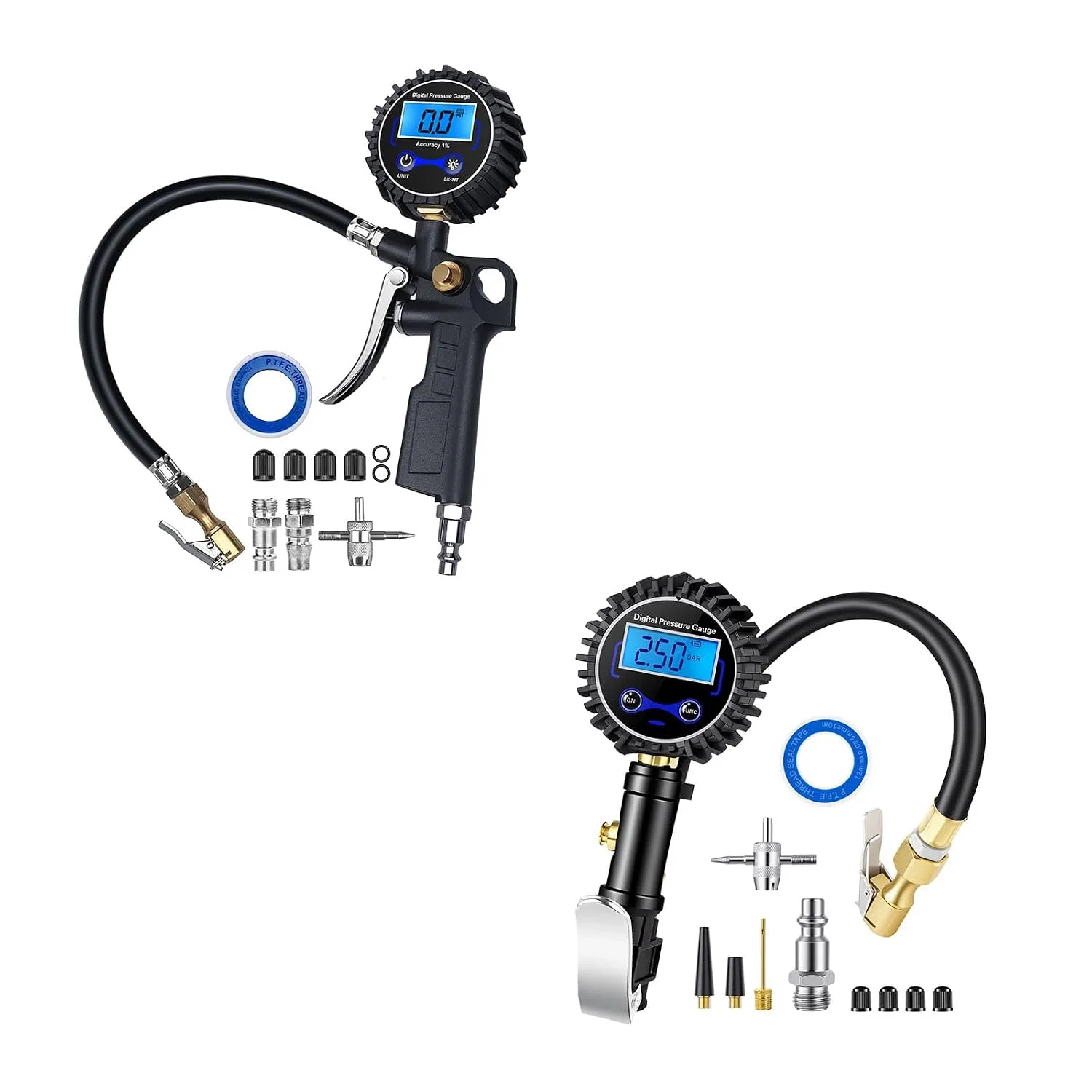
Digital Tire Pressure Gauge for Vehicles & Heavy Duty Tire Pressure Gauge for Cars and
Highlights
- Digital readout
- Check gauge
- Passenger / light-truck oriented
- About $33.58 list
Best for
- Monthly cold placard checks on daily drivers
- Night checks and drivers who want a lit/hold reading
- Quick cross-check against TPMS
Strengths
- Easy-to-read digits beat guessing between dial hash marks for many owners
- This brand check gauges are built for the monthly PSI routine, not trail air-downs
- Cheaper and more accurate day-to-day than trusting TPMS alone when all four tires drop together
- Light enough to keep permanently in the car
Watch-outs · not ideal when
- Electronics and seals still dislike glovebox heat and drops long-term
- Not a compressor — you still need a way to add air
- Low-end car dials top out too early for many light-truck / overloaded fills
- Always cross-check a new gauge against a known-good one before trusting it alone
Spec-by-spec table
Below is a side-by-side comparison of key specifications. Where a spec is not published, we mark it as n/a and do not speculate.
- Price (current): $27.42 vs $33.58
- Price (historical low): $27.42 vs $33.58
- Star rating: 4.4 vs 4.4
- Number of ratings: n/a vs n/a
- Measurement range: n/a vs n/a
- Accuracy: n/a vs n/a
- Display type: Digital vs Digital
- Chuck type: Dual head vs Heavy duty single head
- Battery included: n/a vs n/a
- Warranty: n/a vs n/a
Where the Dual Head Gauge Wins
The Dual Head Tire Gauge for RV Truck has a clear advantage for vehicles with dual wheels or hard-to-reach valve stems. Its dual-head chuck allows you to measure from either side, which can be a back-saver when working on inner duals. At $27.42, it also undercuts the Heavy Duty model by $6.16, and its historical low of $27.42 shows it rarely drops much lower—so you're not overpaying at list price.
Without published accuracy specs, we can't declare a winner on precision, but the dual-head design is a functional win for RV and truck owners. If your priority is accessibility and price, this is the one to pick.
- Dual-head chuck for easier access to dual wheels (based on product name and typical design).
- Lower current price: $27.42 vs $33.58.
- Historical low of $27.42 indicates stable pricing.
Where the Heavy Duty Gauge Wins
The Heavy Duty Tire Pressure Gauge for Cars and is built for durability and everyday use on standard vehicles. Its heavy-duty construction suggests it can withstand more abuse, though we lack specific materials or drop-test data. The higher price of $33.58 may reflect beefier components, but without a spec sheet, that's an assumption—not a fact.
For cars and light trucks, a single-head heavy-duty gauge is often simpler to use and store. If you don't need the dual-head feature, this model's focus on ruggedness could pay off in longevity.
- Heavy-duty build (per product name) may offer better durability for frequent use.
- Designed for cars and light trucks, likely with a standard chuck that fits most valve stems.
- No price fluctuation: current price equals historical low, suggesting consistent value.
The tie-breakers
When specs are thin, focus on these three factors:
1. Warranty and support: Neither product lists a warranty, so check the seller's return policy. A longer warranty can offset a higher price.
2. Included accessories: Some gauges come with a case, batteries, or adapters. These add value but aren't specified here—verify before buying.
3. Owner feedback: With no reviews on file for either product, you're flying blind on real-world accuracy and durability. Look for reviews on the retailer's site or forums to gauge reliability.
- Warranty and support
- Included accessories
- Owner feedback (currently unavailable)
Pick one
Choose the Dual Head Tire Gauge if you own an RV, truck, or any vehicle with dual wheels and want to save a few bucks. Choose the Heavy Duty Tire Pressure Gauge if you drive a car or light truck and prefer a rugged, no-frills tool—and you're okay paying $6.16 more for potential durability.
Decision rule 1: If you need to reach inner duals, get the Dual Head. Decision rule 2: If you want the most robust build for standard vehicles, get the Heavy Duty.
- Dual Head for RV/truck dual wheels and lower price.
- Heavy Duty for cars/light trucks and potential durability.
Method and sources
This guide is built from product data and list prices pulled from Affiliate Hub at build time, together with owner feedback we summarize on the cards. It is catalog-backed buying help, not a lab ranking of every model.
Read how we test for the protocol behind any measured figures we still cite in Guides & Tips.