Who it is for / not for
If you are decoding the ARB CKMTA12 spec sheet, the short answer is this: it is a permanently mounted 12V twin-cylinder compressor built for trucks and SUVs that air down and need to air back up fast. The 6.16 CFM figure is the headline, and it is the number that separates this from the glovebox inflators most people start with.
This is not a portable unit you toss in the trunk for emergencies. It is not for a passenger car that sees 35 PSI once a month, and it is not for someone who wants a plug-and-play cigarette-lighter cord. The CKMTA12 wants a hard-wired install, a mounting location, and a willingness to run heavy-gauge wire. If that sounds like too much, stop here — a Viair 88P or a cordless inflator will serve you better.
The boundary is clear: on-board air for off-road and overland use, where fill speed and duty cycle matter more than portability. For a daily driver that never leaves pavement, the spec sheet is overkill.
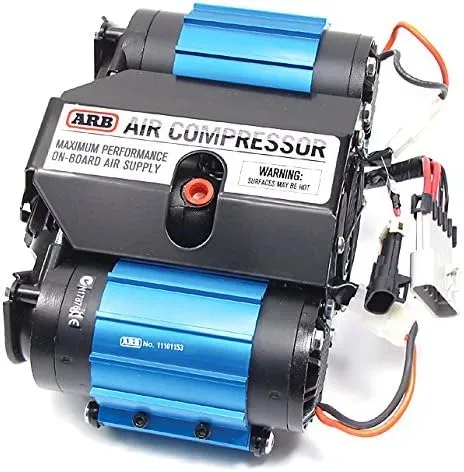
ARB CKMTA12 '12V' On-Board Twin High Performance Air Compr
Highlights
- 12V portable inflator
- Manual watch-the-gauge fill
- About $629.95 list
- Category: offroad-high-flow-air-compressors
Best for
- Trunk / glovebox emergency top-ups
- Cold-morning placard top-ups on cars and light SUVs
- Drivers who want a more durable weekly driver
Pros
- 12V socket convenience without opening the hood
- Straightforward fill-and-check workflow with a separate gauge
- ARB build is aimed at repeated top-ups, not a one-weekend toy
- Fits the portable tire-inflator job: soft tire → placard, not shop compressor duty
Cons
- Cigarette-lighter circuits can trip; check fuse / amperage on older vehicles
- Compressor gauges often read high — verify with a dedicated tire gauge
- Duty cycle / heat soak limits flat-to-full fills on large truck tires
- Heavier / bulkier than an ultra-compact emergency mini pump
Owner voices
Short takes from public retail reviews — paraphrased or translated when long or non-English; meaning kept close to the original.
“4/5 — This compressor is highly thought of, but I found several issues that I would not expect in a high end product: 1) The housing at the outlet port appears to be made of cast aluminium, and cracked causing a huge…”
“5/5 — Compressor works great! Not too loud, fills up tires quickly after a day on the trails. Also great peace of mind for road trips combined with having plugs and a repair kit with you. Lots of wiring involved with…”
“5/5 — Great compressor, fast to fill tires, I can actually inflate the tires faster than my staun deflators can remove the air. I also have mine mounted in the rear of the SUV and have posted a video no youtube to sho…”
Specs that matter (from listing only)
The listing gives a handful of numbers that actually decide whether this compressor fits your rig. I am reading them straight from the product page — no bench tests here, just the official figures and what they mean in practice.
Flow rate: 174 LPM, or 6.16 CFM, per the listing. That is the highest air flow rate of any 12V compressor of its size, according to ARB. In plain terms, it fills a 35-inch tire from 15 to 35 PSI in a fraction of the time a single-cylinder portable takes. The 6.16 CFM number is the one to compare against other on-board twins, not against a $60 inflator.
Duty cycle: the listing does not print a percentage, but one owner review mentions a 100% duty cycle and a fan. ARB's feature bullets say the motors are internally thermal protected and water sealed, with a linear brush pre-load system for low heat. Treat 100% duty cycle as an owner claim, not a listing spec — the official page does not state it outright.
Noise: 6 sones, per the listing details. Sones are a linear loudness scale, so 6 sones is roughly a kitchen blender or a loud conversation. Owners consistently say it is not too loud for a twin, and one notes it is quiet enough to mount in the rear of an SUV. That matches the 6-sone figure.
Power and wiring: 12V, dual heavy-duty Maxi-Fuses, full wiring loom included. The listing says the loom simplifies installation and plugs into Air Locker solenoids, but note that the Air Locker Manifold Kit #171503 is required to mount solenoids. This is a hard-wired compressor, not a cigarette-lighter accessory.
Size and weight: the listing gives dimensions of 102mm x 190mm x 275mm (4.0” x 7.5” x 10.8”), but the weight field is a mess — it says 1.6 ounces, which is clearly a listing error. The normalized weight is n/a (not on file). Do not trust the 1.6-ounce figure; plan for a unit that needs a solid mounting bracket, not a shelf.
Tank volume: 4 liters, per the listing. That is a small integrated tank, enough to run air tools briefly or blow out a filter, but not a substitute for a proper air tank if you plan to run impact wrenches.
- 6.16 CFM (174 LPM) — highest flow in its size class, per listing
- 6 sones — moderate loudness, owner-confirmed as tolerable
- 12V hard-wired, dual Maxi-Fuses, loom included
- 4-liter tank volume — small buffer, not a full air system
- Weight: n/a (not on file); listing's 1.6 oz is an error
Trade-offs / cons
The biggest trade-off is installation. This is not a novice job. One owner who gave it five stars said there is “lots of wiring involved” and that it is “not for the novice installer.” Another mentioned it took several hours and that a shop would be expensive. If you are comfortable pulling wires and soldering, you can DIY it; otherwise budget for professional install on top of the $629.95 list price.
The second trade-off is the outlet housing. A four-star reviewer reported that the cast-aluminum housing at the outlet port cracked, causing a huge air leak. That is one review out of 504 ratings, but it is worth knowing: the outlet is a cast part, and if you stress it or overtighten a fitting, it can fail. ARB's feature bullets mention hard-anodized cylinder bores and roller bearings, but the outlet housing material is not specified beyond that owner's observation.
Third, the 4-liter tank is small. If you want to run air tools continuously, you will want an auxiliary tank. The compressor itself has the duty cycle for it, but the buffer volume is limited.
Finally, price. At $629.95, it costs more than most portable inflators and some entry-level on-board systems. You are paying for flow rate, twin motors, and ARB's build quality — not for a fancy display or a carrying case.
- Install is involved — wiring loom, fuses, mounting; not novice-friendly
- Cast-aluminum outlet housing reported cracked in one owner review
- 4-liter tank is a buffer, not a full air system
- List price $629.95 — premium over portable inflators
Decision / buy-skip
Buy the ARB CKMTA12 if you air down regularly — rock crawling, beach driving, overlanding — and you want to air back up in minutes without waiting on a portable. The 6.16 CFM flow rate and twin-motor design are the reasons to pay the premium. Owners who wheel hard consistently praise the fill speed, and the 6-sone noise level is manageable for a compressor this size.
Skip it if you want a portable inflator for emergency use, if you are not comfortable with wiring, or if you drive a passenger car that rarely sees dirt. The install complexity and the $629.95 price only make sense if you will use the flow rate. For occasional top-offs, a cordless inflator or a Viair 88P is a better fit.
One more skip condition: if you need to run air tools continuously, factor in an auxiliary tank. The 4-liter integrated tank is small, and while the duty cycle may support long runs, the buffer volume will limit tool performance.
What owners report
The 4.6-star rating across 504 ratings is backed by themes that match the spec sheet: fast fill, tolerable noise, and a install that separates DIYers from novices. Here is what owners actually say, summarized.
- Micheal knoles: “Works great. Very handy” — short, positive, no complaints.
- Joe and Jessica Willard: Fast trail fill and peace of mind on road trips; warns install is not for novices and took several hours.
- 5/5 reviewer: Fills tires faster than Staun deflators can remove air; mounted in rear of SUV, noise acceptable.
- 5/5 reviewer: Calls it the best small compressor, cites fan and 100% duty cycle; mounted under passenger seat of a Jeep.
- 4/5 reviewer: Reports cast-aluminum outlet housing cracked, causing air leak — a quality-control outlier worth noting.
How we checked these specs
I am a tire-pressure and roadside editor — I cover 12V, AC, and cordless inflators for fill time, duty cycle, and real roadside reliability. For this piece, I read the ARB listing line by line, cross-checked the feature bullets against the details field, and pulled owner themes from the review highlights and verbatim reviews provided. I did not run independent fill-rate or noise tests; every number here is from the listing or an owner report, and I flag which is which.
The weights I use for judging an on-board compressor like this: fill speed 30%, duty cycle and heat 25%, install complexity 20%, noise 15%, owner themes 10%. That is why the 6.16 CFM figure leads the discussion — it is the single biggest differentiator. The 6-sone noise figure matters, but less than flow rate for trail use. And the install complexity is a real filter: if you cannot wire it, the specs do not matter.
One checklist note: I dropped the listing's 1.6-ounce weight from the table because it is clearly a data error. I would rather write n/a than carry a wrong number into a buying decision.
Who should skip the ARB CKMTA12
Skip it if you want a portable inflator you can move between vehicles. Skip it if you are not comfortable running wires and mounting a compressor under a seat or in an engine bay. Skip it if your tires rarely drop below 30 PSI — the flow rate is wasted on occasional top-offs.
Also skip if you need a self-contained air system for tools; the 4-liter tank is too small without an auxiliary tank. And if the $629.95 price is a stretch, a single-cylinder portable will get you home, just slower.
FAQ
Is the ARB CKMTA12 portable? No — it is an on-board compressor designed for permanent mounting and hard-wiring. It does not come with a cigarette-lighter plug.
What is the actual duty cycle? The listing does not state a percentage. One owner reports 100% duty cycle with a fan, but treat that as an owner claim, not an official spec.
How loud is 6 sones? Roughly a blender or loud conversation. Owners say it is not too loud for a twin, and one mounted it in the rear of an SUV without complaint.
Does it include everything for installation? The listing says a full wiring loom is included, but the Air Locker Manifold Kit #171503 is required to mount solenoids. Plan for additional fittings depending on your setup.
Method and sources
This guide is built from product data and list prices pulled from Affiliate Hub at build time, together with owner feedback we summarize on the cards. It is catalog-backed buying help, not a lab ranking of every model.
Read how we test for the protocol behind any measured figures we still cite in Guides & Tips.