
Slime Airlock Pencil Tire Gauge: 10-120 PSI Review
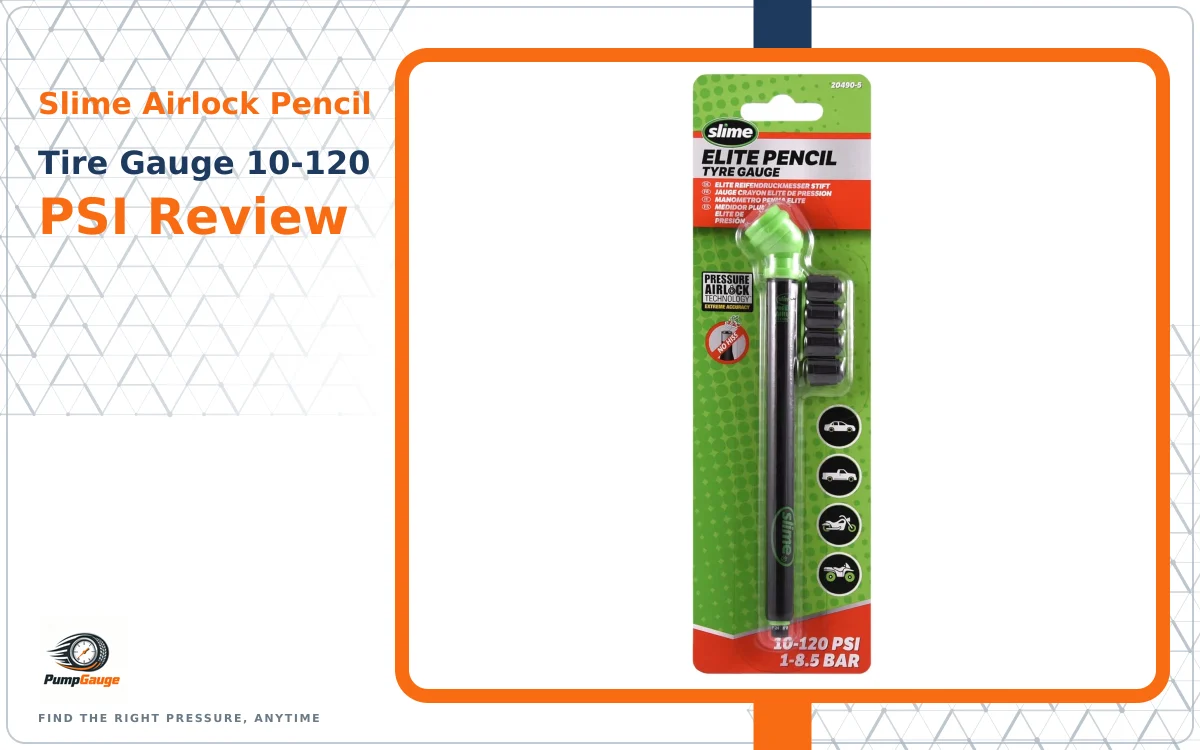
Slime's Airlock Pencil Tire Gauge covers 10-120 psi with a bleed valve and chuck seal. Here's what the specs say and what to check before buying.
Slime Airlock Pencil Tire Gauge (10-120 psi) at a glance
The Slime Airlock Pencil Tire Gauge (10-120 psi) is a stick-style gauge for checking tire pressure by hand. It is listed at $27.99, currently $20.11, which matches its historical low. No owner reviews are on file, so this review sticks to the published specs: the 10-120 psi range, the bleed valve, and the chuck seal.
- Price: $20.11 current, $27.99 list, $20.11 historical low
- Pressure range: 10-120 psi
- Type: pencil (stick) gauge
- Features: bleed valve, chuck seal
- Owner reviews: none on file
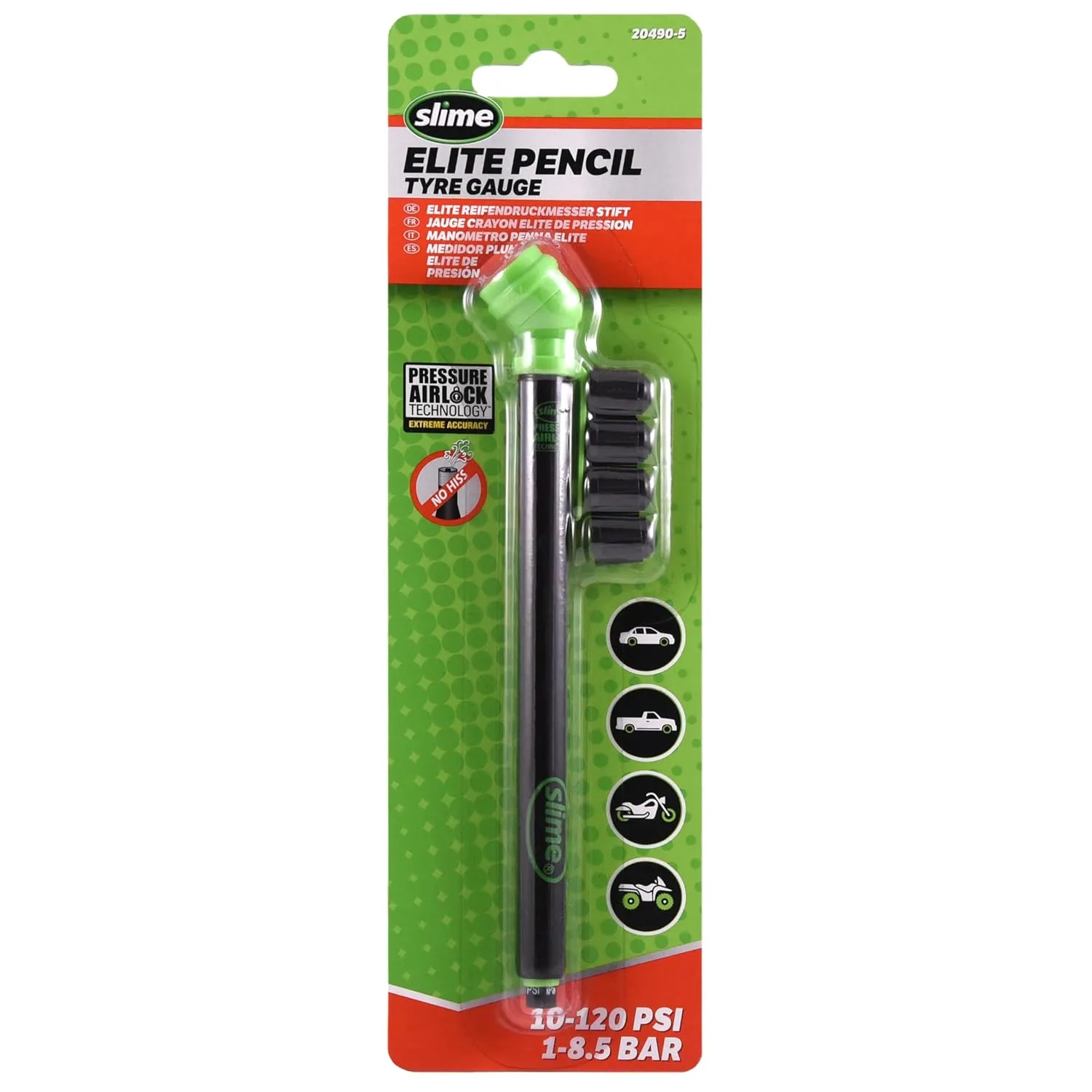
Slime Airlock Pencil Tire Gauge (10-120 psi)
Highlights
- Pencil / stick gauge
- Bleed / hold friendly
- Multi-PSI scale in product name
- About $27.99 list
Best for
- Monthly cold placard checks on daily drivers
- Glovebox analog when you refuse dead batteries
- Bleed-down to placard without removing the chuck every time
Strengths
- No batteries and a slim body that survives glovebox abuse
- Bleed / hold features turn “check” into “set” without walking for a compressor
- Cheaper and more accurate day-to-day than trusting TPMS alone when all four tires drop together
- Light enough to keep permanently in the car
Watch-outs · not ideal when
- Coarse stick marks make odd placard targets (33 / 35) a visual estimate
- Not a compressor — you still need a way to add air
- Low-end car dials top out too early for many light-truck / overloaded fills
- Always cross-check a new gauge against a known-good one before trusting it alone
Accuracy and range: what 10-120 psi covers
A 10-120 psi range covers most passenger cars, light trucks, and many trailer tires. The bottom of the scale starts at 10 psi, so it is not intended for very low-pressure applications like some off-road or ATV tires. For everyday vehicles, the range is wide enough to be useful.
Pencil gauges read pressure mechanically, so accuracy depends on the internal spring and seal. Without owner reviews or independent test data on file, I cannot confirm real-world accuracy for this specific model. If you need documented accuracy, look for a gauge with a published tolerance or a calibration certificate.
Bleed control and chuck seal
The Airlock Pencil Tire Gauge includes a bleed valve, which lets you release air while the gauge is still on the valve stem. That is useful when you overshoot your target pressure and want to fine-tune without removing and re-seating the gauge.
The chuck seal is the other half of the job. A pencil gauge only reads correctly if the chuck seals squarely on the valve stem. Press it on straight and listen for leaks; if you hear hissing, reseat it. A worn or dirty seal will give low or inconsistent readings, so keep the chuck clean and replace the gauge if the seal stops holding.
Readability and calibration habits
Pencil gauges use a sliding scale that extends from the body when pressure is applied. Read it at eye level, straight on, to avoid parallax error. The 10-120 psi scale is marked in increments, but the exact increment size is not listed in the product data, so check the markings on the unit before you rely on a precise number.
Calibration is a habit, not a one-time event. Compare this gauge against a known-good digital gauge or a shop gauge at your normal tire pressure. Do that a few times a year and after any drop or hard knock. If it drifts, replace it. At $20.11, it is a low-cost tool, but a wrong reading can cost you tire wear or fuel economy.
Who this gauge is for
This is a straightforward choice if you want a no-battery, pocket-sized gauge for checking car or light-truck tires in the 10-120 psi window. The bleed valve is a real convenience for dialing in pressure, and the current price of $20.11 is at its historical low.
Skip it if you need a gauge for very low pressures, if you want a digital readout, or if you need documented accuracy. With no owner reviews on file, there is no field data on durability or long-term seal performance, so treat this as a specs-based recommendation rather than a tested one.
Method and sources
This guide is built from product data and list prices pulled from Affiliate Hub at build time, together with owner feedback we summarize on the cards. It is catalog-backed buying help, not a lab ranking of every model.
Read how we test for the protocol behind any measured figures we still cite in Guides & Tips.