What value means on this list
If you are shopping for a tire sealant or plug kit, the real question is not which one is cheapest — it is which one gets you off the shoulder without a tow, and how many times it can do that before it quits. A $10 kit that fails on the first cold night is worse value than a $35 kit that lives in your trunk for a decade.
This page is about emergency flat repair for passenger cars and light off-highway use — gravel roads, farm tracks, trailhead parking. It is not a guide to permanent sidewall repair, and it is not for RV-sized tires or heavy truck rubber. Those need a different class of tool and a shop, not a plug kit.
The value math here is simple: cost per usable repair. For sealants, that means cost per dose and whether the can is single-use. For plug kits, it means cost per plug plus whether the tools survive heat, rust, and being stepped on. I also weigh how much of the kit you actually need — a case full of extras you will never touch is not value, it is clutter.
Quick picks: top, runner-up, also-consider
Top value: Slime 1034-A Tire Repair Reamer Plug Kit at $10.28. It is the cheapest way to make a puncture repair that actually holds, and owners consistently say the handles outlast the bargain-bin alternatives.
Runner-up: AUTOWN Universal Tire Plug Patch Tool Set at $19.99 (list $26.95). You pay roughly double for a proper case and heavier T-handles — worth it if the kit lives in a truck bed rather than a glovebox.
Also consider: Slime 10009 sealant at $17.79 if you want a no-tools option for a passenger car, or Boulder Tools 30 Tire Plugs at $34.99 if you want a larger plug supply and a gauge in one box. Fix-A-Flat S60197 is on the list for completeness but has no price or rating on file, so I cannot rank it on value.
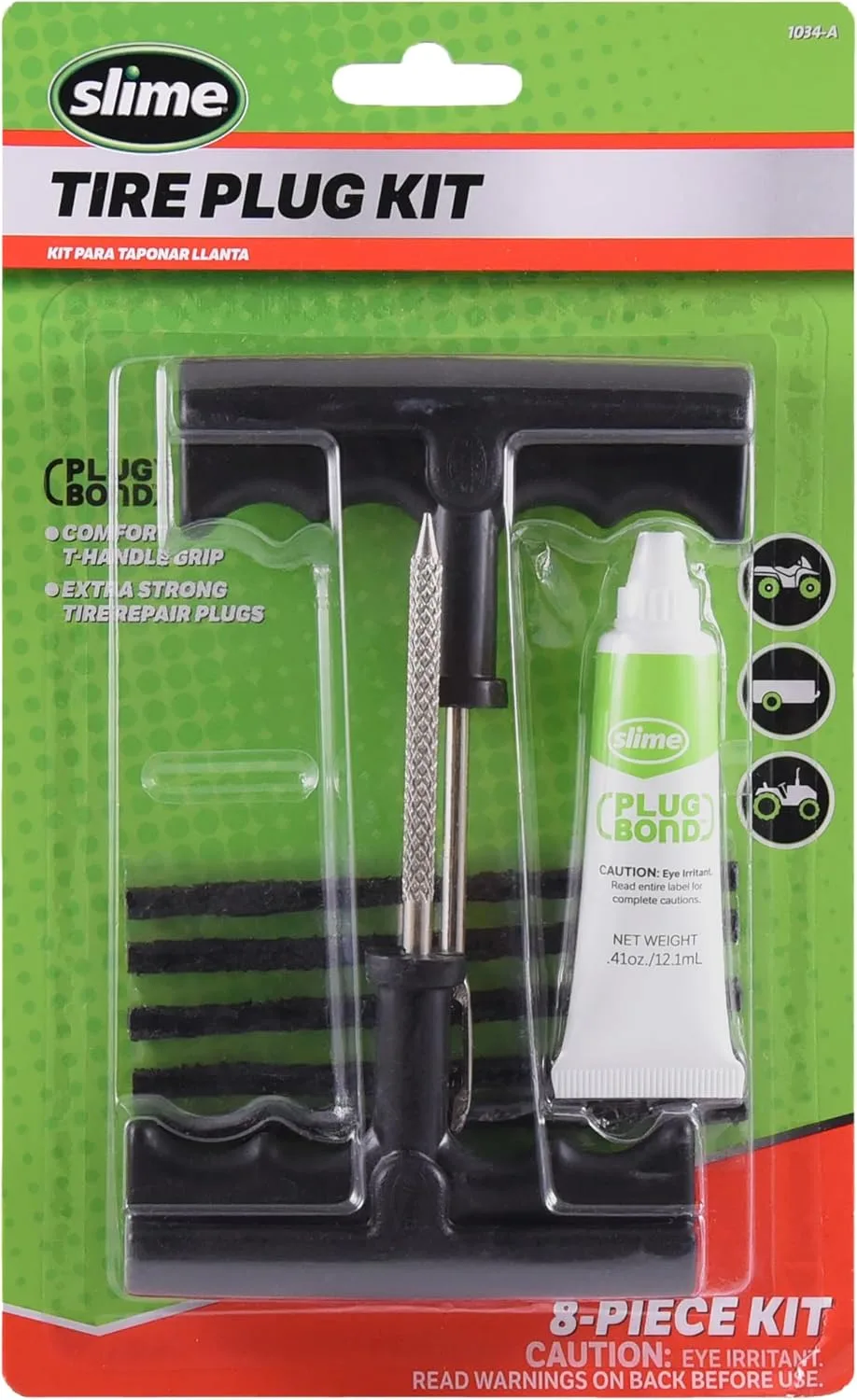
Slime 1034-A Tire Repair Reamer Plug Kit
Highlights
- String-plug / reamer repair kit
- Passenger / light-truck roadside
- About $10.28 list
- Category: tire-repair-plug-kits
Best for
- Shoulder plug repairs on tubeless punctures you can see and ream
- Glovebox / recovery-bag spare for trips away from a tire shop
- Cheap insurance that lives in the vehicle year-round
Pros
- Mechanical plugs fix many nail holes without writing off the tire
- Slime kits are built for the roadside job, not a full vulcanizing shop
- Low enough list price that leaving it unused still feels fine
- Reamer + plug string is the standard DIY tubeless repair sequence
Cons
- Won’t fix sidewall cuts, large gashes, or bead failures
- Not a substitute for a real compressor or a proper gauge check afterward
- Cold weather and improper install still leave slow leaks
- Minimal kits run out of strips / tools fast
Owner voices
Short takes from public retail reviews — paraphrased or translated when long or non-English; meaning kept close to the original.
“5/5 — Great inexpensive kit if you're NOT a Little Old Lady trying to repair a 1/4" puncture near the sidewall of a HUGE SUV tire for the first time! The addition of a small tube of rubber cement to this kit makes ins…”
“5/5 — I’m not sure why this kit works so much better than several others that I have used, but it does. The plastic handles that you’ll get from cheaper kits will not degrade and become brittle and break after sitting…”
“4/5 — I keep these in my car and it has come in handy a couple of times. I also keep a small air compressor. It is a simple kit that is easy to use. Last time I used it, a neighbor had a flat and it was the middle of…”
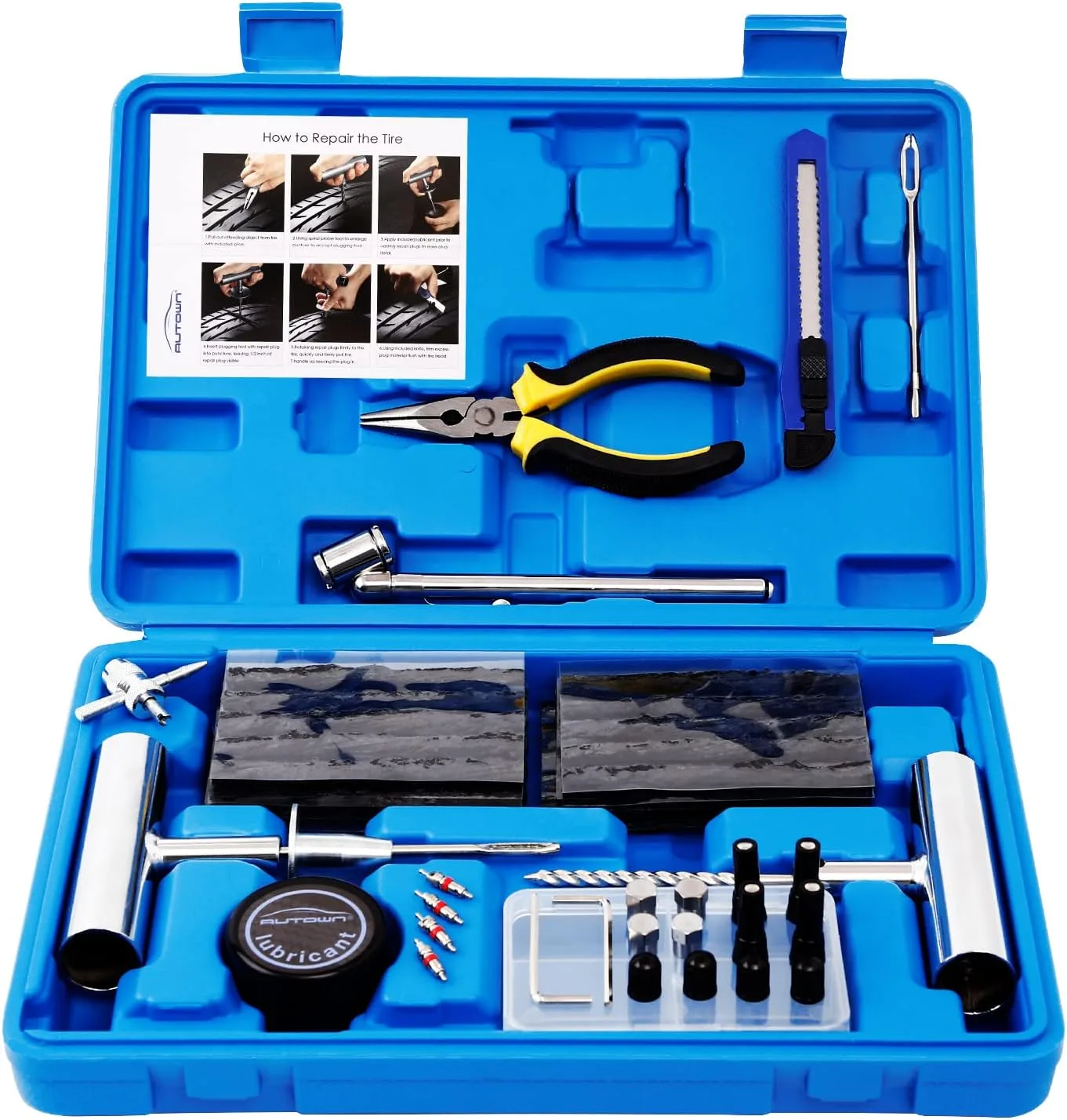
AUTOWN Universal Tire Plug Patch Tool Set with Case for Car
Highlights
- String-plug / reamer repair kit
- Passenger / light-truck roadside
- About $26.95 list
- Category: tire-repair-plug-kits
Best for
- Shoulder plug repairs on tubeless punctures you can see and ream
- Glovebox / recovery-bag spare for trips away from a tire shop
- Owners who want a more complete plug kit than a three-strip blister pack
Pros
- Mechanical plugs fix many nail holes without writing off the tire
- AUTOWN kits are built for the roadside job, not a full vulcanizing shop
- Enough strips / tools for more than one puncture before you restock
- Reamer + plug string is the standard DIY tubeless repair sequence
Cons
- Won’t fix sidewall cuts, large gashes, or bead failures
- Not a substitute for a real compressor or a proper gauge check afterward
- Cold weather and improper install still leave slow leaks
- Bulkier cases take more trunk space than a slim sealant can
Owner voices
Short takes from public retail reviews — paraphrased or translated when long or non-English; meaning kept close to the original.
“5/5 — Works great. This kit includes everything you need. I recommend removing tire so you have room to push down on both the hand help drilling tool and the plug insertion tool to properly plug hole. The manual drill…”
“5/5 — I bought this kit after a thin metal wire punctured the rear tire on my Bad Boy mower. The plug kit had everything I needed, and the tools felt much heavier duty than I expected for the price. The T-handle tools…”
“5/5 — At first glance, the blue case is great! Typical tool containers are black or silver so easy to spot. The cost is immensely less for a kit like this. It comes with everything you need for a quick tire repair, ju…”
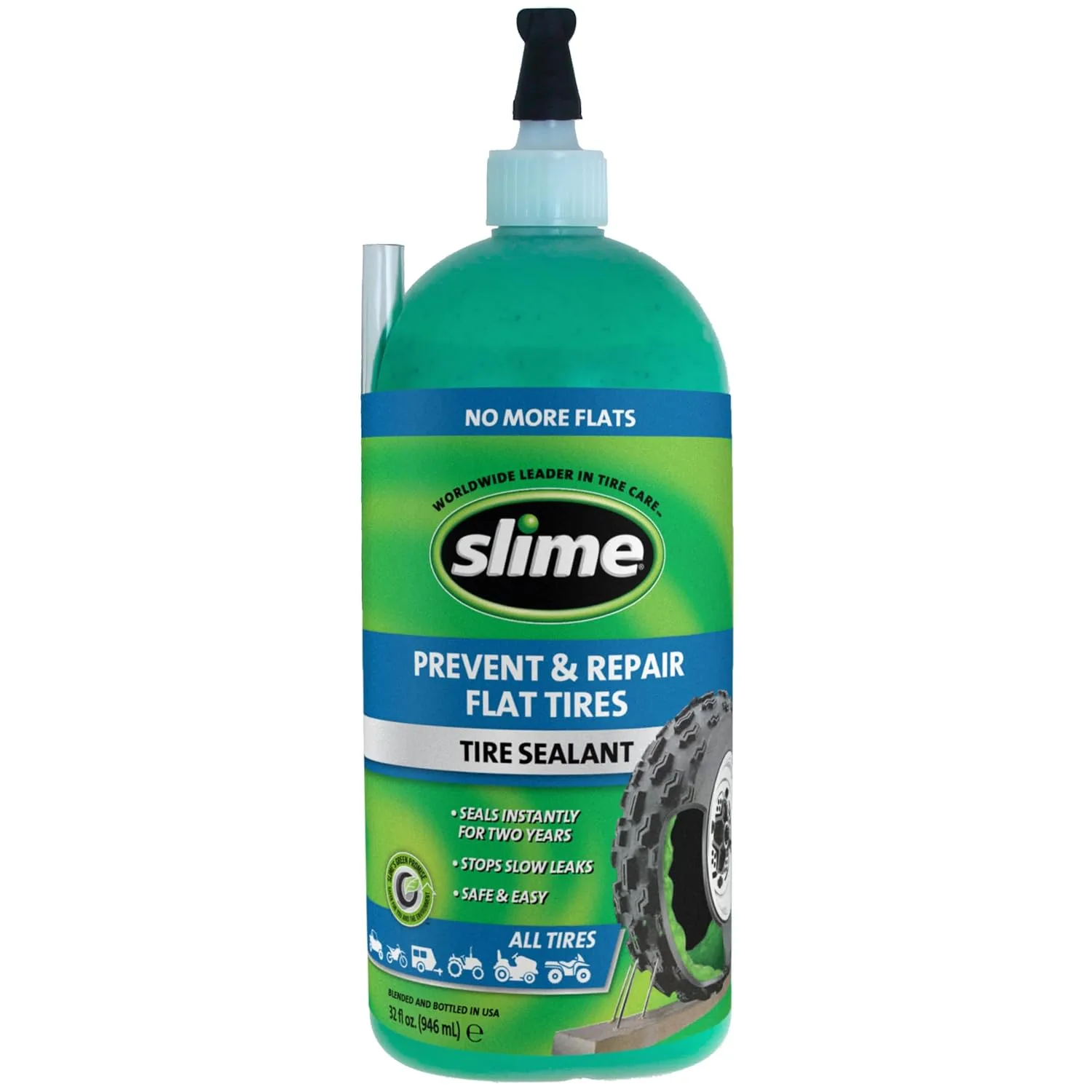
Slime 10009 Flat Tire Puncture Repair Sealant
Highlights
- Roadside tire repair
- Passenger / light-truck roadside
- About $17.79 list
- Category: tire-sealant
Best for
- Shoulder plug repairs on tubeless punctures you can see and ream
- Glovebox / recovery-bag spare for trips away from a tire shop
- Cheap insurance that lives in the vehicle year-round
Pros
- Mechanical plugs fix many nail holes without writing off the tire
- Slime kits are built for the roadside job, not a full vulcanizing shop
- Low enough list price that leaving it unused still feels fine
- No compressor required for the sealant step itself
Cons
- Won’t fix sidewall cuts, large gashes, or bead failures
- Not a substitute for a real compressor or a proper gauge check afterward
- Cold weather and improper install still leave slow leaks
- Minimal kits run out of strips / tools fast
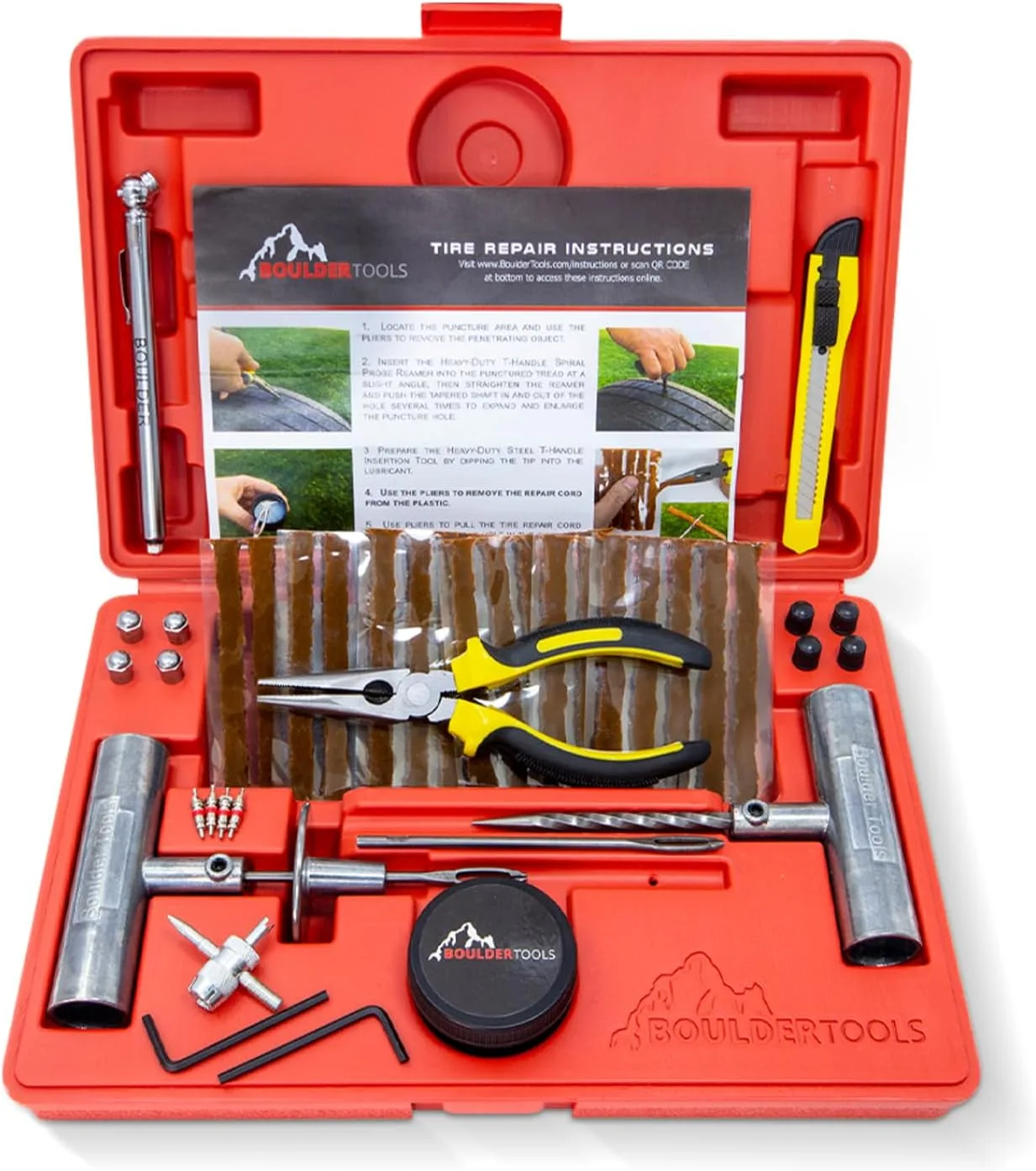
Boulder Tools 30 Tire Plugs
Highlights
- String-plug / reamer repair kit
- Passenger / light-truck roadside
- About $34.99 list
- Category: tire-repair-plug-kits
Best for
- Shoulder plug repairs on tubeless punctures you can see and ream
- Glovebox / recovery-bag spare for trips away from a tire shop
- Owners who want a more complete plug kit than a three-strip blister pack
Pros
- Mechanical plugs fix many nail holes without writing off the tire
- Boulder Tools kits are built for the roadside job, not a full vulcanizing shop
- Enough strips / tools for more than one puncture before you restock
- Reamer + plug string is the standard DIY tubeless repair sequence
Cons
- Won’t fix sidewall cuts, large gashes, or bead failures
- Not a substitute for a real compressor or a proper gauge check afterward
- Cold weather and improper install still leave slow leaks
- Bulkier cases take more trunk space than a slim sealant can
Owner voices
Short takes from public retail reviews — paraphrased or translated when long or non-English; meaning kept close to the original.
“5/5 — I did a lot of research on this topic. I had a old tire that already had a plug in it and the local tire place said they won’t replug a plug. I looked in a different types of plugs spent some time on YouTube and…”
“4/5 — I just got this yesterday and had a repair ready for it. When I got the tire off and looked it over with a soapy spray bottle, I realized an old patch was leaking, probably one done by Pep Boys (I wonder how che…”
“5/5 — I bought this, put velcro on the case, and put it in my car (that I opted not to buy run flats for). I forgot about it until a few tire punctures in my other cars this spring/summer. I just want to say that this…”
How we ranked these (and what we did not do)
I weighted four things: cost per usable repair (35%), tool durability and heat resistance (25%), ease of use on the shoulder (20%), and owner-reported reliability (20%). Price and rating come from the product listings; owner themes come from the review text on file. I did not run timed plug tests or lab-measure sealant pressure retention — this is a listing-and-owner-evidence ranking, not a bench test.
One concrete filter: I dropped any kit that could not plausibly handle a passenger-car puncture without extra tools you would have to buy separately. That is why the list is short. I also carried the listed weight into the ranking — a 2.6 lb kit is fine in a truck, less fine in a small car's spare-tire well.
I am the tire-pressure and roadside editor at PumpGauge. My checklist is simple: does it get a driver home, and does it still work the second time you reach for it?
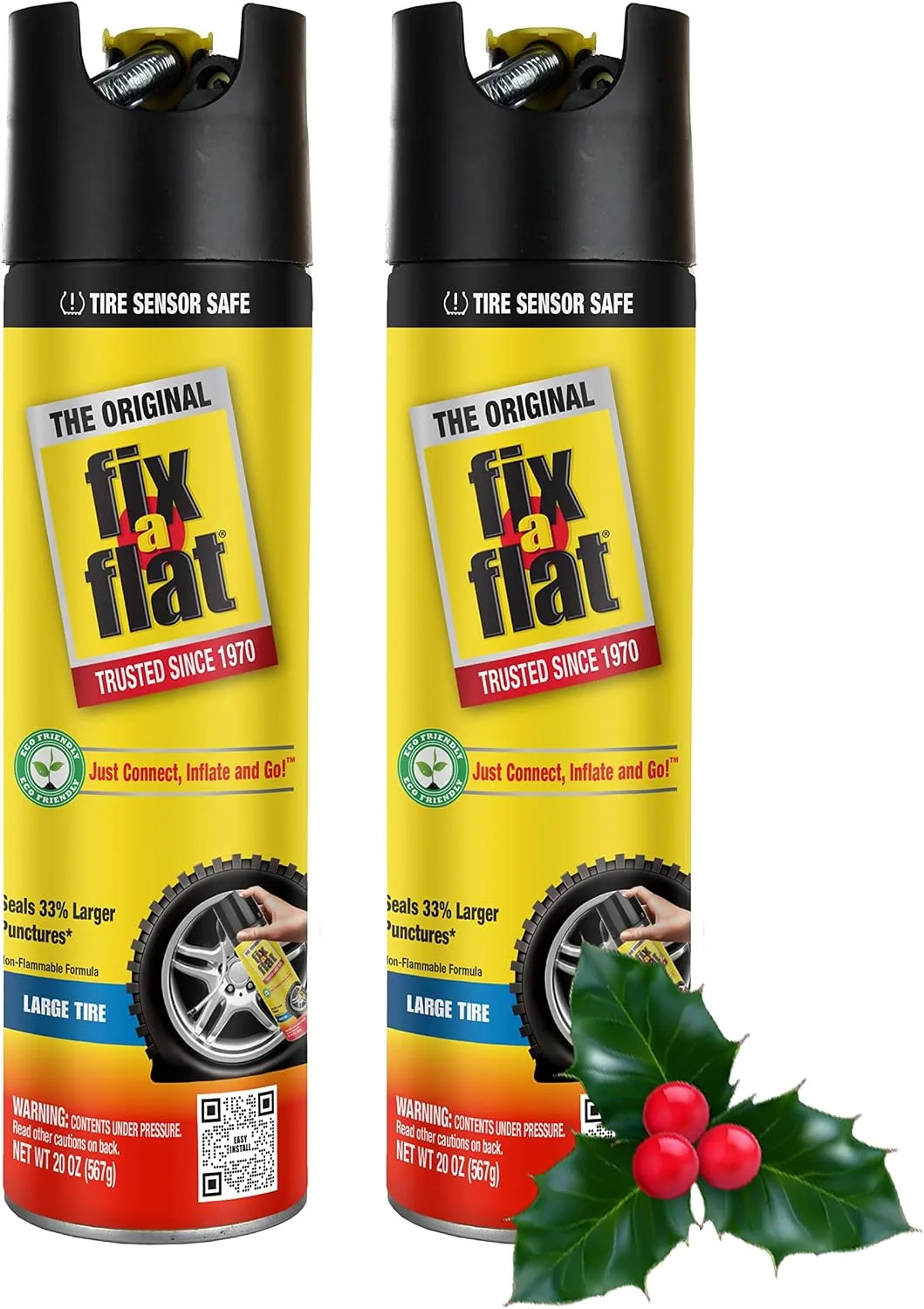
Fix-A-Flat Tire Inflator with Eco-Friendly Formula
Highlights
- Aerosol sealant / inflate can
- Passenger / light-truck roadside
- About $19.98 list
- Category: tire-sealant
Best for
- Emergency soft-tire limp to a shop when you cannot plug on the shoulder
- Glovebox / recovery-bag spare for trips away from a tire shop
- Cheap insurance that lives in the vehicle year-round
Pros
- Can seal and add a little air without tools when you are stuck
- Fix-A-Flat kits are built for the roadside job, not a full vulcanizing shop
- Low enough list price that leaving it unused still feels fine
- No compressor required for the sealant step itself
Cons
- Sealant messes and shop pushback — treat as get-home, not permanent
- Not a substitute for a real compressor or a proper gauge check afterward
- Cold weather and improper install still leave slow leaks
- Minimal kits run out of strips / tools fast
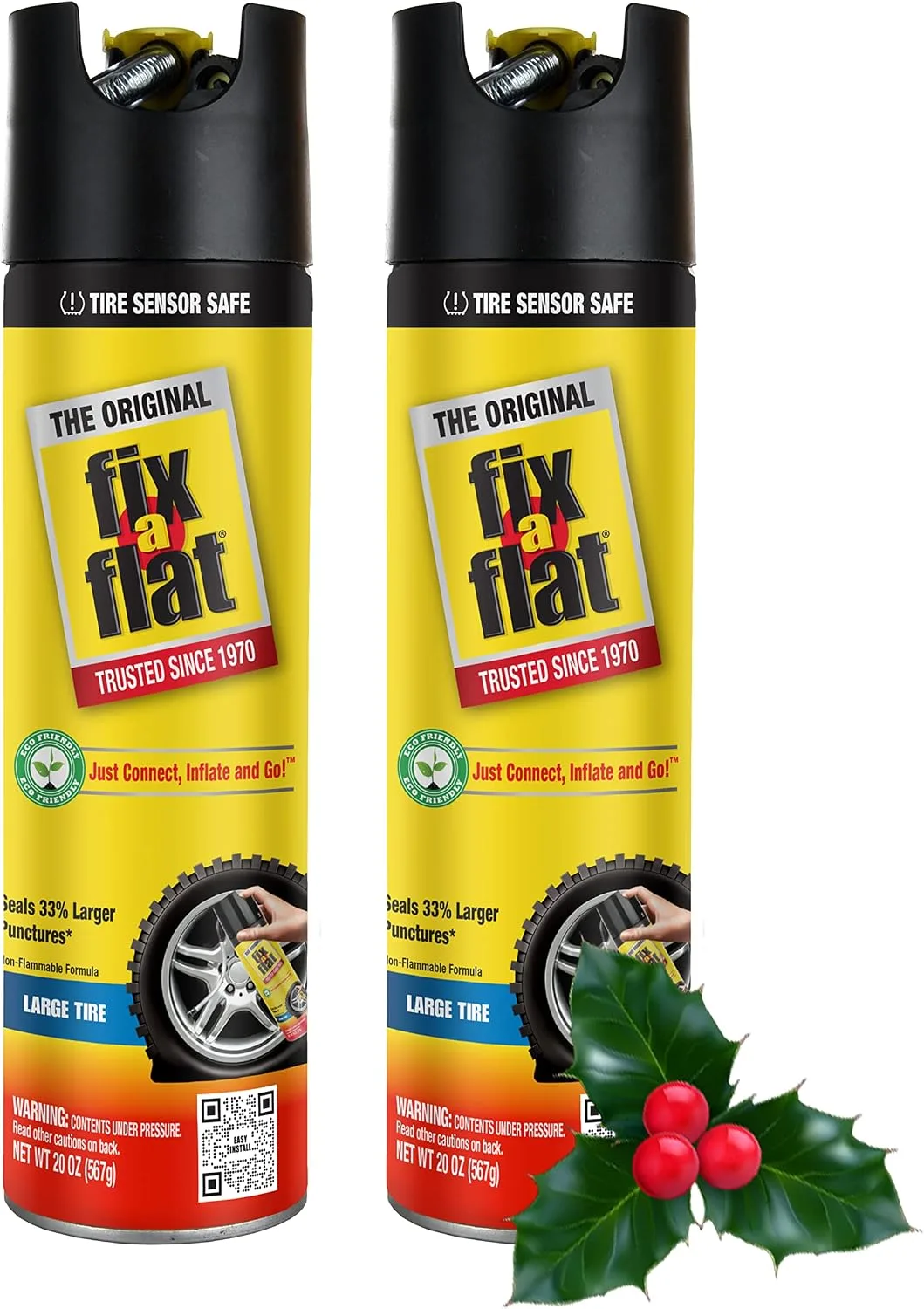
Fix-A-Flat S60197 Aerosol Emergency Flat Tire Repair
Highlights
- Aerosol sealant / inflate can
- Passenger / light-truck roadside
- Category: tire-sealant
Best for
- Emergency soft-tire limp to a shop when you cannot plug on the shoulder
- Glovebox / recovery-bag spare for trips away from a tire shop
- Owners who want a more complete plug kit than a three-strip blister pack
Pros
- Can seal and add a little air without tools when you are stuck
- Fix-A-Flat kits are built for the roadside job, not a full vulcanizing shop
- Enough strips / tools for more than one puncture before you restock
- No compressor required for the sealant step itself
Cons
- Sealant messes and shop pushback — treat as get-home, not permanent
- Not a substitute for a real compressor or a proper gauge check afterward
- Cold weather and improper install still leave slow leaks
- Bulkier cases take more trunk space than a slim sealant can
Spec snapshot
Prices are current list prices from the product data. Weight is listed where the manufacturer published it; otherwise n/a.
| Product | Price | Max PSI | Flow (CFM / L/min) | Power | Weight (lb) | Rating |
|---|---|---|---|---|---|---|
| Slime 10009 Flat Tire Puncture Repair Sealant | $17.79 | n/a (not on file) | n/a (not on file) | n/a (not on file) | n/a (not on file) | 4.5 |
| Fix-A-Flat Tire Inflator with Eco-Friendly Formula | $19.98 | n/a (not on file) | n/a (not on file) | n/a (not on file) | n/a (not on file) | 4.2 |
| Fix-A-Flat S60197 Aerosol Emergency Flat Tire Repair | n/a (not on file) | n/a (not on file) | n/a (not on file) | n/a (not on file) | n/a (not on file) | n/a (not on file) |
| Slime 1034-A Tire Repair Reamer Plug Kit | $10.28 | n/a (not on file) | n/a (not on file) | n/a (not on file) | n/a (not on file) | 4.6 |
| AUTOWN Universal Tire Plug Patch Tool Set with Case for Car | $26.95 | n/a (not on file) | n/a (not on file) | n/a (not on file) | 1.39 lb | 4.7 |
| Boulder Tools 30 Tire Plugs | $34.99 | n/a (not on file) | n/a (not on file) | n/a (not on file) | 2.6 lb | 4.7 |
The picks, ranked by value
Ranking is by cost per usable repair first, then durability and owner evidence. The order below reflects that weighting — not raw star rating.
#1 Slime 1034-A: the cheapest repair that actually holds
At $10.28, this is the value benchmark. You get a T-handle reamer, a plug inserter, a small tube of rubber cement, and a handful of medium-heavy-duty strings. That is enough to fix a nail hole in a passenger tire and get moving. Cost per repair is pennies once you own the kit.
Owners repeatedly mention the handles holding up better than cheaper kits — one reviewer noted the plastic on bargain kits goes brittle in a hot car and breaks when you need it. Another described using it at night for a neighbor's flat with a small compressor alongside. That matches the intended use: a glovebox or trunk kit paired with an inflator.
Suits: daily drivers who want a one-time $10 insurance policy. Skip if: you drive a heavy truck or deal with large sidewall damage — the strings and handles here are sized for passenger and light-truck punctures, not commercial rubber.
#2 AUTOWN Universal Plug Kit: pay once for a case and heavier tools
The AUTOWN kit lists at $26.95 but currently sells for $19.99, which puts it at roughly double the Slime kit. What you get for the extra ten dollars is a molded case, heavier T-handle tools, and a broader assortment of plugs and patches. Owners describe the tools as feeling heavier-duty than expected for the price, and one reviewer used it successfully on a lawn-mower tire after a wire puncture.
The case matters more than it sounds. A kit that stays organized in a truck bed or under a seat is a kit you will actually find when it is raining. Cost per repair is still low — the plug supply will outlast several tires — but the upfront spend is higher.
Suits: pickup and off-highway owners who want the kit to live in the vehicle long-term. Skip if: you only want a minimal glovebox kit and already have a case or pouch you like.
#3 Boulder Tools 30 Tire Plugs: more plugs, plus a gauge
At $34.99 and 2.6 lb, this is the heaviest and priciest kit on the list. The value case is different: you get 30 plugs, a hard case, and a tire pressure gauge in one box. If you are starting from zero and want a single kit that covers plugging and checking pressure, the bundled gauge saves a separate purchase.
Owners describe the tools as solid and not cheap-feeling, and several mention using the kit multiple times without issue. One reviewer bought it specifically because a shop would not re-plug an already-plugged tire — a reminder that plug kits are for emergencies, not permanent repairs.
Suits: overlanders and truck owners who want a larger plug supply and a gauge in the same case. Skip if: weight and space matter in a small car — 2.6 lb is not huge, but the case is bulkier than a bare T-handle kit.
#4 Slime 10009 sealant: no tools, one dose, one limp home
Sealant is a different product category, and it belongs on a value list with a caveat. At $17.79 for a single dose, the Slime 10009 is not cheap per use — it is a one-shot product. The value is convenience: no jacking, no reaming, no tools. You screw it onto the valve, inflate, and drive to a shop.
The 4.5 rating across more than 7,000 reviews suggests it works often enough for passenger cars, but there is no owner review text on file for this specific listing, so I cannot quote themes. Treat the rating as a signal, not a guarantee. Sealant also complicates the eventual proper repair — many shops charge extra to clean it out.
Suits: drivers who cannot or will not plug a tire themselves and want a single-dose emergency option. Skip if: you are comfortable with a plug kit — the Slime 1034-A costs less and does not leave goo in the tire.
#5 Fix-A-Flat S60430: sealant plus inflator, thin feedback
The eco-friendly Fix-A-Flat formula at $19.98 bundles sealant with an inflator, which is the appeal — one can does two jobs. But the rating sits at 4.2 across just 10 ratings, and there is no owner review text on file. That is thin evidence, and I would not rank it above the Slime sealant on value until more feedback accumulates.
The bundled inflator is convenient for a slow leak, but it is not a substitute for a proper compressor if you air down for off-highway driving. Treat this as a passenger-car emergency can, not a trail tool.
Suits: drivers who want sealant and inflation in one purchase and do not want to carry a separate pump. Skip if: you want proven owner feedback — the sample here is too small to lean on.
#6 Fix-A-Flat S60197: on the list, but not rankable on value
This aerosol Fix-A-Flat has no price and no rating on file, so I cannot compute cost per repair or weigh owner evidence. It is included because it belongs to the same buying decision, but I would not pick it over the Slime 10009 or the plug kits until pricing and feedback are available.
Suits: nobody specifically, until data exists. Skip if: you are buying today and want a ranked value pick — choose one of the options above.
Cheap but not good value
Two patterns show up repeatedly in the owner feedback and in the listings themselves. First, no-name plug kits with thin plastic handles: they cost $6–$8, but owners report the handles going brittle in heat and breaking on the first real use. That is false economy — you save $4 and lose the repair.
Second, single-use sealant cans bought as a substitute for a plug kit. At $17–$20 per dose, the cost per repair is high, and the sealant can complicate a proper patch later. Sealant has a place, but it is not the value pick for someone who is willing to learn a plug repair.
A third trap: kits that bundle tools you already own. If you have a compressor and a gauge, paying extra for a kit that includes them is not value — it is duplication.
When to stop optimizing
Stop when the kit you are looking at costs less than a single tow and has owner evidence that the tools survive heat and repeated use. For most drivers, that line is crossed at the Slime 1034-A. Paying more than about $35 for a plug kit only makes sense if you need the larger plug supply or the bundled gauge — beyond that, you are buying case quality and brand, not more repairs per dollar.
Who should pick something else
If you drive a heavy-duty truck, an RV, or equipment with commercial tires, none of these kits are the right tool. You need a shop-grade plug kit and likely a proper compressor — a passenger-car T-handle kit will not seat a plug in a thick truck tire.
If you have a sidewall puncture or a cut, no sealant or plug kit is a safe permanent fix. Those need a replacement tire. And if you are shopping for a tire inflator to pair with a plug kit, see our guide to portable tire inflators for daily drivers — the kit and the pump are a system.
What owners report
Theme summaries from the review text on file. Ratings are shown for context; these are paraphrases, not direct quotes.
- Slime 1034-A: handles outlast cheap kits — owners say bargain plastic goes brittle in a hot car; the rubber cement helps plug insertion (4.6 stars, 6,933 ratings).
- AUTOWN: tools feel heavier than the price suggests — one owner used it on a mower tire; the blue case is easy to spot in a crowded trunk (4.7 stars, 9,953 ratings).
- Boulder Tools: solid, not cheap-feeling — owners report repeated use without failure; one bought it after a shop refused to re-plug a tire (4.7 stars, 6,979 ratings).
- Slime 10009: rating is strong but no owner review text on file — treat as a signal, not a theme (4.5 stars, 7,002 ratings).
- Fix-A-Flat S60430: thin feedback — 10 ratings and no review text on file; not enough to draw themes (4.2 stars, 10 ratings).
- Fix-A-Flat S60197: no rating or review text on file — cannot summarize owner experience.
FAQ
Do I need both a plug kit and a sealant? Not usually. A plug kit is the better value for a repairable puncture; sealant is a convenience option for drivers who will not plug a tire themselves. Carrying both is redundancy, not value.
Will a plug kit work on an off-highway tire? For light-truck and SUV tires with a simple tread puncture, yes — the AUTOWN and Boulder kits are the better fits. For sidewall damage or large cuts, no.
Is the cheapest kit always the best value? No. The Slime 1034-A is both cheap and well-reviewed, which is unusual. Most sub-$10 kits have handle durability problems that owners report.
How much should I spend? For a passenger car, $10–$20 covers a good plug kit. Above $35 you are paying for plug quantity, a case, or bundled accessories — worth it only if you need those specifically.
Method and sources
This guide is built from product data and list prices pulled from Affiliate Hub at build time, together with owner feedback we summarize on the cards. It is catalog-backed buying help, not a lab ranking of every model.
Read how we test for the protocol behind any measured figures we still cite in Guides & Tips.