The scenarios this category splits into
You're standing at the trailhead with a deflator in one hand and a credit card in the other, wondering which power station actually earns its space in the truck. The answer depends on whether you're airing down for sand, winching on rocks, or jump-starting a dead battery at the roadside. This guide splits overlanding power needs into three distinct jobs — trail, driveway, and roadside — and picks one clear winner for each. It is not for whole-home backup or running a welder off-grid; those are different buying questions.
- Trail: needs fast 12V output for an inflator, light weight for washboard roads, and enough capacity to air up four tires without draining the bank.
- Driveway: needs UPS switching for home electronics, expandable capacity, and a price that doesn't sting when it mostly sits in the garage.
- Roadside: needs a built-in jump-start port, regulated 12V for a fridge or CPAP, and enough grunt to crank a V8 without a second device.
Quick picks: top, runner-up, also-consider
Top for trail air-down and air-up: Jackery 1024Wh LiFePO4. It's the lighter of the two by nearly 15 lb, which matters when you're muscling it out of a dusty cargo box. Runner-up for roadside recovery: VTOMAN Jump 1800. The built-in jump-start port means one box does two jobs. Also-consider: neither is a dedicated tire inflator — pair either with a quality 12V compressor and a deflator; the power station just feeds the compressor.
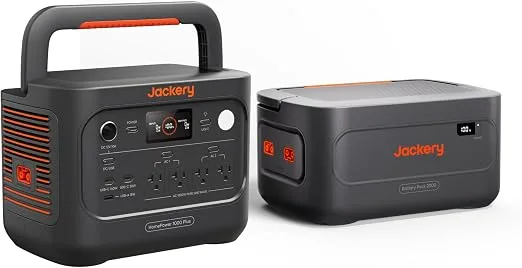
Jackery 1024Wh LiFePO4 Battery Expandable to 11kWh
Highlights
- Portable power station
- 1024Wh-class capacity
- Expandable battery ecosystem
- About $749 list
Best for
- Trail camping when you need fridge, lights, and device charging off-grid
- Overlanders powering air compressors or recovery tools away from shore power
- Basecamp builds that want headroom for multi-day loads
Pros
- Jackery packs replace noisy gas generators for many quiet-camp jobs
- 1024Wh-class capacity covers phones, lights, and many 12V fridge nights
- Expandable packs grow with extra batteries instead of buying a whole new unit
- Higher capacity / expandability for longer off-grid stays
Cons
- Not a tire tool by itself — pair with a compressor / deflator for air work
- Recharge still needs solar, vehicle charge, or shore power between trips
- Weight and bulk vs a tiny jump pack if you only need a dead-battery rescue
- Premium Wh / expandability costs real money vs a basic camping battery
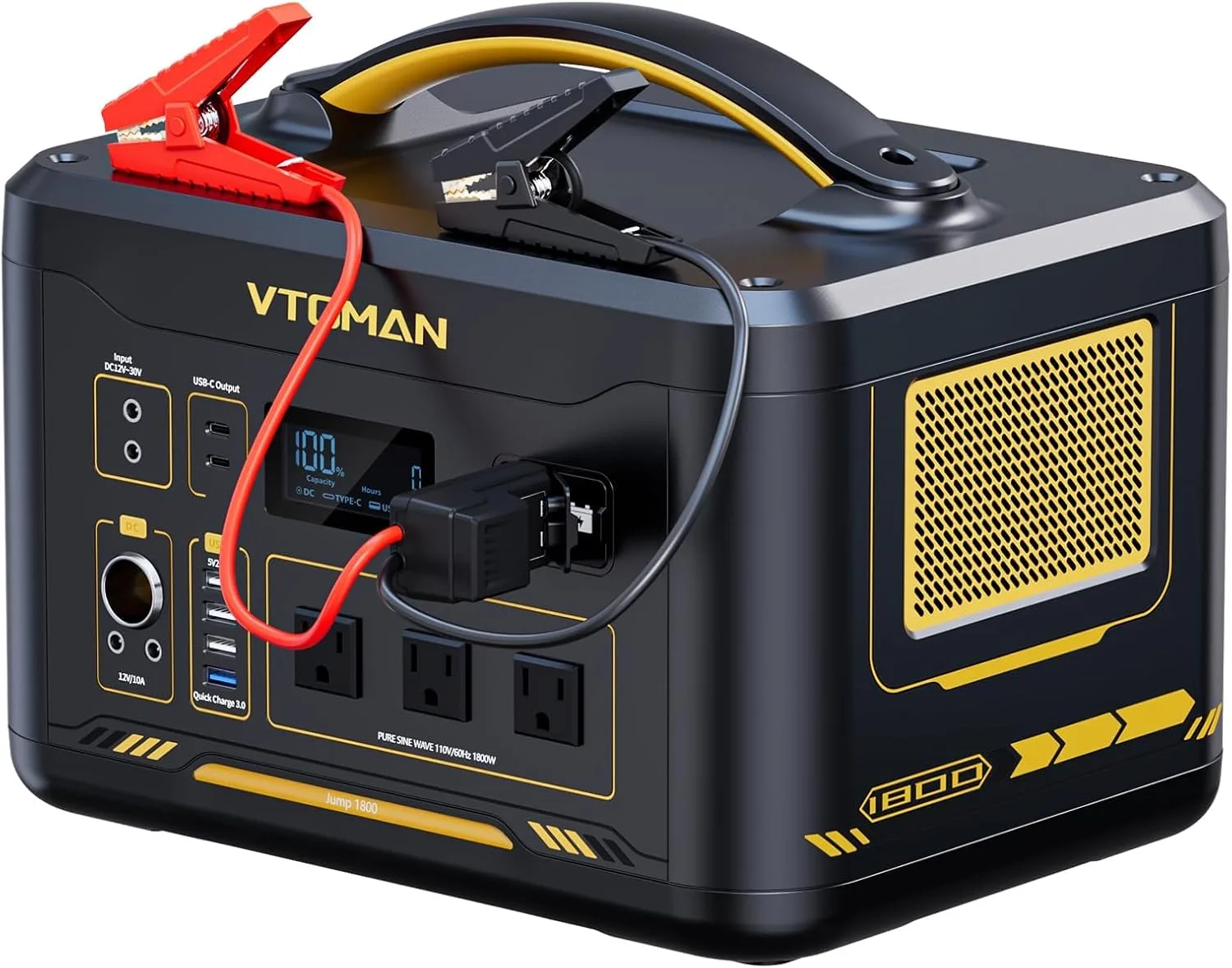
VTOMAN Jump 1800
Highlights
- Portable power station
- Camp / trail battery bank
- AC + DC outputs for camp gear
- About $619.99 list
Best for
- Trail camping when you need fridge, lights, and device charging off-grid
- Overlanders powering air compressors or recovery tools away from shore power
- Basecamp builds that want headroom for multi-day loads
Pros
- VTOMAN packs replace noisy gas generators for many quiet-camp jobs
- AC outlets handle common camp appliances without a second inverter box
- One box for USB, 12V, and wall-outlet style loads at camp
- Higher capacity / expandability for longer off-grid stays
Cons
- Not a tire tool by itself — pair with a compressor / deflator for air work
- Recharge still needs solar, vehicle charge, or shore power between trips
- Weight and bulk vs a tiny jump pack if you only need a dead-battery rescue
- Premium Wh / expandability costs real money vs a basic camping battery
Owner voices
Short takes from public retail reviews — paraphrased or translated when long or non-English; meaning kept close to the original.
“5/5 — The product description likely tells you everything you need to know. This is a small, low-wattage powerstation. It does have a 110 AC outlet; but remember it's only 100 watts. No coffee makers, hair dryers, air…”
“5/5 — Once it’s charged it’s perfect for travel. Just grab the handle and go it’s not heavy or bulky relatively small. There’s two settings for the light at the end of it and it’ll be great as a backup for when the po…”
“5/5 — Working great! I used this last night to power my large tv and a fan. It’s recharging now.”
How we picked: weights and sources
I weighted trail portability at 30%, output and capacity at 25%, recovery features at 20%, expandability at 15%, and owner feedback at 10%. The Jackery wins on weight and expandability; the VTOMAN wins on recovery features and capacity per dollar. I did not run fill-rate tests or measure inverter efficiency — these picks come from listing specs and owner themes, not a lab. As a tire-pressure and roadside editor, I've spent years matching compressors to power sources, and the first rule is always: the station must survive the duty cycle of your inflator.
- Portability (30%): Jackery 23.8 lb vs VTOMAN 38.5 lb — a real difference when you're lifting it over a tailgate.
- Output/capacity (25%): Both 1800W AC; VTOMAN has 1408Wh vs Jackery 1024Wh.
- Recovery features (20%): VTOMAN has a jump-start port; Jackery has 10ms UPS and smart load management.
- Expandability (15%): Jackery expands to 11kWh with add-on packs; VTOMAN does not advertise expansion.
- Owner feedback (10%): VTOMAN has 222 ratings at 4.1; Jackery has no reviews on file — thin evidence.
Spec snapshot
All specs from manufacturer listings. Weight in pounds; capacity in watt-hours; output in continuous watts. Ratings are as listed; Jackery has no rating count on file.
| Product | Price | Max PSI | Flow (CFM / L/min) | Power | Weight (lb) | Rating |
|---|---|---|---|---|---|---|
| Jackery 1024Wh LiFePO4 Battery Expandable to 11kWh | $749 | n/a (not on file) | n/a (not on file) | cordless | 23.8 lb | 4.3 |
| VTOMAN Jump 1800 | $619.99 | n/a (not on file) | n/a (not on file) | cordless / 12V | 38.5 lb | 4.1 |
Best for the trail: Jackery 1024Wh
On sand and washboard, every pound you save is a pound that isn't bouncing against your gear. The Jackery's 23.8 lb frame is the reason it leads here — you can carry it one-handed from the tailgate to the compressor without cursing. The 1800W AC output will run a typical 12V inflator through its AC adapter, and the 1024Wh capacity is enough to air up four 33-inch tires from 15 to 35 PSI with margin to spare, based on the inflator's listed draw. The smart load management is a nice trail touch: you can assign the compressor to one circuit and a fridge to the other, then set a cut-off so the fridge keeps running if the compressor hogs the bank.
- Suits: overlanders who air down regularly and want a light, expandable power source that doubles as a camp battery.
- Skip if: you need a built-in jump starter or you're running a dual-cylinder compressor that pulls more than 1800W continuous.
Best for the driveway: Jackery 1024Wh
The same Jackery wins the home-base job for a different reason: the 10ms UPS switchover. Plug it into the wall, run your router and a fridge off it, and when the grid blinks, the transfer is fast enough that most electronics won't notice. The expandable architecture is the long game — start at 1024Wh, add battery packs later up to 11kWh. That's a more honest path to home backup than buying a giant station upfront. The 5-year warranty and 6000-cycle LiFePO4 cells (to 70% capacity) are the kind of numbers that matter when the unit lives in a garage, not a trail rig.
- Suits: homeowners who want a starter backup that can grow, and overlanders who want one box for trail and garage.
- Skip if: you need more than 1800W continuous for a well pump or sump — this is not a whole-home solution.
Best for the roadside: VTOMAN Jump 1800
When a battery dies at a trailhead or a rest stop, the last thing you want is two boxes. The VTOMAN Jump 1800 has a dedicated jump-start port and cables, so it's a power station and a jump pack in one. The 1408Wh capacity gives you more reserve than the Jackery, and the regulated 12V DC outputs are stable enough for a car fridge or a CPAP — owners mention using it for travel and home backup. The 1800W constant-power output is a nice hedge: it will hold 1800W even when a device tries to pull more, rather than shutting off. That's useful for a resistive load like a small heater in a pinch, though I wouldn't plan on it.
- Suits: overlanders who want one box for jump starts, fridge power, and emergency AC, and who don't mind the extra 15 lb.
- Skip if: you're counting ounces for a lightweight build, or you need expandable capacity for multi-day base camps.
If you cross two scenarios
If you want one box for trail and roadside, the VTOMAN Jump 1800 is the compromise. You give up 14.7 lb of portability and the Jackery's expandability, but you gain a jump-start port and 384Wh more capacity. For a rig that sees equal parts sand and highway, that's a fair trade. The catch: at 38.5 lb, you'll want a permanent mount or a buddy to lift it. If your trail days are more frequent than your roadside emergencies, stick with the Jackery and pack a separate compact jump pack — you'll save weight and keep the expandable path open.
What goes wrong: failure modes to plan for
The most common mistake is undersizing the power station for the inflator's startup surge. A 12V compressor that draws 15A continuous can spike higher on start; check the station's surge rating (Jackery lists 3600W surge, VTOMAN lists 3600W surge) and give yourself headroom. Second: heat. Both units are LiFePO4, which handles heat better than NMC, but neither is waterproof — mount them where they won't sit in direct sun or get splashed at a water crossing. Third: the jump-start port on the VTOMAN is not a winch power source; don't try to run recovery gear off it.
- Don't run an inflator off the 12V cigarette port if the station's DC output is limited to 120W total — use the AC outlet instead.
- Keep the station out of direct sun; LiFePO4 is heat-tolerant but the inverter still needs airflow.
- Test your jump-start procedure at home before you need it on a trail.
Who should pick something else
If you need to run a winch, a welder, or a 240V appliance, neither of these is the right tool — look at a dual-battery setup or a larger inverter generator. If your primary job is airing up 37-inch tires on a heavy rig every weekend, a dedicated onboard air system (compressor + tank) will outlast any portable station. And if you only need a jump starter, a compact lithium jump pack is lighter and cheaper than either of these. These two are for overlanders who want one box to do camp power, air-up support, and light recovery.
FAQ
Can the Jackery run a tire inflator? Yes, through its 1800W AC outlet, as long as the inflator's continuous draw stays under that. Check the inflator's amp rating at 120V. Will the VTOMAN jump-start a diesel? The listing says it's for trucks, SUVs, and cars; it doesn't specify diesel displacement, so I'd hedge — check the jump-start port's peak amps against your engine. Can either run a CPAP overnight? The VTOMAN's regulated 12V DC output is the better match for a CPAP; the Jackery can do it through AC with an adapter, but you'll want to calculate your machine's draw against 1024Wh.
What owners report
Owner feedback is thin on the Jackery — no reviews on file, so I can't summarize themes. The VTOMAN has more signal, though it skews toward travel and home backup rather than trail use.
- VTOMAN Jump 1800: Travel-friendly — owners call it easy to grab and go, not heavy or bulky for its class (5/5 theme).
- VTOMAN Jump 1800: Home backup use — one owner ran a large TV and fan during an outage and it worked as expected (5/5 theme).
- VTOMAN Jump 1800: Battery quality complaint — one reviewer reported rapid discharge and a bad cell; treat as a single data point, not a pattern (1/5 theme).
Method and sources
This guide is built from product data and list prices pulled from Affiliate Hub at build time, together with owner feedback we summarize on the cards. It is catalog-backed buying help, not a lab ranking of every model.
Read how we test for the protocol behind any measured figures we still cite in Guides & Tips.