The buying question: which analog gauge shape fits your routine?
If you're shopping for an analog tire pressure gauge, the first decision isn't brand — it's form factor. A pencil gauge, a dial gauge, and an inflator-gauge combo each solve a different job, and mixing them up is how people end up with a gauge that lives in a drawer instead of the glovebox.
This shortlist is organized by type, not by a single overall winner. It's for daily drivers, weekend overlanders, and home-garage folks who want a battery-free gauge they can trust. It is not for someone who needs a digital TPMS tool, a programmable sensor, or a high-volume air compressor — those are separate purchases.
Quick picks: one best of each type
Top pencil pick: Milton High Pressure 10-75 PSI Tire Pencil Gauge — built-in deflator and tread-depth gauge, no batteries, glovebox-friendly. Runner-up pencil: Milton S-921 (or the 2-pack if you want a spare).
Top dial pick: JACO Elite 60 PSI — 2-inch glow-in-the-dark dial, 1 PSI resolution, bleed valve, and a 360-degree swivel chuck. Also-consider dial: Milton Accu-Gage RH60X, which adds a flexible hose and a rubber guard.
Top inflator-gauge pick: Milton S-506 — dual-head chuck, 15-inch hose, 10–160 PSI range, and replaceable gauge/valve cartridges. It's the one to mount on a shop air line, not to toss in the glovebox.
How we picked: weights and sources
I weighted four things: accuracy and resolution (30%), ease of use in the real world — chuck reach, bleed valve, one-hand operation (25%), durability and warranty (20%), and owner feedback themes (25%). Price was a tiebreaker within a type, not across types, because a $20 dial gauge and a $50 inflator gauge aren't competing for the same job.
Data comes from manufacturer listings and owner reviews on file. I did not run lab fill-rate or calibration tests; where I say a gauge is accurate, that's the listing's ANSI claim or an owner's comparison, not my own bench result. As PumpGauge's tire-pressure and roadside editor, I use a checklist approach: range match, resolution, chuck type, bleed valve, and warranty. If a gauge lacks a published weight, I write n/a rather than guess.
Spec snapshot
Prices are list/current from Product data. Weight is n/a where the manufacturer didn't publish it. Ratings are as listed.
| Product | Price | Max PSI | Flow (CFM / L/min) | Power | Weight (lb) | Rating |
|---|---|---|---|---|---|---|
| Milton S-921 Pencil Tire Pressure Gauge Passenger Car | n/a (not on file) | n/a (not on file) | n/a (not on file) | n/a (not on file) | n/a (not on file) | 4.6 |
| Milton S-921 2pk | $13.33 | n/a (not on file) | n/a (not on file) | n/a (not on file) | n/a (not on file) | 4.6 |
| JACO Superior Products JACO Elite Tire Pressure Gauge - 60 PSI | $19.9 | 60 PSI | n/a (not on file) | n/a (not on file) | 13.2 lb (~6 kg) | 4.6 |
| Milton S-506 Original Service Station Tire Inflator and Air Pressure Gauge, Dual Head C | $50.77 | n/a (not on file) | n/a (not on file) | n/a (not on file) | n/a (not on file) | 4.7 |
| Milton High Pressure 10-75 PSI Tire Pencil Gauge | $17.91 | 70 PSI | n/a (not on file) | n/a (not on file) | n/a (not on file) | 4.6 |
| Milton Accu-Gage RH60X Professional Tire Pressure Gauge | $24.95 | 60 PSI | n/a (not on file) | n/a (not on file) | n/a (not on file) | 4.5 |
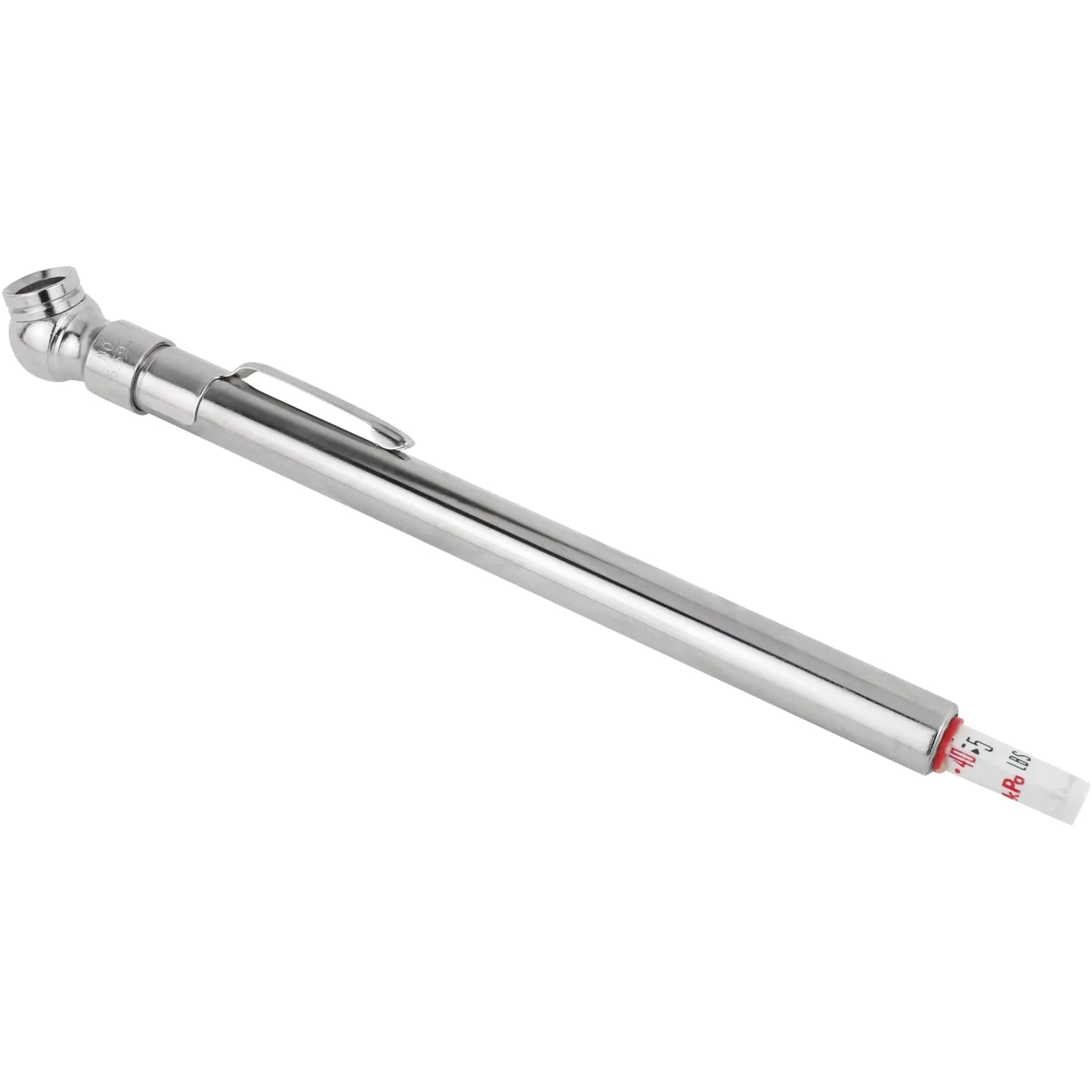
Milton S-921 Pencil Tire Pressure Gauge Passenger Car
Highlights
- Pencil / stick gauge
- Check gauge
- Passenger / light-truck oriented
Best for
- Monthly cold placard checks on daily drivers
- Glovebox analog when you refuse dead batteries
- Quick cross-check against TPMS
Pros
- No batteries and a slim body that survives glovebox abuse
- Milton check gauges are built for the monthly PSI routine, not trail air-downs
- Cheaper and more accurate day-to-day than trusting TPMS alone when all four tires drop together
- Light enough to keep permanently in the car
Cons
- Coarse stick marks make odd placard targets (33 / 35) a visual estimate
- Not a compressor — you still need a way to add air
- Low-end car dials top out too early for many light-truck / overloaded fills
- Always cross-check a new gauge against a known-good one before trusting it alone
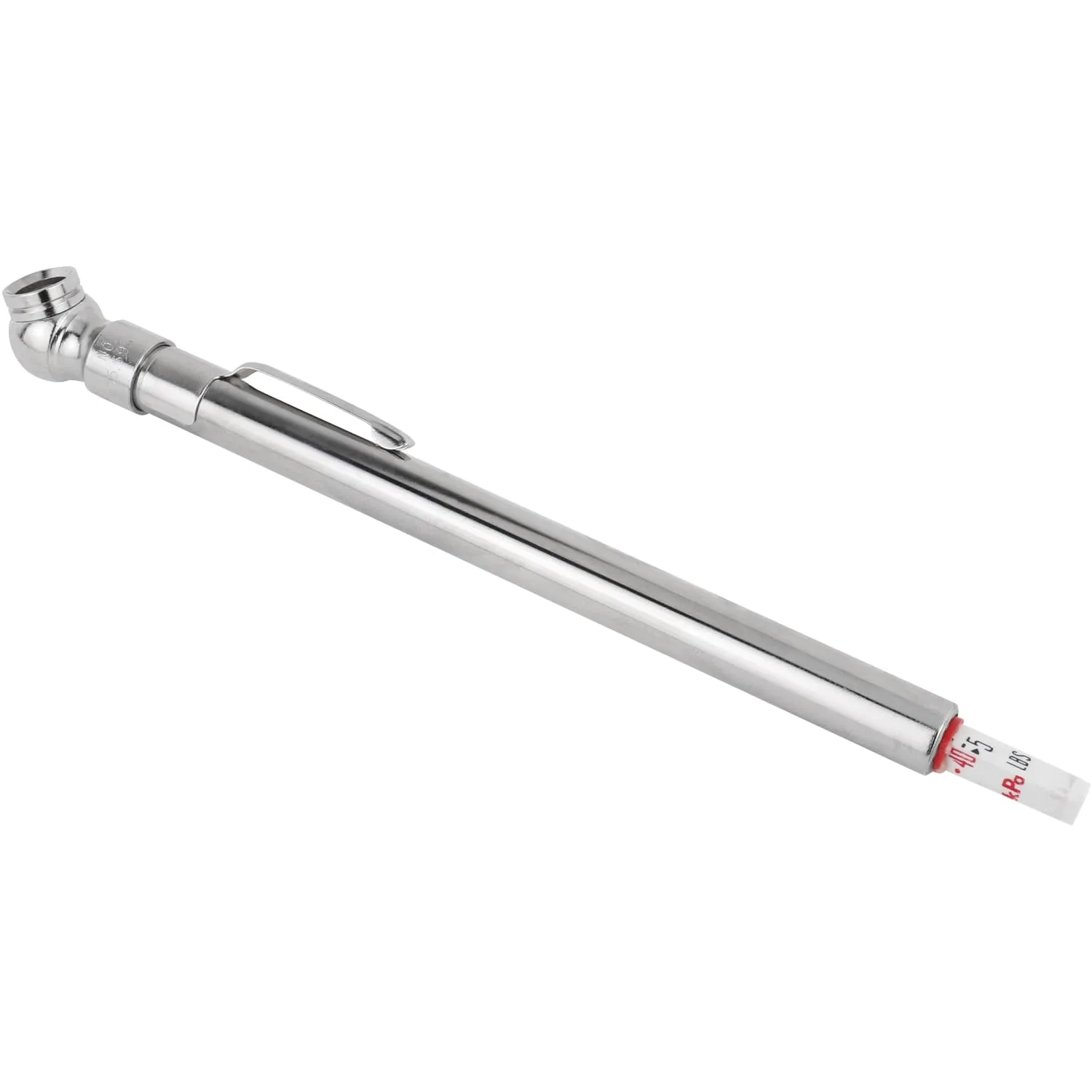
Milton S-921 2pk
Highlights
- Dial gauge
- Check gauge
- Passenger / light-truck oriented
- About $13.33 list
Best for
- Monthly cold placard checks on daily drivers
- Glovebox analog when you refuse dead batteries
- Quick cross-check against TPMS
Pros
- Analog dial stays usable after years of heat without a coin-cell death
- Milton check gauges are built for the monthly PSI routine, not trail air-downs
- Cheaper and more accurate day-to-day than trusting TPMS alone when all four tires drop together
- Light enough to keep permanently in the car
Cons
- Dial needles can stick off zero after a drop — always check return-to-zero
- Not a compressor — you still need a way to add air
- Low-end car dials top out too early for many light-truck / overloaded fills
- Always cross-check a new gauge against a known-good one before trusting it alone
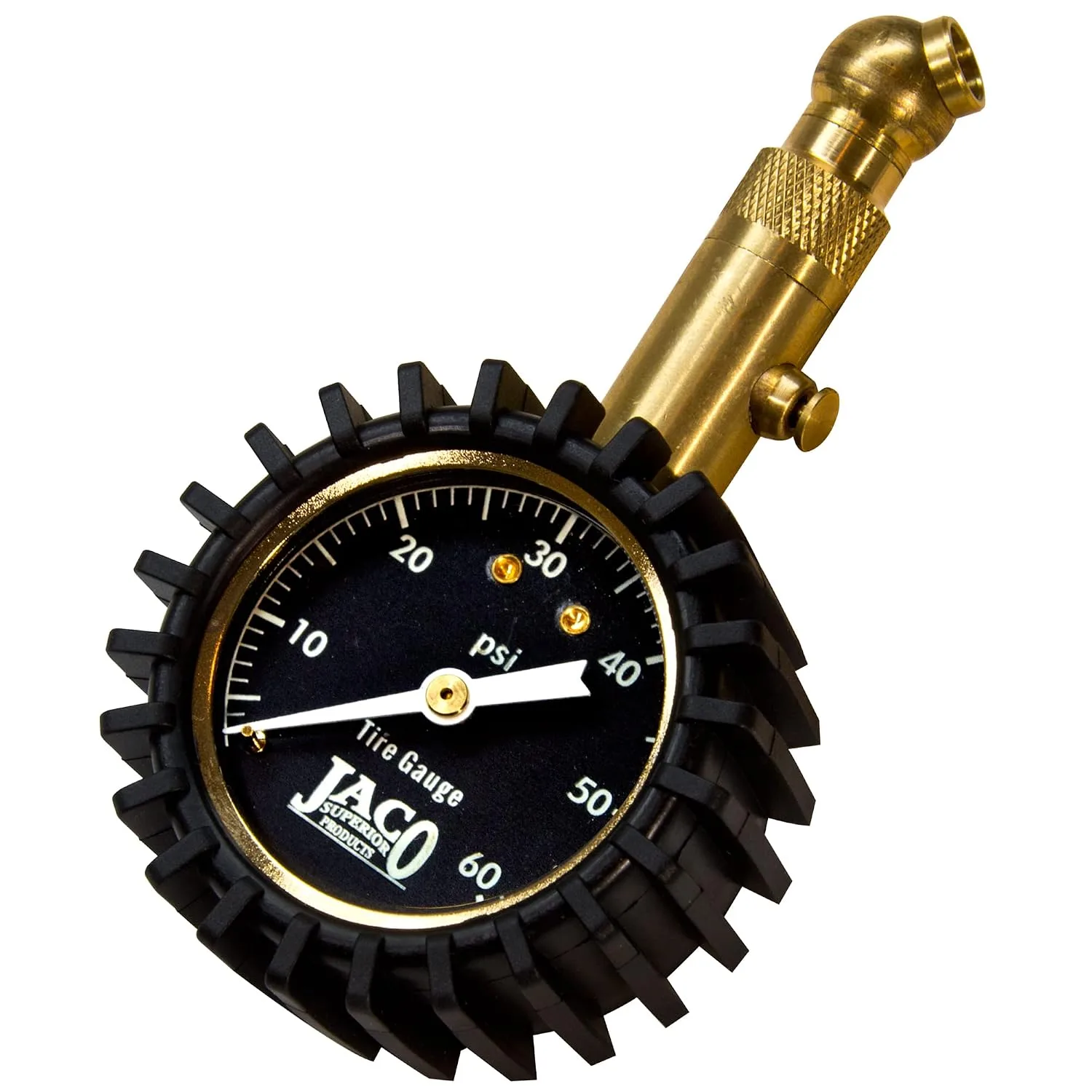
JACO Superior Products JACO Elite Tire Pressure Gauge - 60 PSI
Highlights
- Electric inflatable pump
- 12V car-socket power
- Watch-the-gauge fill
- About $19.90 list
Best for
- Paddle boards and high-pressure drop-stitch boards at the put-in
- Kayaks, dinghies, and other inflatables that need more than a mattress pump
- Occasional day trips when you want electric fill without a heavy compressor
Pros
- JACO Superior Products electric fill beats hand-pumping a full board at the beach
- 12V socket convenience from the tow vehicle or nearby car
- Simple workflow: connect, fill, confirm with the board’s recommended PSI
- Low enough list price for a seasonal spare in the board bag
Cons
- Not a tire compressor — duty cycle and fittings are for inflatables
- Car-socket amperage and cable reach still matter at crowded put-ins
- May top out below what a racing / high-pressure board wants
- Expect more noise and slower top-end fill than premium dual-stage units
Owner voices
Short takes from public retail reviews — paraphrased or translated when long or non-English; meaning kept close to the original.
“5/5 — A perfect tire pressure gauge for this very affordable price! I have aftermarket rims, so I was a bit worried about the ease of reaching the valve with a limited reach tube, and, in fact, I was seriously conside…”
“5/5 — Purchased in 2017 and I've had no issues. I appreciate good engineering being one. I didn't rate the accuracy because I have nothing known accurate to compare it to. For tires I am not that concerned and it seem…”
“5/5 — Well built, and easy to use and read tire gauge. I decided to go with the 60lb model since it is in 1lb graduations. The instructions that came with it say that it is a tested calibrated, and certified gauge. Th…”
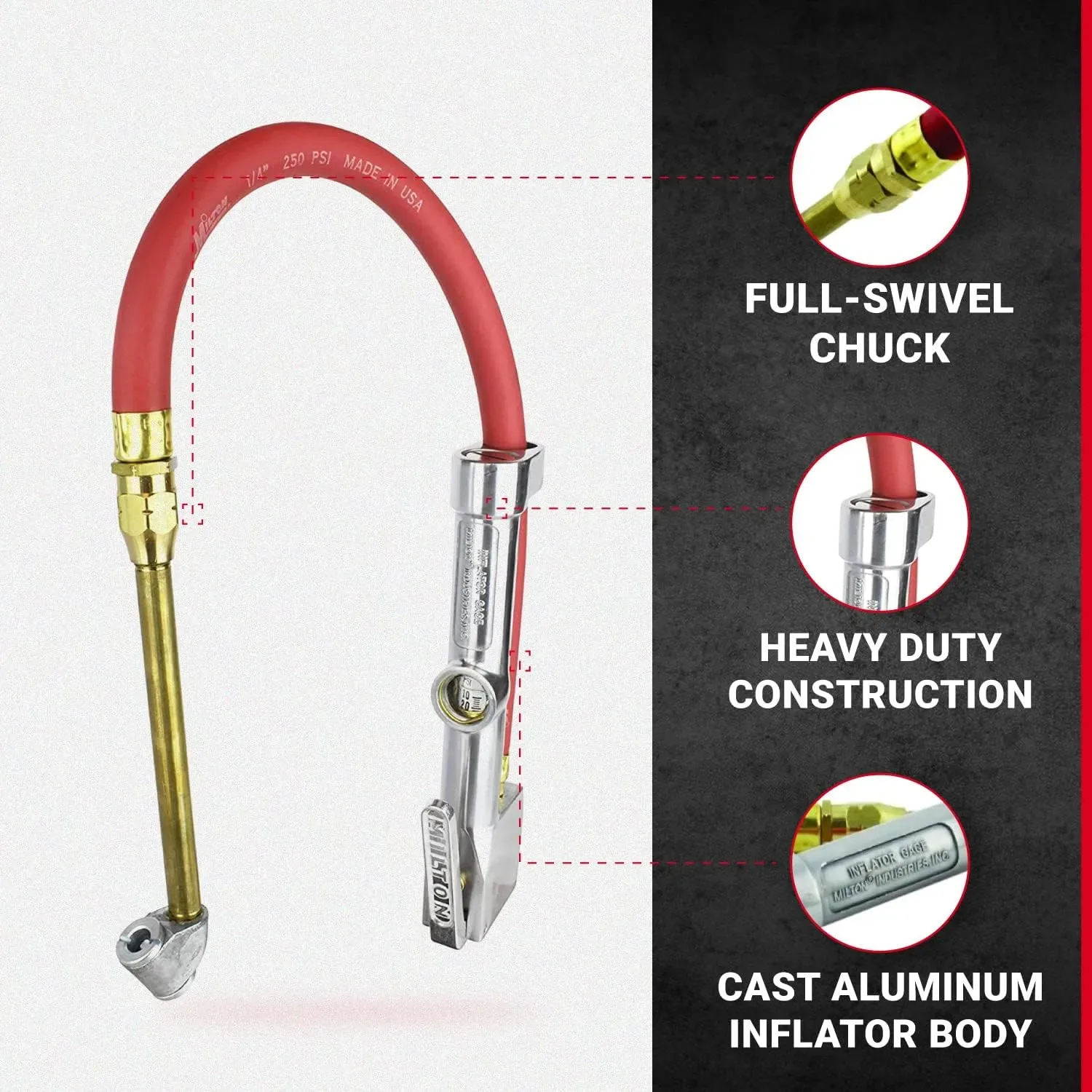
Milton S-506 Original Service Station Tire Inflator and Air Pressure Gauge, Dual Head C
Highlights
- AC + 12V dual power
- Manual watch-the-gauge fill
- About $50.77 list
- Category: analog-tire-pressure-gauges
Best for
- Garage wall power plus roadside 12V in one box
- Cold-morning placard top-ups on cars and light SUVs
- Drivers who want a more durable weekly driver
Pros
- One tool covers home wall outlets and cigarette-lighter sockets
- Straightforward fill-and-check workflow with a separate gauge
- Milton build is aimed at repeated top-ups, not a one-weekend toy
- Fits the portable tire-inflator job: soft tire → placard, not shop compressor duty
Cons
- Cigarette-lighter circuits can trip; check fuse / amperage on older vehicles
- Compressor gauges often read high — verify with a dedicated tire gauge
- Duty cycle / heat soak limits flat-to-full fills on large truck tires
- Heavier / bulkier than an ultra-compact emergency mini pump
Owner voices
Short takes from public retail reviews — paraphrased or translated when long or non-English; meaning kept close to the original.
“5/5 — The S-506 model now is a 160 lb gauge based on the Milton website information. This inflator gauge was bought as a gift for my son. It's essentially a duplicate of one that I've been using in my own garage for a…”
“4/5 — I could probably copy and paste the same review for all Milton products: Skookum, USA manufactured tools made with above average materials, components, and craftsmanship. I'll get right to the meat of it. Pros:…”
“5/5 — The one I received is dead accurate at least to the nearest pound vs my Joe's Racing pressure gauge and an old, old Schrader. This is a bit bulky, and yes the readout is small and not the easiest to read, but wi…”
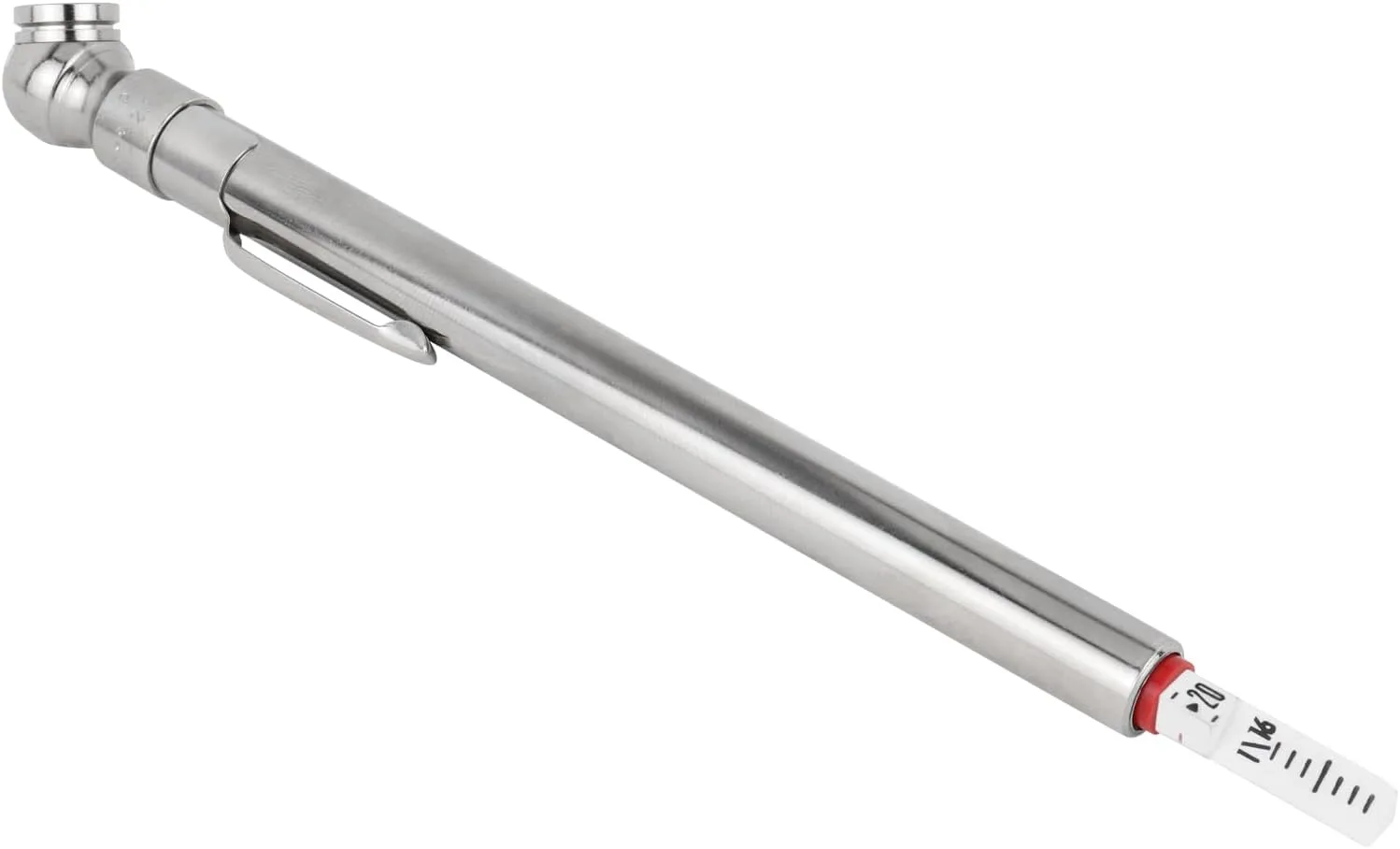
Milton High Pressure 10-75 PSI Tire Pencil Gauge
Highlights
- Pencil / stick gauge
- 10–75 PSI
- Metal body
- Made for glovebox abuse
Best for
- Glovebox backup when you refuse battery gauges
- Quick cold checks on cars and light trucks
- Owners who already trust Milton shop gear
Pros
- No batteries to die or leak in a hot glovebox
- Metal pencil body survives drops better than cheap plastic dials
- Owners report stable readings vs digital units that drift or die
- Compact and USA-made feel that shop users already recognize
Cons
- 2-PSI increments make odd placard targets (33 / 35) a visual estimate
- Not a bleed-while-you-watch tool — add/bleed air separately
- Easy to lose the protective sleeve / end pieces
- Scale tops out at 75 PSI — skip for many commercial / overload fills
Owner voices
Short takes from public retail reviews — paraphrased or translated when long or non-English; meaning kept close to the original.
“No batteries, no dial glass to crack — this is the glovebox gauge after years of Milton shop tools.”
“Solid metal stick gauge. Stay away from the cheap plastic ones if you actually care about the number.”
“Works well — just know it marks even PSI numbers, so 33 and 35 are between the lines.”
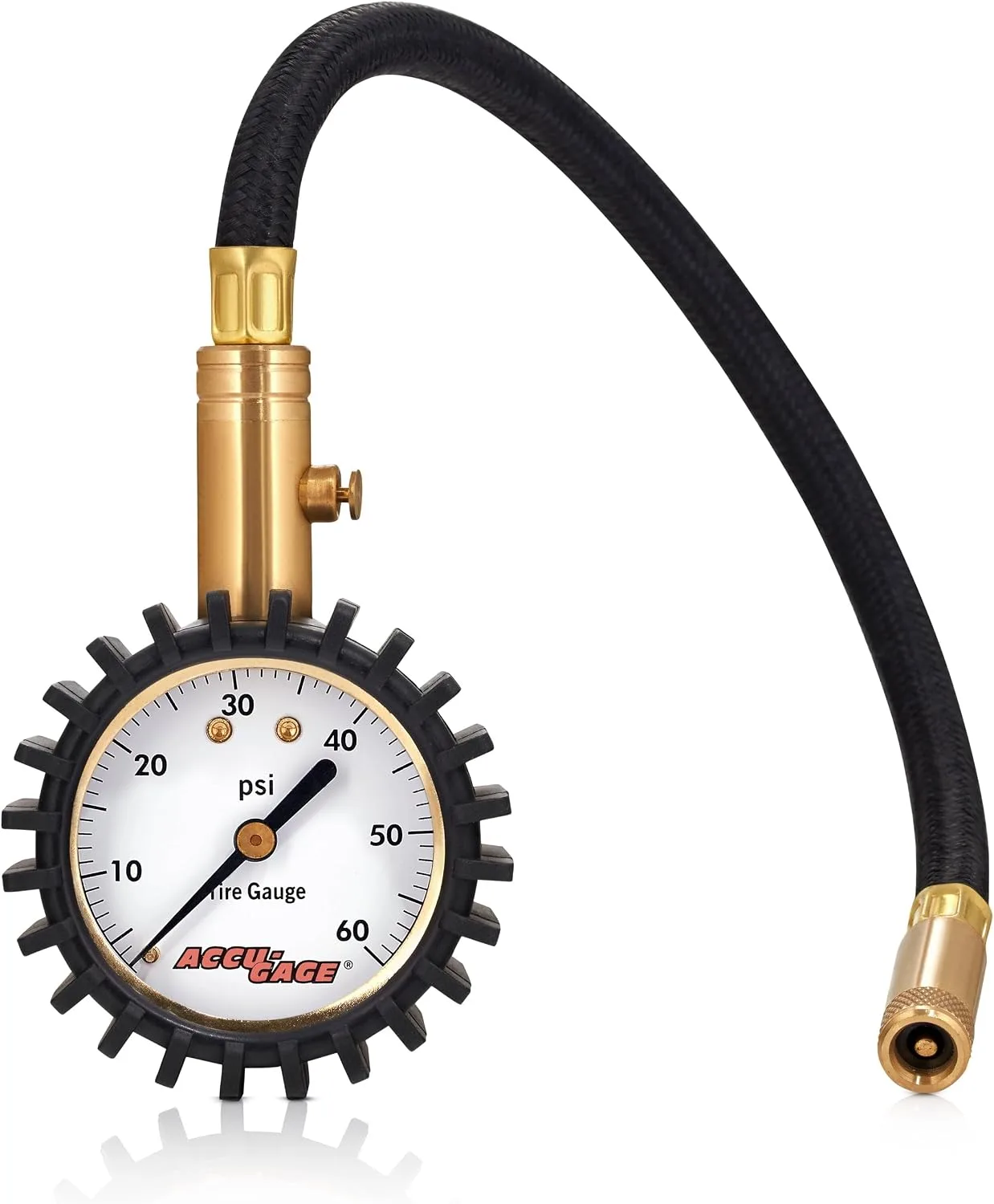
Milton Accu-Gage RH60X Professional Tire Pressure Gauge
Highlights
- Hose Accu-Gage
- 60 PSI
- Bleed / reset valve
- Rubber boot
Best for
- Car owners who want hose reach and a readable face
- Drivers who bleed overfills without removing the chuck
- Garage drawers where a rubber-booted dial gets knocked around
Pros
- Hose puts the dial in your hand instead of twisted at the valve
- Chuck seals and pops off cleanly with little air loss for many owners
- Bleed / reset valve helps dial down from overfills to placard PSI
- Rubber boot and rugged feel match the “shop Accu-Gage” reputation
Cons
- Pricier than a basic pencil for the same car PSI job
- Bleed valve can fail after years — verify before trusting it alone
- 60 PSI face is wrong for many light-truck / RV high fills
- Still cross-check after drops; no digital hold / backlight
Owner voices
Short takes from public retail reviews — paraphrased or translated when long or non-English; meaning kept close to the original.
“Hose readout and a proper bleed valve — finally easy to bring a 40 PSI fill down to my 32 placard.”
“Straight chuck, release button, and rubber cover — simple and tough for monthly car checks.”
“Loved it for years until the bleed valve quit. Great while it worked; now I treat that part as wear.”
Deep ranking: the best of each type
Pencil gauges: simple, battery-free, and nearly indestructible. The Milton High Pressure 10-75 PSI is the standout because it adds a built-in deflator and a tread-depth gauge — two things you'd otherwise carry separately. Owners like the no-battery reliability; one reviewer noted it replaced a digital gauge that died in a hot glovebox. The 10–75 PSI range covers most passenger cars and light trucks, though it's not for 80+ PSI RV tires. Skip it if you want 1 PSI resolution — it reads in 2-lb increments.
The Milton S-921 is the classic passenger-car pencil gauge. It's cheap, light, and the 2-pack is a sensible way to keep one in each vehicle. But the listing doesn't publish a max PSI or weight, and there's no owner review text on file — so I'd call feedback thin. Buy it if you want a basic spare; skip it if you need a documented range or a bleed valve.
Dial gauges: easier to read, especially at night or in tight wheel wells. The JACO Elite 60 PSI is the one I'd hand to most drivers. It has a 2-inch glow-in-the-dark dial, 1 PSI resolution, a hold-reading button, a bleed valve, and a 360-degree swivel chuck. Owners consistently mention the build quality and the one-hand operation; one noted it won't work on Presta valves. The listing weight of 13.2 lb looks like shipping weight, not the gauge itself — treat it as n/a for pocketability. Skip it if you need a hose to reach recessed valves; that's where the Accu-Gage comes in.
The Milton Accu-Gage RH60X is the dial gauge for people who hate bending their head around the valve. It adds a flexible hose, a rubber protective guard, and a push-button bleed valve. Owners like the hose and the solid seal; one long-term reviewer reported a 6 PSI high reading after two years, which is a reminder that any analog gauge can drift. It's a good pick if reach matters more than a built-in hold button. Skip it if you want the simplest possible glovebox tool.
Inflator-gauge: the Milton S-506 is a different animal — it's a service-station-style inflator with a dual-head chuck, 15-inch hose, and a 10–160 PSI range in 2-lb increments. Owners describe it as accurate and durable, with one noting a 30-year-old unit still in service. It's the right choice if you have a shop compressor and want to inflate and read pressure in one step. It is not a glovebox gauge — it's bulky and needs an air line. Skip it if you only check pressure monthly and don't own a compressor.
Type vs type: the trade-offs that matter
Pencil vs dial: pencil gauges are smaller, cheaper, and don't break if dropped, but they're harder to read in low light and usually have coarser resolution. Dial gauges are easier to read and often add a hold button or bleed valve, but they're bulkier and the glass can be a weak point.
Dial vs inflator-gauge: a dial gauge is for checking pressure; an inflator-gauge is for inflating and checking in one motion. If you already own a compressor, the S-506 saves a step. If you don't, it's dead weight.
Hose vs no hose: a hose makes recessed valves easier to reach and lets you read the dial without crouching. The trade-off is bulk and one more thing to fail. For most drivers, a no-hose dial like the JACO is fine; for trucks with dual rear wheels, the hose is worth it.
Prices across types
Pencil gauges run from about $13 for a 2-pack to $18 for the high-pressure version with a deflator. Dial gauges sit around $19–$25, with the Accu-Gage often discounted to about $19. The inflator-gauge is the outlier at roughly $46–$51, because it's a shop tool rather than a pocket gauge.
Don't cross-shop a $13 pencil against a $50 inflator gauge — they're not substitutes. Pick the type first, then the price band within it.
Failure modes: what goes wrong with analog gauges
The most common failure is drift — a gauge that reads a few PSI high or low after years of use. One Accu-Gage owner reported a 6 PSI high reading after two years, which is enough to matter for tire wear and fuel economy. There's no user calibration on most of these; the fix is to compare against a known-good gauge or replace it.
The second is seal wear at the chuck. A hardened or dirty seal leaks air on connection, so you get a low reading. The third is range mismatch: a 60 PSI gauge is fine for a passenger car but pegged on an RV tire. Finally, cheap pencil gauges can lose their internal spring tension, which shows up as a sticky or non-returning slide.
Who should pick something else
If you want a digital readout, a backlit display, or TPMS integration, skip this list — you want a digital gauge or a TPMS tool, not an analog one.
If you need to inflate 80+ PSI RV or trailer tires, the 60 PSI dial gauges here are the wrong range; look for a 100–160 PSI gauge or the S-506 inflator.
If you're shopping for a bike with Presta valves, the JACO Elite won't fit — JACO makes a separate Presta-compatible gauge. And if you want a gauge that lives in a hot glovebox without a dial to break, the Milton pencil is the safer shape.
What owners report
Themes from owner reviews on file. Ratings are as listed; I did not verify individual claims.
- Milton High Pressure 10-75 PSI: No-battery reliability and glovebox durability — owners like that it won't die in heat like a digital gauge.
- JACO Elite 60 PSI: Build quality and one-hand use — owners mention the glow-in-the-dark dial and 1 PSI resolution; one notes it won't fit Presta valves.
- Milton S-506: Accuracy and longevity — owners describe it as a shop-grade tool, with one citing a 30-year-old unit still working.
- Milton Accu-Gage RH60X: Hose convenience and solid seal — but one long-term owner reported a 6 PSI high reading after two years.
- Milton S-921 / 2pk: Feedback is thin — no owner review text on file, so I can't summarize themes.
FAQ
Do I need a bleed valve? If you frequently overinflate or track your tires, yes — it lets you fine-tune pressure without removing the gauge. The JACO Elite and Accu-Gage both have one.
Is a 60 PSI gauge enough for a truck? For most half-ton pickups running 35–45 PSI, yes. For heavy-duty or RV tires at 80 PSI, no — step up to a 100+ PSI gauge.
Why is the JACO weight listed as 13.2 lb? That's almost certainly shipping weight, not the gauge. Treat the gauge weight as n/a unless the manufacturer publishes it.
Can I calibrate an analog gauge? Most of these are sealed; there's no user calibration. Compare against a known-good gauge and replace if it drifts.
Method and sources
This guide is built from product data and list prices pulled from Affiliate Hub at build time, together with owner feedback we summarize on the cards. It is catalog-backed buying help, not a lab ranking of every model.
Read how we test for the protocol behind any measured figures we still cite in Guides & Tips.