Which power station actually earns its space in a trail rig?
If you're building an overland electrical setup, the question isn't which station has the biggest number on the box. It's which one runs your fridge overnight, tops up cameras and radios, and doesn't turn into a 40-pound paperweight when the trail gets rough. Both units here are rated 1800W continuous with LiFePO4 cells, but they solve different problems.
This is not a home-backup ranking. If you need to run a furnace blower or a full-size fridge through a multi-day outage, neither of these is the right tool — look at the expandable battery ecosystem instead. This page is for truck camping, trail-side recovery, and basecamp power where weight and port count matter more than whole-home watt-hours.
Quick picks: top, runner-up, also-consider
Top pick: Jackery 1024Wh LiFePO4 Battery Expandable to 11kWh. Lighter, expandable, and the 10ms UPS is a genuine bonus for sensitive gear. Runner-up: VTOMAN Jump 1800. Heavier, but the built-in jump-start port and 1408Wh capacity make it a stronger standalone trail box. Also-consider: neither — if you need more than 1408Wh without expansion, the Jackery's add-on battery path is the only real option in this pair.
- Top: Jackery 1024Wh — 23.8 lb, expandable to 11kWh, 1800W AC, 10ms UPS.
- Runner-up: VTOMAN Jump 1800 — 38.5 lb, 1408Wh, 1800W AC, built-in jump-start port.
- Also-consider: Jackery if you plan to grow capacity later; VTOMAN if you want one box that also jumps the truck.
How we weight this shortlist
Default weights unless the title forces a tilt: fill speed (claimed CFM / duty notes) 30%, accuracy & auto-cutoff 25%, duty-cycle / heat handling 20%, portability 15%, owner themes 10%. Specs are from listings and owner themes on file — not lab measurements. Gaps stay n/a (not on file). I edit tire-pressure and roadside roundups with a checklist approach against the catalogue.
I started with the two SKUs in this shortlist — both are 1800W-class LiFePO4 stations with published AC output, so they fit the same buyer. I weighted four things: portability and weight (30%), usable capacity and expansion (25%), trail-specific features like jump-start or UPS (25%), and owner-reported reliability (20%). Price was a tiebreaker, not a ranking driver.
Data comes from manufacturer listings and platform owner reviews. I did not run independent capacity or fill-rate tests — no lab, no bench. Where a spec is missing, I say so rather than guess. As a tire-pressure and roadside editor, I look at power stations the same way I look at compressors: does it earn its space, and does it fail gracefully when it doesn't?
Spec snapshot
All numbers below are from the product listings. Weight is in pounds; capacity in watt-hours; output in continuous watts. Ratings are platform averages where available.
| Product | Price | Max PSI | Flow (CFM / L/min) | Power | Weight (lb) | Rating |
|---|---|---|---|---|---|---|
| Jackery 1024Wh LiFePO4 Battery Expandable to 11kWh | $749 | n/a (not on file) | n/a (not on file) | cordless | 23.8 lb | 4.3 |
| VTOMAN Jump 1800 | $619.99 | n/a (not on file) | n/a (not on file) | cordless / 12V | 38.5 lb | 4.1 |
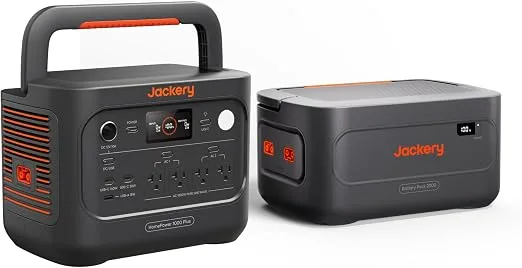
Jackery 1024Wh LiFePO4 Battery Expandable to 11kWh
Highlights
- Portable power station
- 1024Wh-class capacity
- Expandable battery ecosystem
- About $749 list
Best for
- Trail camping when you need fridge, lights, and device charging off-grid
- Overlanders powering air compressors or recovery tools away from shore power
- Basecamp builds that want headroom for multi-day loads
Pros
- Jackery packs replace noisy gas generators for many quiet-camp jobs
- 1024Wh-class capacity covers phones, lights, and many 12V fridge nights
- Expandable packs grow with extra batteries instead of buying a whole new unit
- Higher capacity / expandability for longer off-grid stays
Cons
- Not a tire tool by itself — pair with a compressor / deflator for air work
- Recharge still needs solar, vehicle charge, or shore power between trips
- Weight and bulk vs a tiny jump pack if you only need a dead-battery rescue
- Premium Wh / expandability costs real money vs a basic camping battery
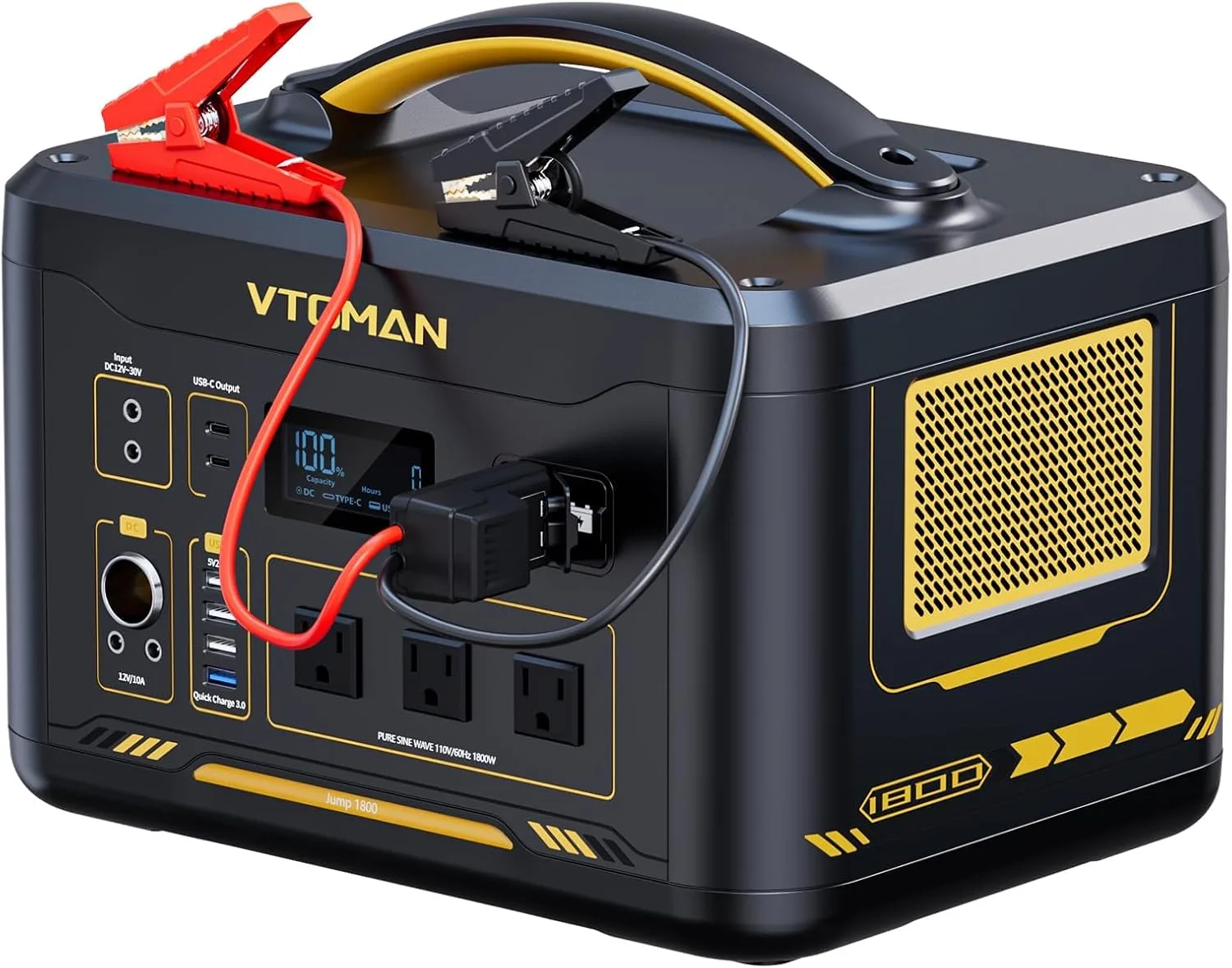
VTOMAN Jump 1800
Highlights
- Portable power station
- Camp / trail battery bank
- AC + DC outputs for camp gear
- About $619.99 list
Best for
- Trail camping when you need fridge, lights, and device charging off-grid
- Overlanders powering air compressors or recovery tools away from shore power
- Basecamp builds that want headroom for multi-day loads
Pros
- VTOMAN packs replace noisy gas generators for many quiet-camp jobs
- AC outlets handle common camp appliances without a second inverter box
- One box for USB, 12V, and wall-outlet style loads at camp
- Higher capacity / expandability for longer off-grid stays
Cons
- Not a tire tool by itself — pair with a compressor / deflator for air work
- Recharge still needs solar, vehicle charge, or shore power between trips
- Weight and bulk vs a tiny jump pack if you only need a dead-battery rescue
- Premium Wh / expandability costs real money vs a basic camping battery
Owner voices
Short takes from public retail reviews — paraphrased or translated when long or non-English; meaning kept close to the original.
“5/5 — The product description likely tells you everything you need to know. This is a small, low-wattage powerstation. It does have a 110 AC outlet; but remember it's only 100 watts. No coffee makers, hair dryers, air…”
“5/5 — Once it’s charged it’s perfect for travel. Just grab the handle and go it’s not heavy or bulky relatively small. There’s two settings for the light at the end of it and it’ll be great as a backup for when the po…”
“5/5 — Working great! I used this last night to power my large tv and a fan. It’s recharging now.”
Why each one is here
Jackery 1024Wh LiFePO4 Battery Expandable to 11kWh — #1. The 23.8 lb weight is the headline for overlanding: that's light enough to move between truck bed and camp table without a second person. The 1024Wh capacity is modest, but the expansion path to 11kWh via up to five add-on packs means you can grow the system without replacing the station. The 10ms UPS and 3kV surge protection are unusual at this price and genuinely useful if you're running a fridge or sensitive electronics off the AC side. Suits: solo or two-person trail camps where weight matters and you want room to expand. Skip if: you need maximum watt-hours out of the box and don't want to buy add-on batteries.
VTOMAN Jump 1800 — #2. The 1408Wh capacity and 38.5 lb weight tell the story: this is a heavier, more self-contained box. The built-in jump-start port is the differentiator — it's a power station and a jump pack in one, which saves space and hassle if you're already carrying recovery gear. The 1800W constant-power output (with 3600W surge) means it won't shut off on a slightly over-wattage appliance the way some stations do. Suits: rigs where one box needs to do everything — camp power plus roadside rescue. Skip if: you're counting pounds or already carry a separate jump pack.
What goes wrong on the trail
The most common failure mode with any power station in an overland rig is weight creep. A 23.8 lb unit feels fine in the driveway; add a solar panel, cables, and a fridge, and suddenly you're rearranging the truck bed. The Jackery's lighter starting weight is a real advantage here, but the expansion batteries add up fast — five packs would push the system well past what most people want to lug.
The second failure mode is capacity overconfidence. The VTOMAN's 1408Wh sounds like a lot until you're running a 12V fridge through a hot night and charging cameras the next morning. Owners report mixed experiences: some say it's a great value and easy to travel with, while at least one 1-star review describes rapid discharge and a battery that behaved like a worn-out phone. That's a single data point, not a pattern, but it's worth noting that LiFePO4 cells can fail early if the BMS is faulty.
Who should pick something else
If you need to run a CPAP, a full-size fridge, or a heater overnight in cold weather, neither of these is ideal. The Jackery's 1024Wh base capacity will struggle with a resistive heater, and the VTOMAN's 1800W constant output is still limited by its 1408Wh bank. Look at a larger expandable system or a dual-battery setup in the truck.
If you're primarily a weekend car camper and don't need jump-start capability, a smaller, lighter station in the 500–700Wh range will save weight and money. And if you already carry a dedicated jump pack, the VTOMAN's main advantage disappears — the Jackery becomes the clearer pick.
FAQ
Can the Jackery run a 12V fridge? Yes, via the AC outlet with an adapter, but the 1024Wh capacity means you'll want to pair it with solar or expansion batteries for multi-day trips.
Does the VTOMAN jump-start a diesel truck? The listing says it's compatible with trucks and SUVs, but cold-cranking amps aren't published — check your diesel's requirement before relying on it.
Which one is better for a family overland trip? The Jackery's lighter weight and expansion path make it easier to scale for more people and more gear.
Are these safe to leave in a hot truck? LiFePO4 is more heat-tolerant than NMC, but neither listing gives a max operating temperature — don't leave either in direct sun.
What owners report
Owner feedback is thin for the Jackery — no reviews on file, so I can't summarize themes. The VTOMAN has more feedback, but it skews toward general portability and value rather than hardcore overland use.
- Jackery 1024Wh: no owner reviews on file — feedback is thin; listing specs only.
- VTOMAN Jump 1800: owners often mention it's easy to carry and good value for travel; one 1-star review reports rapid battery discharge.
Method and sources
This guide is built from product data and list prices pulled from Affiliate Hub at build time, together with owner feedback we summarize on the cards. It is catalog-backed buying help, not a lab ranking of every model.
Read how we test for the protocol behind any measured figures we still cite in Guides & Tips.